
Car Radiator Replacement Cost Estimator (UK 2026)
Use this tool to estimate your potential bill based on current UK market trends for November 2026. Prices include parts and estimated labor.
You’re driving along, and the temperature gauge starts creeping up. Panic sets in because you know that a car radiator is a heat exchanger used to cool the engine coolant by transferring heat to the air flowing through its fins might be failing. The immediate question isn’t just “how do I fix this?” but “how much is this going to hurt my wallet?” In November 2026, prices for radiators vary wildly depending on your vehicle’s make, model, and whether you choose original equipment manufacturer (OEM) parts or aftermarket alternatives. We’re talking about anything from £45 for a basic aftermarket unit on an older Ford Fiesta to over £300 for a high-performance OEM radiator on a modern BMW. This guide breaks down exactly what drives those costs so you don’t get ripped off at the garage.
The Core Cost Drivers: Part Type and Brand
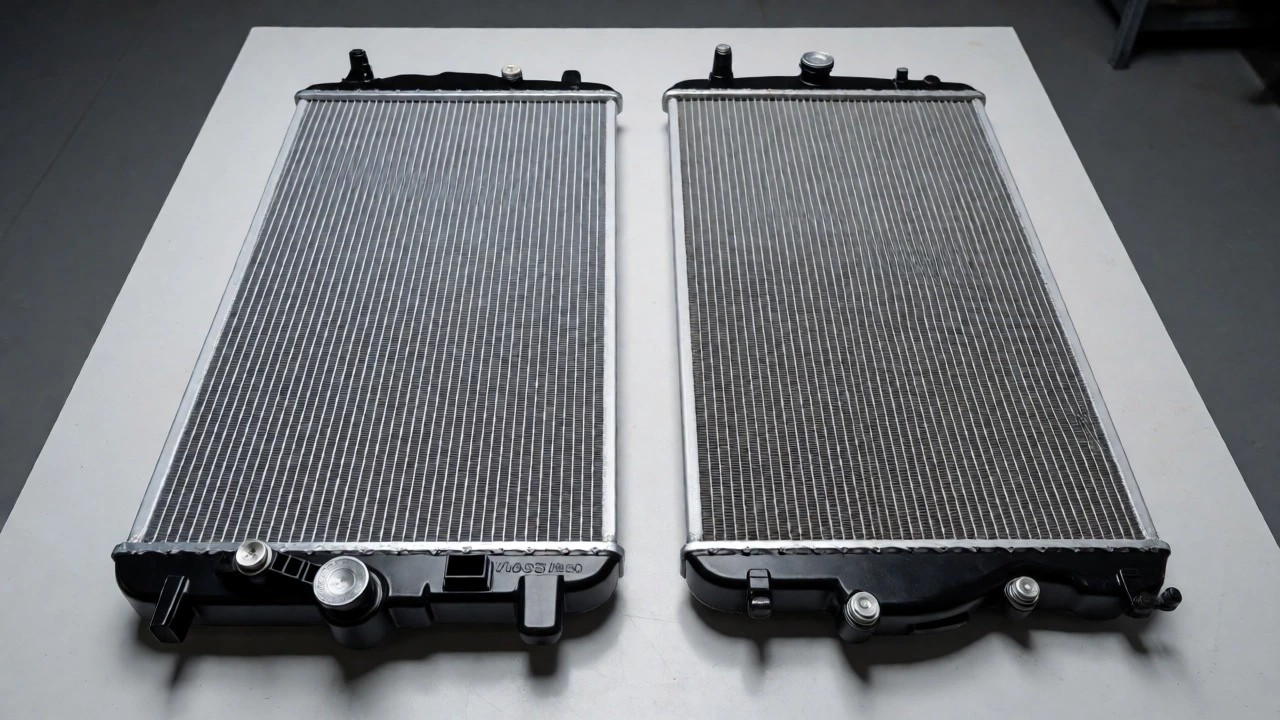
When you walk into a parts shop or look online, the first thing you notice is the massive spread in prices. Why does one radiator cost £50 and another £250? It comes down to two main factors: brand pedigree and construction quality. An OEM radiator is a part manufactured by the original supplier of the vehicle manufacturer, ensuring exact fit and material specifications usually carries a premium. Think Bosch, Valeo, or Denso. These companies often supply the actual parts that come out of the factory. If you drive a Volkswagen Golf, buying a Valeo radiator ensures the plastic tanks are molded to withstand the specific thermal expansion rates VW engineers designed for.
On the flip side, aftermarket radiators are third-party replacements that aim to match OEM performance at a lower cost, though quality can vary significantly between brands like Nissens or Febi Bilstein offer great value. They aren’t necessarily “cheap junk,” but they might use slightly thinner aluminum cores or different plastic compounds. For a daily commuter car with moderate mileage, these are often perfectly fine. However, if you live in a hot climate or tow heavy loads, skimping on the core density could lead to premature failure. I’ve seen cases where a £60 aftermarket radiator lasted three years, while a £180 OEM unit lasted ten. The math changes when you factor in labor costs for repeated replacements.
Labor Costs: The Hidden Half of the Bill
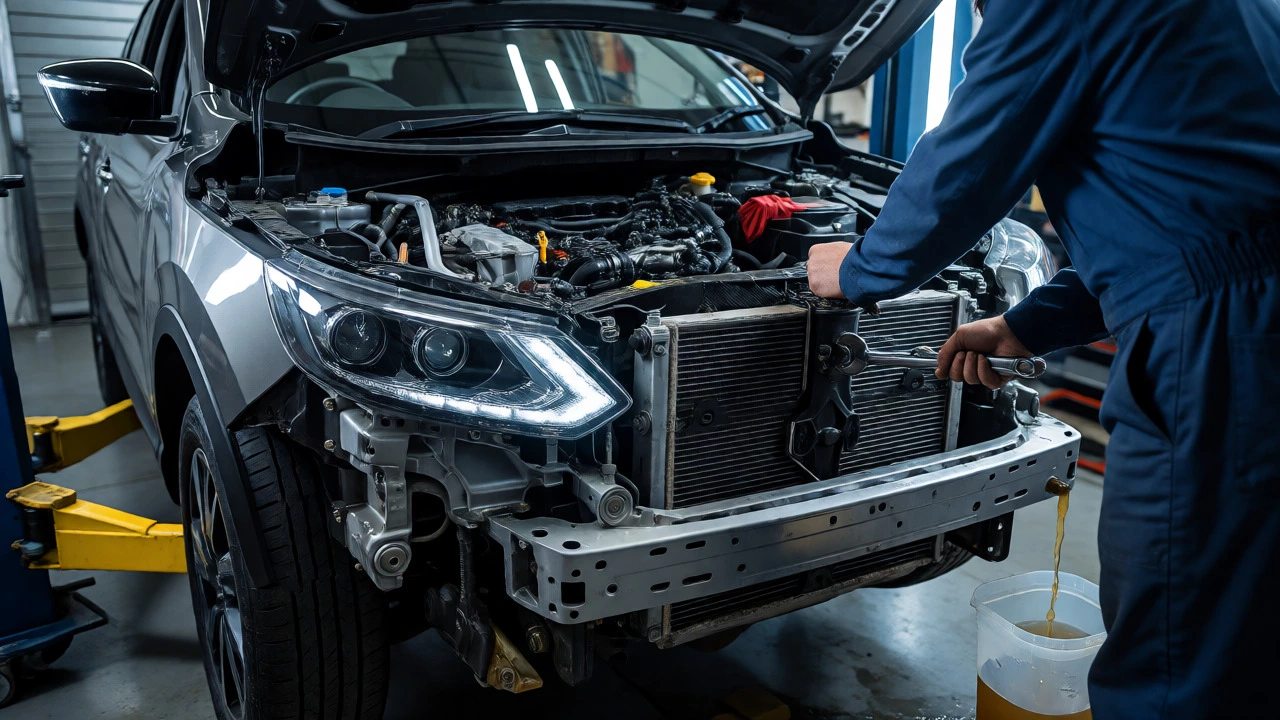
Buying the part is only half the battle. Replacing a radiator isn’t always a quick five-minute job. Labor rates in the UK have climbed steadily, averaging around £70-£90 per hour for independent garages, while franchised dealerships can charge upwards of £120 per hour. A straightforward swap on a common hatchback like a Vauxhall Corsa might take 1.5 hours. But try replacing a radiator on a transversely mounted engine in a tight engine bay, like some Nissan Qashqai models, and you’re looking at 3-4 hours of work because technicians have to remove the front bumper, headlights, and sometimes even the alternator to access the mounting bolts.
Here’s a rule of thumb: if the radiator is easily accessible behind the grille, expect lower labor costs. If it’s buried deep under the intake manifold or requires lifting the engine, prepare for a higher bill. Always ask your mechanic for a fixed-price quote rather than an hourly estimate if possible. Some shops will bundle the radiator flush and new coolant into the labor fee, which saves you from surprise add-ons later. Remember, old coolant degrades over time, so reusing it is a false economy. New coolant typically adds £20-£40 to the total, but it protects your water pump and heater matrix too.
Vehicle-Specific Pricing Trends
Your car’s age and complexity dictate the price tag more than anything else. Let’s break it down by segment to give you realistic expectations for late 2026.
| Vehicle Segment | Example Models | Part Cost (Aftermarket) | Part Cost (OEM) | Total Est. Cost (Inc. Labor) |
|---|---|---|---|---|
| Economy / Small | Ford Fiesta, Toyota Aygo | £45 - £70 | £90 - £120 | £180 - £250 |
| Family Hatchback | VW Golf, Ford Focus | £60 - £90 | £120 - £160 | £250 - £350 |
| SUV / Crossover | Nissan Qashqai, Kia Sportage | £80 - £120 | £150 - £220 | £350 - £500 |
| Premium / Luxury | BMW 3 Series, Audi A4 | £100 - £150 | £200 - £350 | £450 - £700+ |
| High-Performance | Subaru WRX, Ford Mustang | £150 - £250 | £300 - £500 | £600 - £900+ |
Notice how the gap widens as you move up the market. Premium cars often feature complex cooling systems with multiple radiators (engine, transmission, oil cooler). Replacing one might require bleeding air from several circuits, adding time and expertise to the job. Also, newer cars frequently use plastic end-tanks that crack due to age-related brittleness, not just impact damage. If your car is over seven years old, inspect the hoses and clamps while you’re at it; replacing them simultaneously prevents future leaks that could ruin your new radiator investment.
DIY vs. Professional Installation: Is It Worth Saving?
Can you save money by doing it yourself? Absolutely. If you have decent mechanical skills, tools, and space to work, you can cut the bill nearly in half. The process involves draining the coolant, disconnecting upper and lower hoses, unbolting the radiator mounts, and lifting it out. Refitting is the reverse, plus refilling and bleeding the system. However, mistakes here are costly. Cross-threading a bolt on the water pump housing or failing to properly bleed air pockets can cause overheating within minutes, potentially warping the cylinder head. That repair could cost thousands, dwarfing the savings on labor.
If you attempt DIY, buy a quality coolant mixture-never use plain tap water, especially in hard-water areas like Manchester. Limescale deposits clog radiator fins internally, reducing efficiency. Also, check if your vehicle uses special coolant types (like G12++ for VW/Audi or LL-04 for Mercedes). Mixing incompatible fluids causes gel formation that blocks flow. For most people, paying a professional £100-£200 extra for peace of mind is worth avoiding the risk of a blown gasket.
Signs You Need a Replacement Now
Don’t wait until steam pours from the bonnet. Catching issues early keeps costs down. Common symptoms include sweet-smelling coolant puddles under the car, discolored coolant (rusty brown instead of bright green or pink), and fluctuating temperature gauges. Visual inspection helps too: look for bent fins blocking airflow or white crusty residue around tank joints indicating slow leaks. If you spot cracks in the plastic tanks, replace immediately. Temporary fixes like radiator sealants are band-aids, not cures; they often clog heater cores, leading to no heat inside the cabin during winter-a miserable experience in a British November.
How to Save Money Without Sacrificing Quality
You don’t always need the cheapest option or the most expensive one. Here’s how to balance budget and reliability:
- Check for remanufactured units: Sometimes available for rare or older models, these are cleaned and tested originals. Ensure they come with a warranty.
- Buy from reputable online suppliers: Sites like Autodoc or Euro Car Parts often have sales. Compare prices across three platforms before ordering.
- Bundle services: Ask your garage if they’ll discount the radiator if you also book a service or brake replacement at the same time.
- Avoid “universal” radiators unless necessary: Custom-fit direct replacements ensure proper alignment and sealing, preventing leaks that universal kits might suffer from.
Finally, keep records. If you buy an aftermarket part, store the receipt. Most good brands offer 2-3 year warranties. If it fails prematurely, you won’t pay double for labor again.
How long does a car radiator last?
Most car radiators last between 8 to 10 years or 100,000 miles. However, harsh conditions, poor maintenance, or using incorrect coolant can reduce this lifespan to 5 years. Plastic end-tanks are often the first component to fail due to heat cycling and UV exposure.
Is it safe to drive with a leaking radiator?
It depends on the leak size. A minor seep might allow you to drive short distances with frequent checks, but a significant leak risks rapid overheating. Driving with low coolant can warp the cylinder head or seize the engine, turning a £200 repair into a £2,000+ disaster. Towing is safer if the level drops quickly.
Why are OEM radiators more expensive?
OEM radiators guarantee exact dimensional fit, material compatibility, and performance standards set by the vehicle manufacturer. They undergo rigorous testing for vibration resistance and thermal shock. Aftermarket parts may use cheaper materials to meet price points, potentially affecting longevity and efficiency.
Do I need to change the thermostat when replacing the radiator?
Not strictly necessary, but highly recommended. Since the cooling system is already drained and open, replacing the thermostat (£15-£30) prevents future failures. A stuck thermostat can mimic radiator problems, causing overheating even with a new radiator.
Can I use water instead of coolant?
Only in emergencies. Water boils at 100°C and freezes at 0°C, whereas coolant raises the boiling point and lowers the freezing point. Water also lacks anti-corrosion additives, leading to internal rust and scale buildup. Always mix distilled water with concentrated coolant (usually 50/50) for proper protection.