Stage 4 Clutch Recommendation Tool
Imagine flooring the accelerator in your modified car, only to have the clutch slip immediately. The engine screams, but the wheels barely spin. It’s frustrating, expensive, and dangerous if it happens on a track or during a hard launch. This is exactly why enthusiasts look beyond standard OEM clutches. But when you start looking at aftermarket options, you hit a wall of jargon: Stage 1, Stage 2, Stage 3... and then there's the beast known as a stage 4 clutch. What actually makes it different? Is it just marketing hype, or does it offer genuine benefits for high-performance builds?
A stage 4 clutch isn't just a slightly stronger version of your stock part. It represents the upper echelon of street-legal and entry-level race clutch technology. It is designed for vehicles that produce significant amounts of torque-often exceeding 500 lb-ft-and are driven aggressively. Understanding what goes into these components helps you decide if you need this level of hardware or if you're over-engineering your build.
The Anatomy of a Stage 4 Clutch Kit
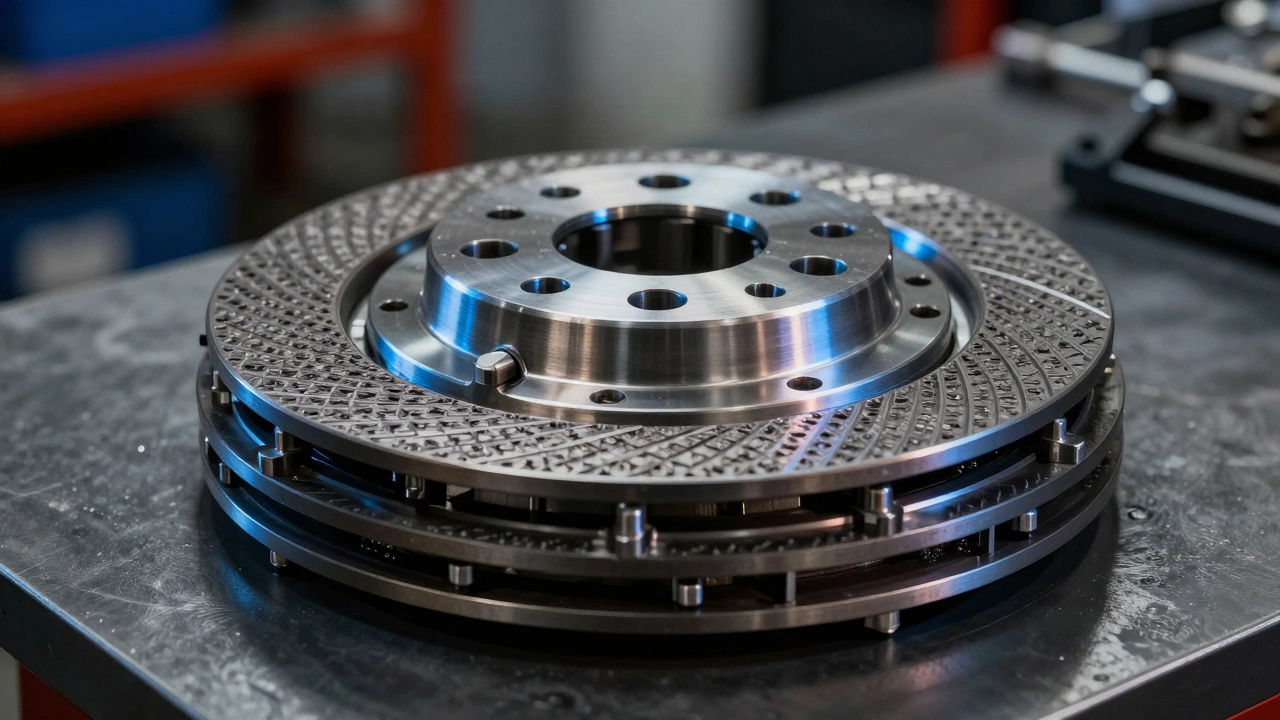
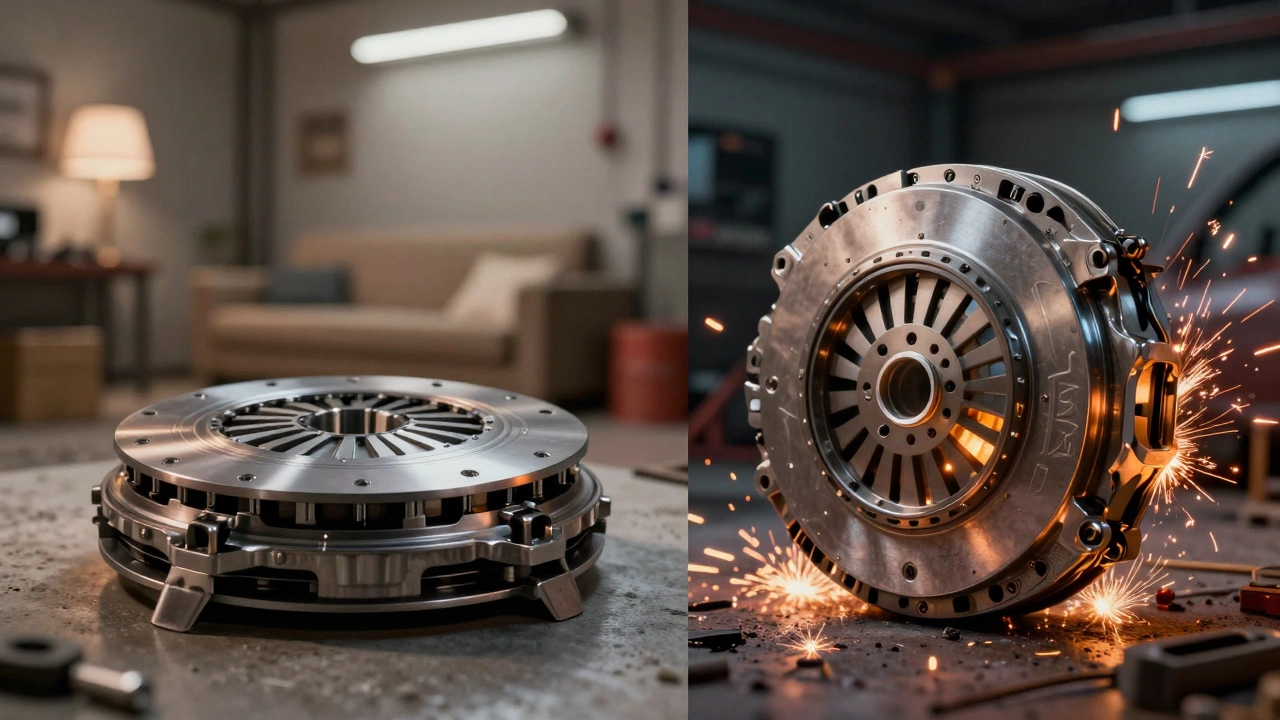
To understand why a stage 4 clutch commands a premium price, we need to look under the hood-or rather, inside the bell housing. A standard clutch consists of a pressure plate, a friction disc, and a release bearing. A stage 4 kit upgrades every single one of these components using materials and designs meant to withstand extreme heat and force.
Think of it like brakes. If you want to stop a heavy truck faster, you don't just use bigger brake pads; you might add more calipers or rotors. Similarly, adding extra discs increases the mechanical advantage. Most stage 4 kits are dual-disc setups, though some extreme applications use triple discs. This design requires a deeper bell housing and often a specific slave cylinder length, so compatibility is not universal.
The friction material itself changes dramatically. Stock clutches use organic compounds that feel smooth but burn up under heat. Stage 4 clutches typically use sintered metal or ceramic-based materials. These materials have a much higher coefficient of friction and can operate at temperatures where organic materials would disintegrate. However, this comes with a trade-off: engagement is less forgiving. We'll talk about that later.
When Do You Actually Need a Stage 4 Clutch?
Not every modified car needs a stage 4 clutch. In fact, installing one on a mildly tuned vehicle is usually a mistake. It will make your daily commute miserable. So, who is this product for? Let's break down the typical scenarios where a stage 4 clutch becomes necessary.
- High-Torque Forced Induction: If you have a turbocharged or supercharged engine producing over 500 lb-ft of torque, a single-disc clutch will likely fail prematurely. A stage 4 clutch handles the surge of power from boost lag to peak output without slipping.
- Track Days and Racing: Frequent launches, heel-toe downshifts, and sustained high RPMs generate immense heat. A stage 4 clutch dissipates this heat better than lower-stage options due to its mass and material composition.
- Heavy Vehicles: Large SUVs or trucks with diesel engines often produce massive low-end torque. Even without modifications, the sheer weight and torque output may require a multi-disc setup to prevent wear.
- Drift Cars: Drifting involves constant clutch usage and half-clutch techniques. A stage 4 clutch offers the durability needed to withstand this abuse, although dedicated drift clutches exist as well.
If you drive a naturally aspirated engine with mild cam upgrades and a tune, a stage 2 or 3 clutch is probably sufficient. Jumping straight to stage 4 is unnecessary expense and discomfort.

Performance vs. Daily Driveability
Here is the hard truth about stage 4 clutches: they are not comfortable. When you buy into this level of performance, you are trading comfort for capability. The engagement point is sharp, and the bite is aggressive. In a stock car, you might be able to creep forward slowly in traffic. With a stage 4 clutch, creeping is difficult. You either engage the clutch fully and move, or you stall the engine.
This "on/off" characteristic is intentional. It ensures that when you do engage the clutch, power transfer is immediate and complete. There is no slippage, no gradual buildup. For a driver used to a soft, organic clutch, the transition period can last several weeks. You learn to modulate the pedal with precision rather than relying on the clutch's forgiveness.
Noise is another factor. Sintered metal discs can be noisy when spinning freely, especially in cold weather. You might hear a rattling sound when the clutch is disengaged. This is normal and not a sign of failure. Once engaged, the noise disappears. Some manufacturers offer quieter alternatives, but they often sacrifice a small amount of durability.
Heat management is also critical. While stage 4 clutches handle heat better than stock units, they still generate significant thermal energy. If you ride the clutch or leave your foot resting on the pedal, you will cook the bearings and warp the flywheel. Proper driving technique is essential for longevity.
Installation Considerations and Compatibility
Installing a stage 4 clutch is not a simple bolt-on job. Because of the multi-disc design, the assembly takes up more space. This means you often need a modified flywheel. Standard flywheels are too thin to accommodate the additional discs. You will likely need a lightweight, machined flywheel specifically designed for your stage 4 kit.
The hydraulic system may also need attention. Multi-disc clutches require more force to disengage. Your stock master and slave cylinders might not provide enough travel or pressure. Upgrading to a short-throw shifter or a larger-bore master cylinder can help improve pedal feel and ensure full disengagement.
Labor costs are higher than a standard clutch replacement. Removing the transmission, replacing the flywheel, installing the new clutch, and reassembling everything takes time. Many shops charge premium rates for performance clutch jobs because they require precision alignment. Misalignment by even a few millimeters can cause vibration and premature wear.
| Feature | Stage 1 | Stage 2 | Stage 3 | Stage 4 |
|---|---|---|---|---|
| Disc Count | Single | Single | Single/Dual | Dual/Triple |
| Material | Organic | Semi-Metallic | Ceramic/Sintered | Sintered Metal/Ceramic |
| Torque Capacity | +10-15% | +25-35% | +40-60% | +75%+ |
| Daily Usability | Excellent | Good | Fair | Poor |
| Price Range | $200-$400 | $400-$700 | $700-$1,200 | $1,200-$2,500+ |
Maintenance and Longevity Tips
Once you install a stage 4 clutch, maintenance habits become crucial. These clutches are durable, but they are not indestructible. Here are some practical tips to extend their life.
- Avoid Riding the Clutch: Never rest your foot on the pedal while driving. Even slight pressure causes slippage, generating heat that degrades the friction material.
- Use Proper Launch Techniques: High-RPM launches put immense stress on the drivetrain. Find the optimal launch point for your car and stick to it. Avoid burning out the clutch repeatedly.
- Check Fluid Levels: Hydraulic fluid absorbs moisture over time, leading to corrosion and reduced performance. Flush and replace clutch fluid annually, especially if you track your car.
- Monitor Engagement Point: If the engagement point rises significantly or feels spongy, check for air in the lines or wear on the release bearing.
- Break-In Period: Follow the manufacturer's break-in procedure. Usually, this involves avoiding hard launches and full-throttle shifts for the first 100-200 miles. This allows the friction material to bed properly against the flywheel.
Ignoring these basics can turn a $2,000 investment into a $500 repair bill within months. Treat your stage 4 clutch with respect, and it will reward you with reliable performance for years.
Alternatives to Consider
Before committing to a stage 4 clutch, consider if other solutions might meet your needs. For example, a sequential gearbox offers lightning-fast shifts and eliminates the clutch pedal entirely, though it is expensive and complex. A dog-ring gearbox provides robustness for racing but requires skill to operate. For street cars, a high-quality stage 3 clutch might offer the best balance of performance and usability.
Another option is upgrading your engine management. Sometimes, tuning the ECU to reduce torque spikes or smoothing out power delivery can allow a lower-stage clutch to survive longer. It’s not always about brute force; sometimes, finesse wins.
Is a stage 4 clutch street legal?
Yes, most stage 4 clutches are street legal. They are designed to pass emissions and safety inspections in most regions. However, their harsh engagement may make them unsuitable for daily commuting in heavy traffic. Check local regulations regarding vehicle modifications, especially if you plan to insure the car for track use.
How long does a stage 4 clutch last?
Lifespan varies based on driving style and application. In a street-driven high-torque car, a stage 4 clutch can last 30,000-50,000 miles. On a track car, it might last only 10-20 track days. Regular maintenance and proper driving technique significantly extend lifespan.
Can I install a stage 4 clutch myself?
Technically, yes, but it is challenging. It requires removing the transmission, machining or replacing the flywheel, and precise alignment. Without proper tools and experience, you risk damaging the transmission or causing premature clutch failure. Professional installation is recommended for most enthusiasts.
Why is my stage 4 clutch noisy?
Noise is common with sintered metal or ceramic discs. The materials vibrate when spinning freely, creating a rattling sound. This is normal and harmless. If the noise persists after engagement or is accompanied by grinding, inspect the release bearing and pilot bushing for wear.
Do I need a new flywheel for a stage 4 clutch?
Almost certainly. Multi-disc clutches require more space than single-disc setups. Your stock flywheel is likely too thin. Manufacturers usually specify a compatible flywheel model. Using an incompatible flywheel can lead to improper clearance and catastrophic failure.