Suspension Noise Diagnostic Tool
Select the sound you hear and when it happens to identify the likely cause.
Worn Shock Absorbers
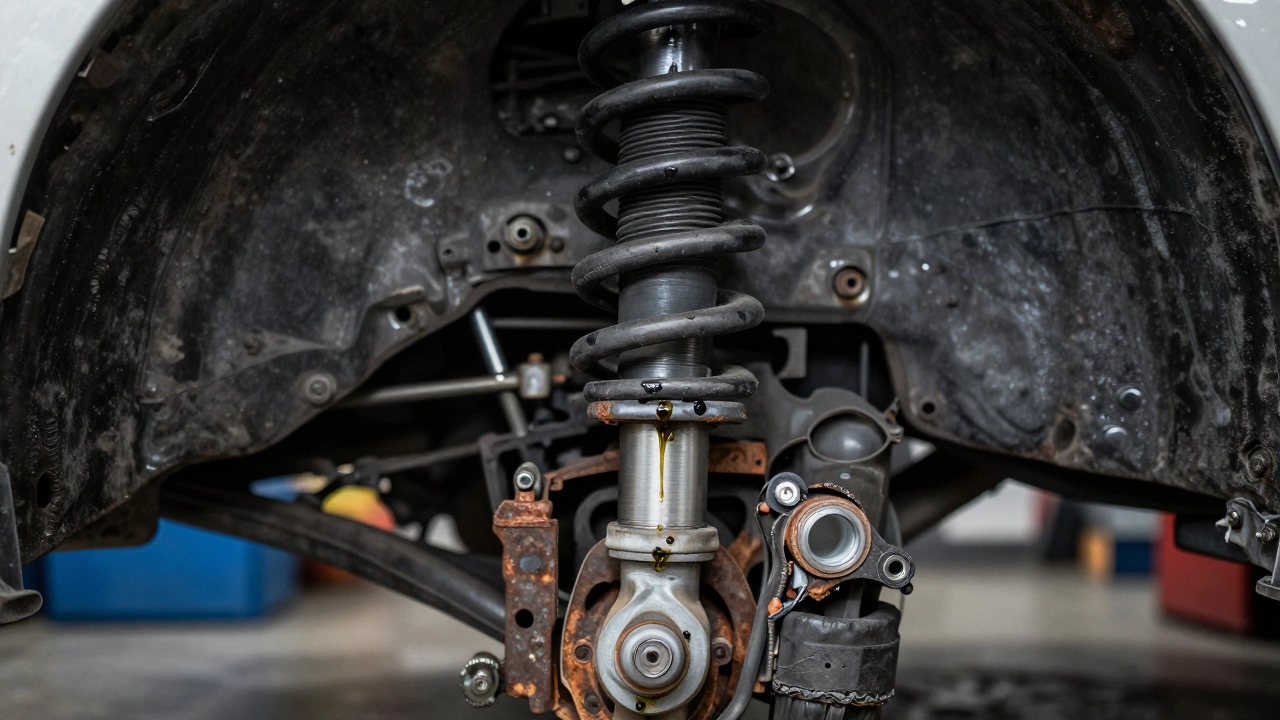
High RiskThe hydraulic fluid inside has likely lost its damping ability due to air bubbles or seal failure.
Diagnostic Checklist:
- Push down firmly on one corner of the car; if it bounces more than twice, the shock is dead.
- Check for oil leaking around the shock body (indicates seal failure).
- Notice if the car feels unstable or bouncy during emergency stops.
You pull up to a stoplight, tap the brakes, and hear a loud clunk from underneath your car. It’s not the engine, and it’s definitely not the exhaust. Your heart skips a beat because you know that sound means something is wrong with your suspension system, which is the network of springs, shocks, and struts that connects your wheels to the chassis. Identifying what bad suspension sounds like early can save you thousands in repairs and keep you safe on the road.
We often ignore these noises until they become unbearable. But every creak, bang, or rattle tells a specific story about which part has failed. In this guide, we’ll break down exactly what failing components sound like so you can diagnose the issue before it turns into a catastrophic failure.
The Loud Clunk: Shock Absorbers and Strut Assemblies
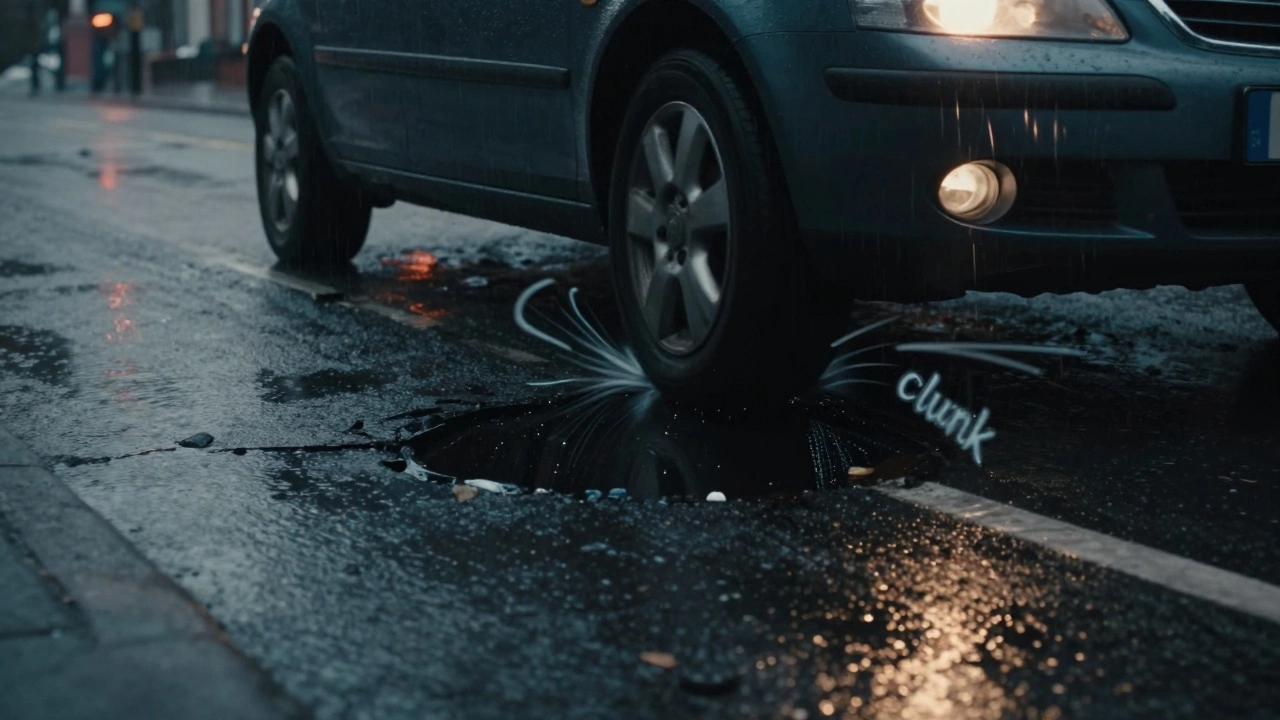
If you hear a distinct clunking noise when going over speed bumps or driving on uneven roads, your shock absorbers are likely dampers that control the movement of your vehicle's springs. This is the most common sign of worn-out suspension parts.
Shock absorbers work by compressing hydraulic fluid to slow down the bounce of your springs. When the internal seals wear out, air gets into the fluid, creating bubbles. These bubbles cause the shocks to lose their damping ability. The result? Your car bounces excessively, and the metal components inside the assembly hit each other with force.
- The Test: Push down firmly on one corner of your car and let go. If the car bounces more than twice, your shocks are dead.
- The Cause: Worn bushings or collapsed internal valves allow too much travel in the strut assembly.
- The Risk: Continued driving can damage your wheel bearings, tie rods, and even bend your rim if you hit a deep pothole.
This noise usually comes from the rear axle if you have separate shocks, or from the front corners if you use strut assemblies. Ignoring this clunk leads to a harsh ride and reduced tire contact with the road, increasing your stopping distance.
Squeaking and Creaking: Control Arm Bushings
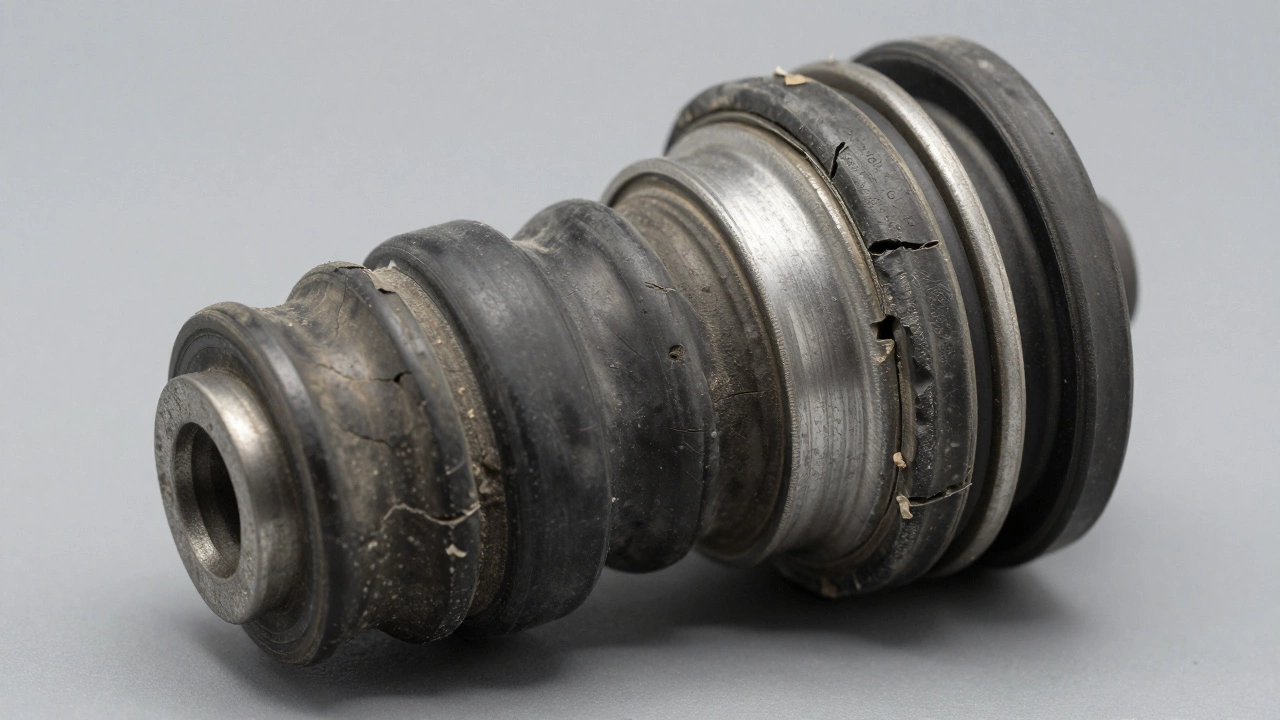
A high-pitched squeak or rubbery creak when turning or going over small bumps points to your control arm bushings, which are rubber cushions that isolate the control arms from the vehicle frame. These bushings absorb vibration and allow the wheels to move up and down smoothly.
Over time, the rubber dries out, cracks, and hardens. When dry rubber rubs against metal during suspension articulation, it creates that annoying squeak. You might notice this sound specifically when turning left or right at low speeds.
| Noise Type | Likely Component | When It Happens |
|---|---|---|
| Clunking | Shocks/Struts | Over bumps, braking |
| Squeaking | Bushings | Turning, small bumps |
| Rattling | Stabilizer Bar Links | Rough roads, side-to-side motion |
| Grinding | Wheel Bearings | Constant, increases with speed |
While squeaky bushings aren’t an immediate safety hazard, they indicate that the suspension geometry is shifting. This leads to uneven tire wear and poor handling. Replacing bushings is cheaper than replacing entire control arms, so catch it early.
Rattling and Banging: Stabilizer Bar Links
If you hear a metallic rattle or bang coming from the front or rear of your car when driving over rough surfaces, check your stabilizer bar links, also known as sway bar links, which connect the anti-roll bar to the suspension control arms. These links reduce body roll during cornering.
The ball joints on these links wear out quickly due to constant twisting forces. Once the play becomes excessive, the link hits against surrounding components, creating a loose, rattling sound. This noise is often mistaken for a loose heat shield or exhaust hanger, but it will only happen when the suspension is moving vertically.
To confirm this, a mechanic can wiggle the link while you drive over a bump. If the noise stops after tightening or replacing the link, you’ve found the culprit. These parts are inexpensive and easy to replace, making them a quick fix for noisy suspensions.
Humming and Grinding: Wheel Bearings (Related Issue)
While not strictly a suspension component, wheel bearings support the weight of the vehicle and allow the wheels to rotate smoothly. Bad suspension puts extra stress on bearings, causing them to fail prematurely.
A failing bearing creates a humming, growling, or grinding noise that increases with speed. Unlike suspension noises, this sound doesn’t change significantly when going over bumps-it changes when you turn. If the noise gets louder when turning left, the right bearing is bad. If it gets louder when turning right, the left bearing is at fault.
Ignoring a bad wheel bearing can lead to the wheel seizing while driving, which is extremely dangerous. Always inspect bearings when replacing suspension parts.
How to Diagnose Suspension Noise Yourself
You don’t need to be a mechanic to identify basic suspension issues. Here’s a simple checklist to help you pinpoint the problem:
- Listen carefully: Note whether the noise happens during braking, acceleration, turning, or just riding over bumps.
- Visual inspection: Look under your car for leaking oil around the shocks or struts. Wetness indicates seal failure.
- Check tire wear: Uneven tread wear suggests alignment issues caused by worn bushings or ball joints.
- The bounce test: Press down on each corner of the car. Excessive bouncing confirms weak shocks.
- Feel the steering: Vibration in the steering wheel at high speeds often points to wheel bearings or unbalanced tires.
If you’re unsure, take your car to a trusted mechanic. Early detection prevents minor issues from becoming major expenses.
Why Ignoring Suspension Noises Is Dangerous
Many drivers think suspension noise is just an annoyance. In reality, it’s a warning sign. A compromised suspension system affects three critical areas: safety, comfort, and cost.
First, safety. Worn shocks increase stopping distances by up to 20% on wet roads. They also reduce tire grip during emergency maneuvers, raising the risk of skidding or rolling over. Second, comfort. A noisy suspension means a harsh ride, leading to driver fatigue on long trips. Third, cost. Failing suspension parts put extra strain on tires, brakes, and drivetrain components. Replacing all these together costs far more than addressing the suspension alone.
In Manchester, where rainy weather and potholes are common, maintaining your suspension is especially important. Wet roads amplify the dangers of poor traction, and damaged roads accelerate wear on already weakened parts.
When to Replace vs. Repair
Some suspension components can be repaired, such as replacing individual bushings or sway bar links. Others, like strut assemblies, are usually replaced as a unit. Modern struts come pre-assembled with mounts, dust boots, and bump stops, saving labor time and ensuring reliability.
As a rule of thumb:
- Replace shocks/struts every 50,000-70,000 miles or if they leak oil.
- Inspect bushings annually; replace if cracked or hardened.
- Check sway bar links whenever you hear rattling; they’re cheap and easy to swap.
- Align your wheels after any suspension repair to prevent uneven tire wear.
Don’t wait for total failure. Proactive maintenance keeps your car running smoothly and safely.
What does bad suspension sound like when going over bumps?
Bad suspension typically makes a loud clunking or banging noise when going over bumps. This is usually caused by worn shock absorbers or strut mounts allowing excessive movement in the suspension assembly.
Is it safe to drive with noisy suspension?
It’s not recommended. Noisy suspension indicates component wear, which reduces vehicle stability, increases stopping distances, and can lead to further damage to tires, brakes, and wheel bearings.
How much does it cost to fix bad suspension noise?
Costs vary widely. Replacing sway bar links may cost £50-£150, while new strut assemblies can run £300-£600 per pair including labor. Early diagnosis helps avoid expensive secondary repairs.
Can I diagnose suspension problems myself?
Yes, you can perform basic checks like visual inspections for oil leaks, checking tire wear patterns, and doing the bounce test. However, professional diagnosis ensures accurate identification of internal wear.
What causes squeaking noises in the suspension?
Squeaking is usually caused by dried-out or cracked control arm bushings. The rubber loses its flexibility and rubs against metal parts during suspension movement, creating friction noise.
Should I replace shocks one at a time or in pairs?
Always replace shocks or struts in pairs (both front or both rear). Mismatched damping levels cause uneven handling and can make the vehicle pull to one side during braking or cornering.