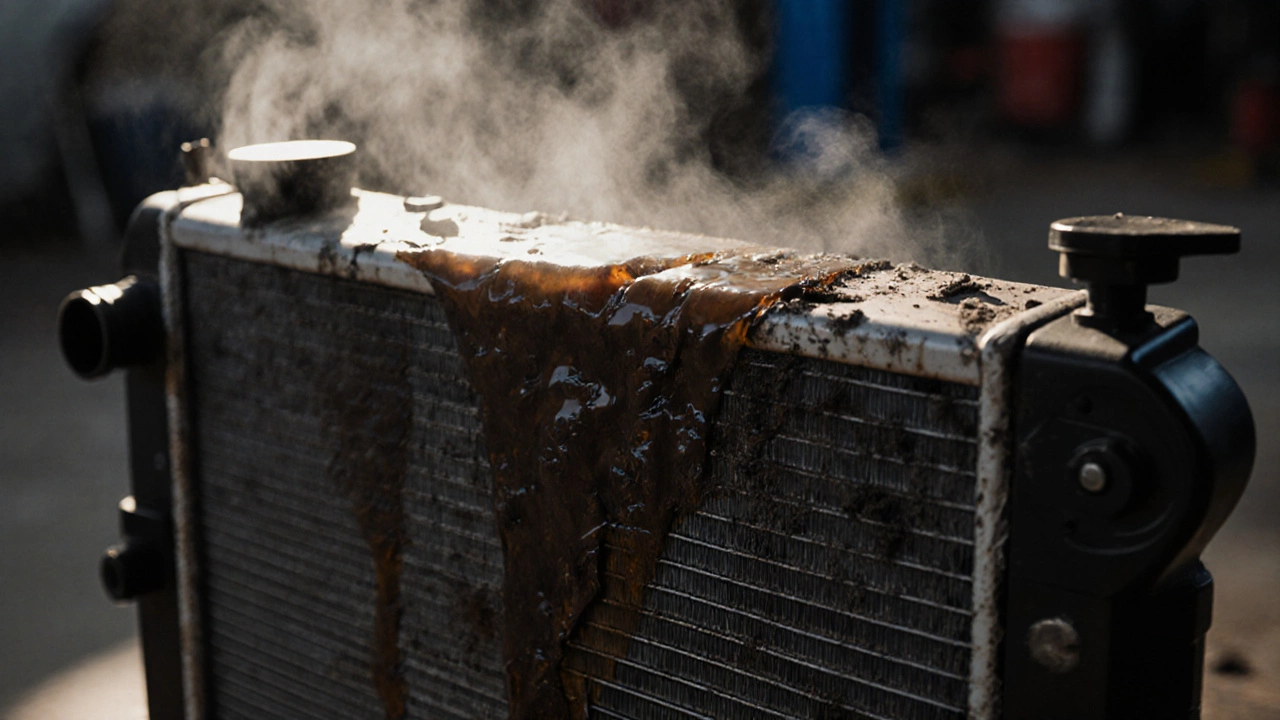
How Long Does a Radiator Last? What You Need to Know
When it comes to keeping your engine from overheating, the radiator, a core part of your car’s cooling system that transfers heat from engine coolant to the air. It’s not something you think about until it fails—and when it does, you’re stranded. Most radiators last between 8 and 12 years, or around 100,000 to 150,000 miles, but that’s only if you keep up with basic maintenance. In the UK, where stop-start traffic, damp roads, and salted winter streets are the norm, many radiators start showing wear by 80,000 miles.
The cooling system, the network of hoses, thermostat, water pump, and radiator that circulates coolant to regulate engine temperature is only as strong as its weakest link. A clogged radiator, leaking hose, or failing water pump can all push the radiator past its limit. You don’t need to replace the radiator just because it’s old—but if you’re seeing coolant leaks, rust inside the tank, or the engine runs hotter than usual, it’s time to pay attention. Many drivers mistake radiator problems for overheating caused by low coolant or a bad thermostat. But if you’ve topped up the coolant and the problem keeps coming back, the radiator itself is likely the issue.
Coolant, the fluid that flows through the radiator and engine to absorb and carry away heat is just as important as the radiator. Old, dirty, or wrong-type coolant turns acidic and eats away at metal and rubber parts inside the system. Most manufacturers recommend a coolant flush every 30,000 to 50,000 miles. Skip it, and you’re speeding up radiator corrosion. Even a small leak from a cracked tank or loose hose can lead to big trouble fast—especially in cold weather when the coolant freezes and expands.
There’s no magic number for when your radiator will die, but there are clear signs you can spot yourself. Look for puddles under your car after parking, especially green, orange, or pink fluid. Check the radiator cap for cracks or stiffness—it should seal tightly. Listen for gurgling sounds when the engine is hot. Watch the temperature gauge. If it creeps into the red zone even after the engine has warmed up, something’s wrong. And if you notice a sweet, syrupy smell inside the cabin, that’s coolant leaking into the heater core, which often means the radiator’s under pressure and failing.
It’s not just about the radiator alone. The thermostat, a valve that controls coolant flow based on engine temperature can stick closed and cause the radiator to work harder than it should. A bad water pump can stop coolant from moving, turning your radiator into a fancy paperweight. That’s why fixing radiator problems often means checking the whole cooling system—not just swapping the radiator and calling it done.
And yes, your air conditioning can be affected too. A clogged or leaking radiator can reduce airflow through the condenser, which sits right in front of it. That means your AC won’t cool as well, even if the compressor and refrigerant are fine. You’ll see this most in summer, when both systems are working at full load.
What you’ll find below are real, practical guides from UK drivers who’ve been there. How to spot a failing radiator before it leaves you stranded. What coolant to use in your car. How to test your radiator cap. When a simple flush saves you a £500 replacement. And why some people replace their radiator every 5 years—just to be safe. No fluff. No theory. Just what works on the road.