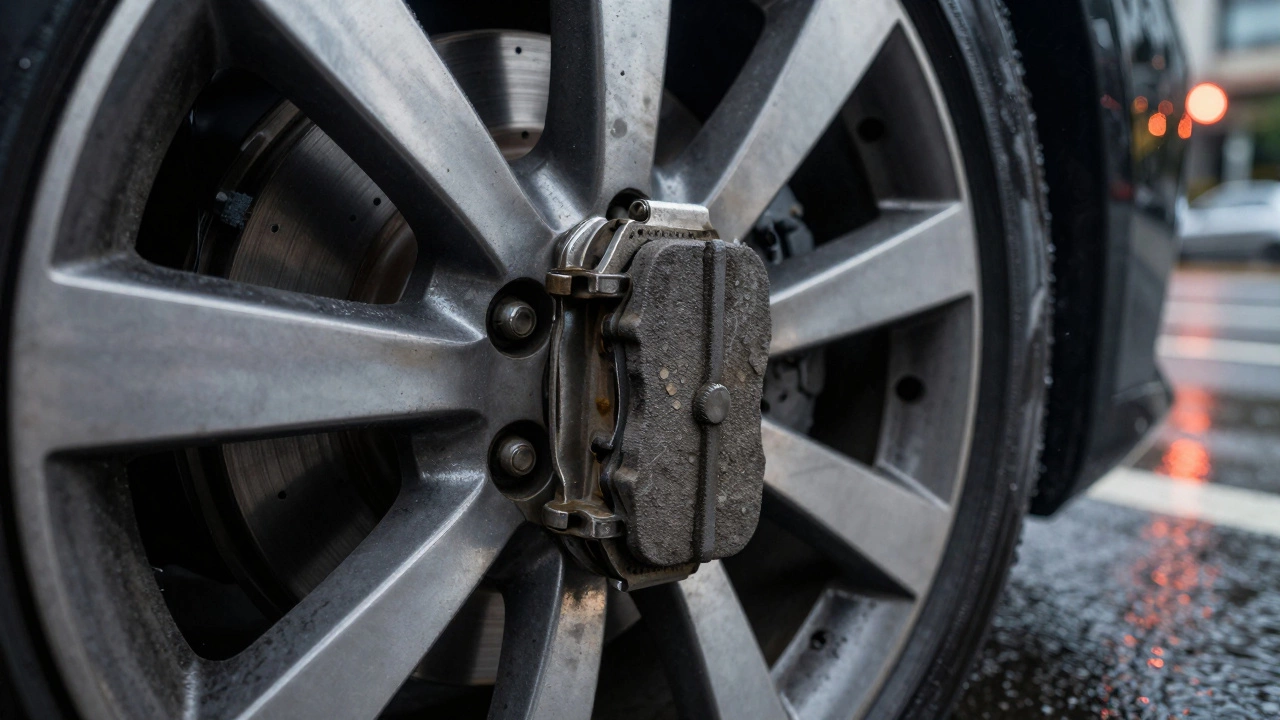
Brake Noise: What It Means and How to Fix It
When your car makes a high-pitched squeal or a deep grinding sound when you press the brake pedal, it’s not just noise—it’s a signal. Brake noise, an audible warning from your vehicle’s braking system that something is worn, misaligned, or failing. Also known as brake squeal, it’s one of the most common signs your brakes need attention. Ignoring it won’t make it go away. In fact, it often means you’re already past the point of a simple fix.
Most brake noise comes from brake pads, the friction material that presses against the rotor to stop your car. When they wear thin, metal wear indicators rub against the rotor, creating that sharp squeal. It’s designed to be loud—so you don’t wait until the pads are gone. But grinding? That’s worse. It usually means the pads are completely worn down and the metal backing plate is scraping the rotor, the spinning disc connected to your wheel that the pads clamp onto. Rotors can get scored, warped, or even cracked from this kind of abuse, and replacing them costs far more than replacing pads early.
Not all brake noise is from wear. A stuck caliper, the hydraulic component that squeezes the brake pads against the rotor can cause uneven wear and a persistent drag or clunk. Loose hardware, dust buildup, or even cheap aftermarket pads can cause noise too. But here’s the thing: if you hear it, you should check it. You don’t need to be a mechanic to spot the signs. Look under the wheel. If the pad material looks thinner than a quarter, it’s time. If the rotor looks grooved or blued, it’s damaged.
Brake noise doesn’t always mean you need a full replacement. Sometimes it’s just dirt, rust, or a loose shim. But if the sound is new, getting louder, or paired with vibration or longer stopping distances, you’re not just dealing with noise—you’re risking safety. The UK’s harsh weather and stop-start driving wear brakes faster than you think. Many drivers wait until the brake warning light comes on, but by then, damage is already done.
Below, you’ll find real-world guides that show you how to tell if your brake pads are done, what causes different types of brake sounds, whether you can replace them yourself, and how to avoid the most common mistakes that lead to premature wear. Whether you’re hearing a squeak after rain or a grind on the highway, there’s a post here that breaks it down plainly—no jargon, no fluff, just what you need to know to keep your car stopping safely.