
Car AC Symptom Checker
Select the symptoms you are experiencing to get a likely diagnosis.
Air Temperature
Compressor Behavior
Vent Pressure/Airflow
Quick Signs Your Refrigerant is Low
- Warm air from vents: The most obvious sign. If the air is cool but not cold, or completely room temperature, your refrigerant levels are likely dipping.
- Weak airflow: While a clogged cabin filter can cause this, low refrigerant sometimes prevents the system from cycling efficiently, making the air feel "thin."
- The AC compressor won't engage: You might hear a loud clicking sound or notice the engine RPMs don't dip slightly when you hit the AC button. This happens because modern cars have a low-pressure cutout switch to protect the compressor from running dry.
- Frequent cycling: If you hear the AC compressor kicking on and off every few seconds, it's often a sign that the pressure is too low to maintain a steady cycle.
- Strange noises: Hissing sounds coming from the dashboard when the AC is on often point to a leak in the evaporator core.
The Science of the Chill: How it Actually Works
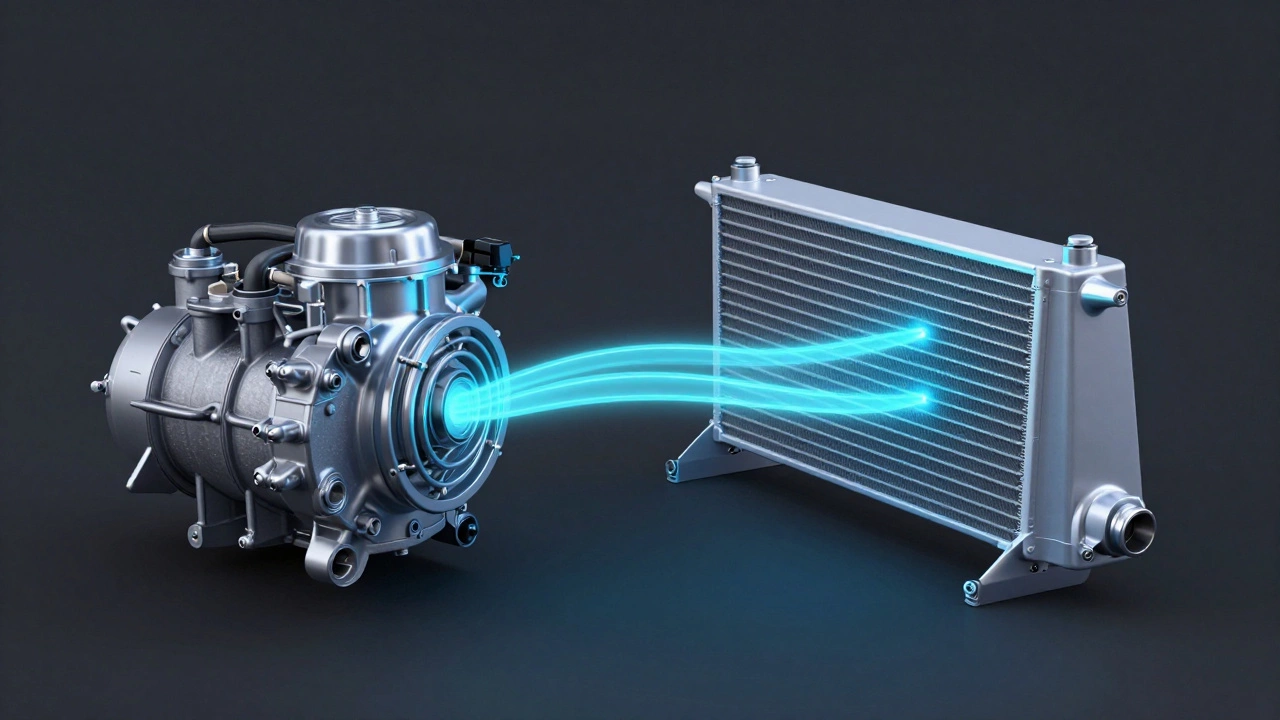
To understand why low refrigerant kills the cool, you have to look at the AC Compressor. This part is the heart of the system; it compresses the gas and pushes it through the Condenser (which looks like a small radiator at the front of your car). In the condenser, the gas turns into a liquid. Then, it hits the Expansion Valve, which drops the pressure rapidly, making the fluid freezing cold before it enters the evaporator.
If you are low on car AC recharge fluid, there isn't enough mass to carry the heat away. It's like trying to mop up a flood with a postage stamp; the tool is there, but there isn't enough of it to do the job. This is why you'll feel the air is "sort of" cool but never actually cold.
| Symptom | Low Refrigerant | Failed Compressor | Clogged Cabin Filter |
|---|---|---|---|
| Air Temperature | Warm/Lukewarm | Hot | Cold, but low flow |
| Compressor Noise | Rapid clicking/cycling | Loud grinding or silence | Normal |
| Vent Pressure | Normal to Low | Normal | Very Low |
| Visual Clues | Oil spots on hoses | Belt slippage/smoke | Dusty/Black filter |
How to Diagnose the Problem Yourself
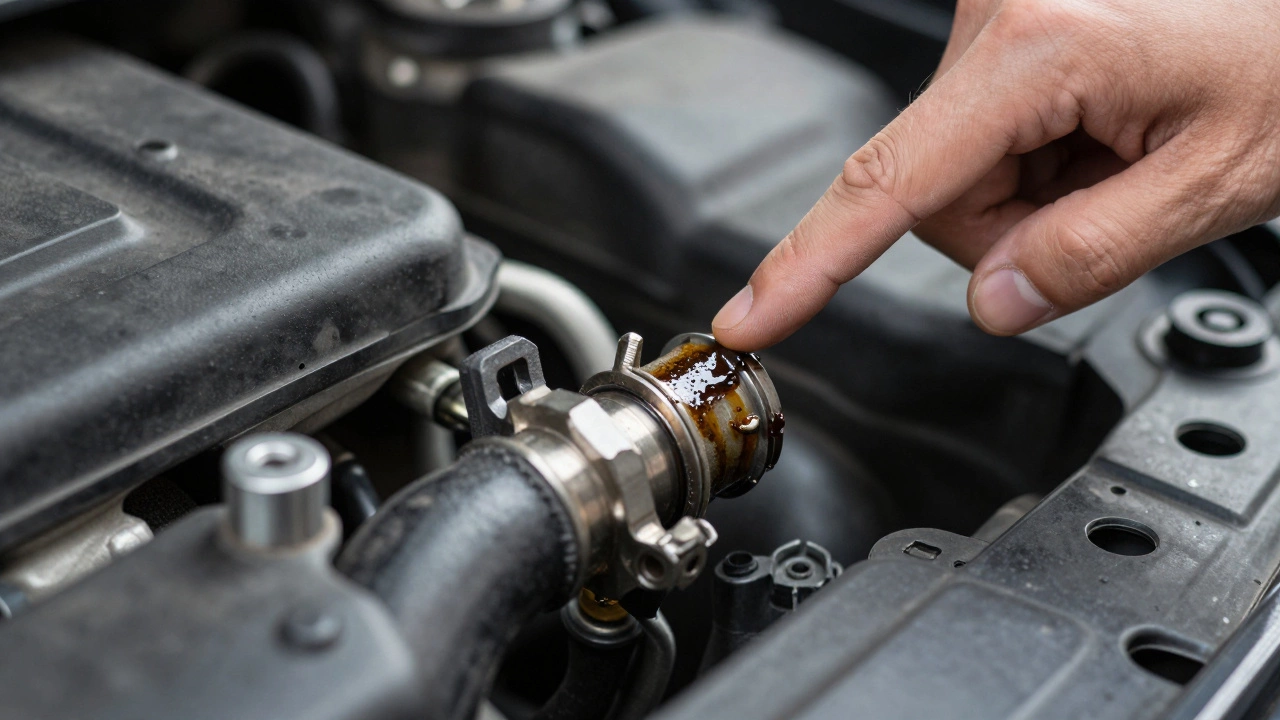
You don't necessarily need a professional gauge set to get a baseline idea of what's happening. Start by popping the hood and looking for "wet" spots. Refrigerant is mixed with a specific lubricating oil. If you see an oily residue on a hose or a fitting, that's almost always where the leak is located. Refrigerant is a gas at normal pressure, so it disappears instantly, but the oil stays behind.
Next, check your Serpentine Belt. If the belt is snapped or slipping, the compressor won't spin, and you'll get warm air regardless of how much Freon is in the system. Give the belt a press-it should be tight. If it's loose or frayed, your problem is mechanical, not chemical.
If you're feeling brave, you can buy a basic DIY pressure gauge from an auto parts store. These usually attach to the low-pressure port (the thinner pipe). If the needle sits in the "Low" or "Zero" zone while the AC is running, you've found your culprit. However, be careful: overfilling the system is just as bad as being low. Too much pressure can blow a seal or lock up the compressor entirely.
Common Leak Points: Where Does the Stuff Go?
Your AC system is a sealed loop. In a perfect world, you'd never need to add refrigerant. If it's low, it means you have a leak. The most common culprits include:
- O-Rings: These tiny rubber seals shrink over time or crack due to temperature swings. A $2 rubber ring can cause a $500 cooling failure.
- The Condenser: Since it sits at the very front of the car, it's prone to rock chips. A tiny pebble hitting the condenser at 60 mph can create a pinhole leak.
- The Evaporator Core: This is located deep inside the dashboard. When it leaks, you'll often smell a faint chemical scent inside the car, and you might see water dripping from the passenger side floorboards.
- Hose Rubbing: Vibrations from the engine can cause an AC hose to rub against a bracket until it wears through.
Fixing the Issue: Recharge or Repair?
Many people buy a can of refrigerant from a supermarket and spray it into the system. While this works for a few weeks, it's a temporary bandage. If there is a hole, the new gas will eventually leak out. More importantly, those DIY cans often lack the proper amount of lubricant, which can lead to premature compressor wear.
The professional way to handle this is a "vacuum and charge" process. A technician uses a vacuum pump to suck out all the air and moisture from the system. Moisture is the enemy of AC; it creates acid that eats the system from the inside. Once the system is vacuumed and leak-tested, they charge it with the exact weight of refrigerant specified by the manufacturer (usually listed on a sticker under the hood).
If the leak is significant, you'll need to replace the part. For example, replacing a Receiver Drier (the filter for your AC system) is standard practice whenever a system is opened to the air. If you don't replace the drier, any leftover moisture will likely cause the system to fail again within a year.
Can I just keep adding Freon every summer?
You can, but it's a bad idea. Every time you add refrigerant without vacuuming the system, you risk introducing air and moisture. This degrades the oil and can eventually lead to a total compressor failure, which is far more expensive than fixing a simple leak.
Why does my AC work sometimes but not others?
This is often a sign of a "borderline" refrigerant level. When the car is moving fast, the condenser gets more airflow, helping the system work better. When you're idling at a red light, the system struggles, and the air turns warm. This is a classic sign that you're slightly low on refrigerant.
Does a low AC charge affect my engine?
Indirectly, yes. If the system is extremely low, the compressor may cycle on and off rapidly, which can put unnecessary stress on your serpentine belt and battery. More importantly, you'll likely crank the fan to maximum to compensate, which puts a heavier load on the electrical system.
Is Freon dangerous if it leaks?
In small amounts, it's not immediately toxic to breathe, but it is a potent greenhouse gas. If you have a massive leak, avoid breathing the fumes in a closed garage. Also, never touch the high-pressure side of the AC system while it's running, as liquid refrigerant can cause instant freeze-burns on your skin.
How often should I check my AC levels?
Unlike oil, you don't "check" AC levels on a schedule. You check them when the performance drops. If your AC has worked perfectly for five years, don't touch it. The system is sealed; opening it up just to "see if it's full" is the quickest way to introduce contaminants.
Next Steps for Troubleshooting
If you've determined your refrigerant is low, your path depends on your budget and tools. For the budget-conscious, start by replacing your cabin air filter. It's a 5-minute job and often mimics the symptoms of low airflow. If that doesn't work, look for those oily spots on the hoses.
For those who want a permanent fix, take the car to a shop that uses an electronic leak detector. These tools can find a leak the size of a pinhead by "sniffing" the gas. This prevents the guesswork of replacing parts and ensures you aren't just paying to refill a system that will be empty again by next month.