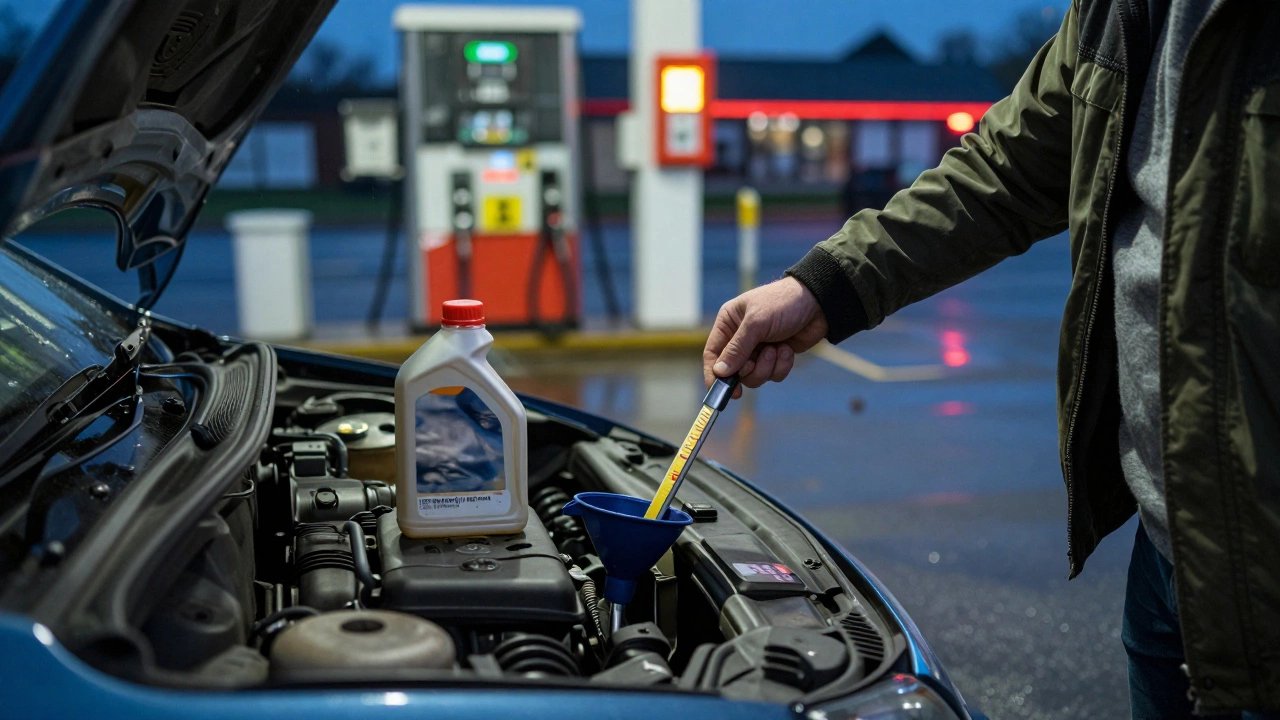
Most drivers don’t think about engine oil until the dashboard light flashes or the dipstick comes up dry. But topping up engine oil isn’t something you wait for-it’s a simple habit that keeps your engine alive. So how often should you actually top it up? The answer isn’t a fixed number of miles or months. It depends on your car, your driving, and the oil you’re using.
Normal oil consumption isn’t a problem
It’s not unusual for a car to use a little oil between changes. Modern engines, especially turbocharged ones, are designed to burn a small amount of oil as part of normal operation. A quart (about 950ml) every 1,000 to 1,500 miles is considered acceptable by most manufacturers, including Toyota, Ford, and Volkswagen. If your car uses less than that, you’re doing fine.
Older cars, especially those with over 100,000 miles, might burn a bit more. A 2010 Honda Civic with 120,000 miles might need a top-up every 800 miles. That doesn’t mean it’s broken-it just means the piston rings and valve seals have worn slightly. As long as the consumption stays steady and doesn’t suddenly jump, it’s normal.
Check your oil every time you fill up
The best way to know if you need to top up is to check it regularly. Make it part of your fuel stop routine. Pull over at a petrol station, turn off the engine, wait two minutes for the oil to settle, then pull the dipstick. Wipe it clean, reinsert it fully, then pull it out again.
Look for the minimum and maximum marks. If the oil is below the minimum, add half a quart. Wait a minute, then check again. Never overfill. Too much oil can cause foaming, which reduces lubrication and can damage your engine. If you’re adding more than a quart between oil changes, that’s a red flag.
Why some cars use more oil than others
Not all engines are the same. Turbocharged engines run hotter and under higher pressure, which increases oil consumption. Direct injection engines can also lead to carbon buildup on valves, which causes oil to seep past seals. European cars like BMWs and Audis often have tighter tolerances and higher-performance oils, which can mean slightly higher consumption rates.
Also, driving style matters. If you’re constantly accelerating hard, towing heavy loads, or driving long motorway stretches at high revs, your engine will burn more oil. City driving with lots of idling can cause oil to accumulate in the combustion chamber without fully burning off, leading to sludge buildup over time.
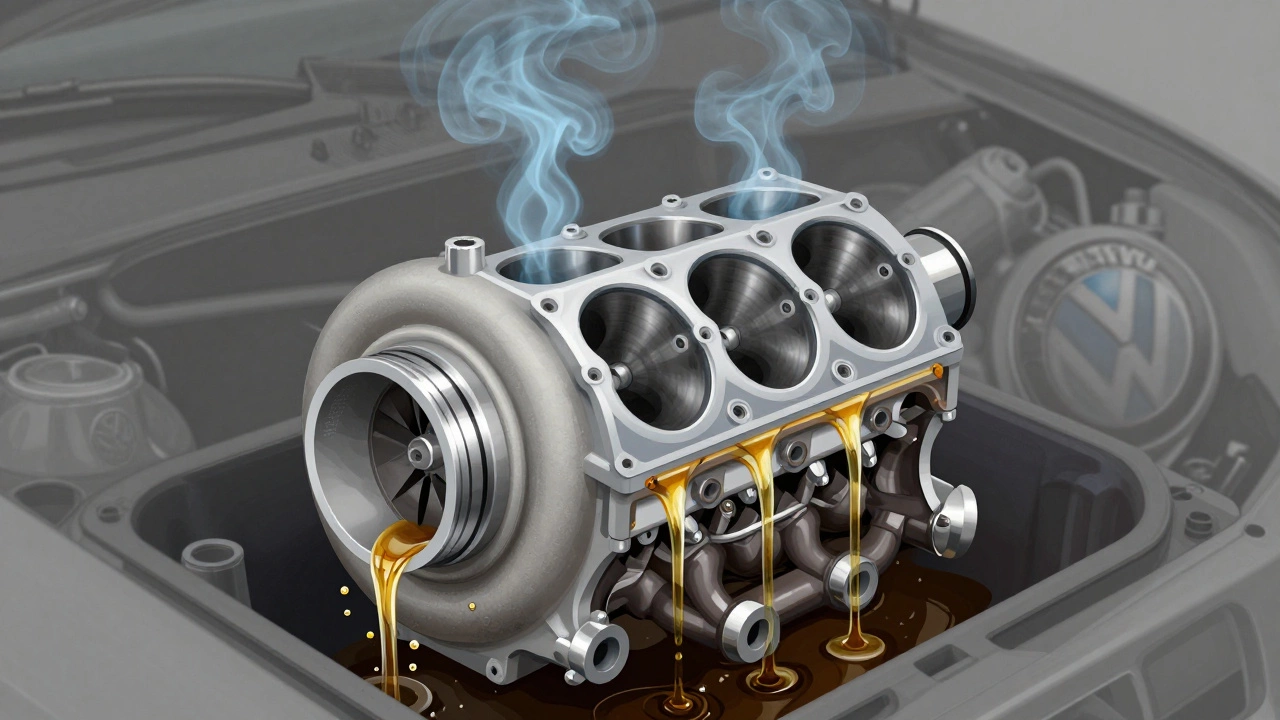
What to do if you’re topping up too often
If you’re adding a full quart every 500 miles or less, something’s wrong. Don’t just keep topping up-you need to find out why.
- Check for leaks. Look under the car after it’s been parked for a few hours. Oil stains on the ground mean a gasket, seal, or oil pan is leaking.
- Look at the exhaust. Blue smoke when you accelerate means oil is being burned in the combustion chamber. That’s usually worn piston rings or valve stem seals.
- Check the PCV valve. A clogged positive crankcase ventilation valve can cause pressure to build up, forcing oil into places it shouldn’t go.
- Test the oil quality. If the oil looks milky or has coolant mixed in, you’ve got a head gasket issue. That’s serious and needs immediate attention.
Many UK drivers ignore these signs until the engine starts knocking. By then, repairs cost hundreds-or thousands-more than a simple seal replacement would have.
Oil type and viscosity matter
Using the wrong oil can make oil consumption worse. Always follow your owner’s manual. Most modern cars use 5W-30 or 5W-40 synthetic oil. Synthetic oils hold up better under heat and stress, reducing evaporation and burn-off.
Some drivers think thicker oil (like 10W-60) will stop leaks. It won’t. It might even make your engine work harder, increasing wear. Stick to the viscosity your manufacturer recommends. If your car is older and burning oil, switch to a high-mileage synthetic. These contain seal conditioners that help reduce leaks without blocking oil passages.
When to change the oil, not just top it up
Topping up isn’t a substitute for an oil change. Every time you add fresh oil to old, dirty oil, you’re diluting contaminants-metal particles, carbon, and water-that are still in the engine. That sludge builds up over time and can clog oil galleries.
Most manufacturers recommend oil changes every 10,000 to 15,000 miles for synthetic oil, or every 6 months, whichever comes first. If you drive short trips in cold weather (common in Manchester), moisture builds up in the oil. That’s why even if you’ve only driven 5,000 miles, you should still change the oil after six months.
Don’t let the ‘oil life monitor’ fool you. These systems are helpful, but they don’t know if you’ve been topping up with cheap mineral oil or driving in stop-and-go traffic. Always combine the monitor with regular dipstick checks.
What to keep in your car
Keep a spare quart of the correct oil in your boot. Most UK garages don’t stock every type of oil, and if you’re stranded with low oil, you might not find the right one in time. Buy the same brand and grade your car uses-don’t guess.
Also carry a funnel and a clean rag. Pouring oil directly from the bottle can spill, and spills on a hot engine can smoke or even catch fire. A small funnel prevents mess and makes it easier to add oil slowly.
Real-world example: A Manchester commuter’s oil habits
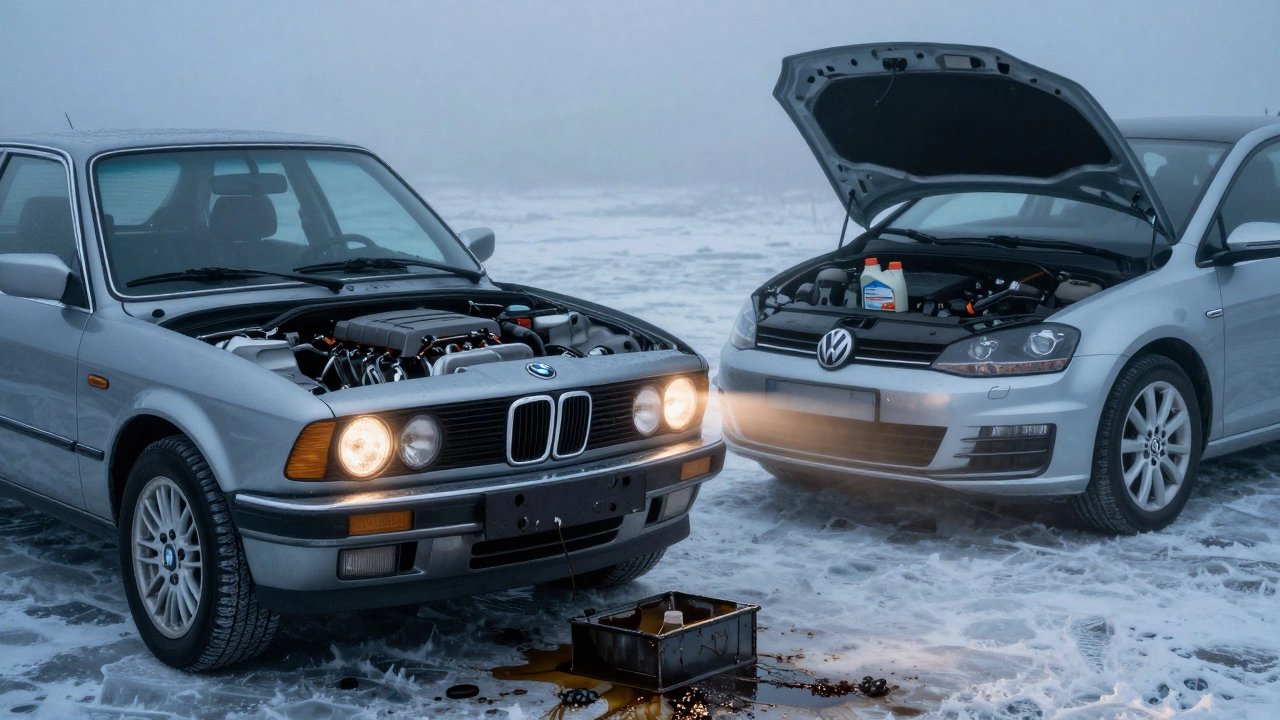
Take a 2018 Volkswagen Golf TDI with 85,000 miles. It’s used for daily 15-mile commutes in rain and cold. The owner checks the oil every time they fill up-about once a week. They’ve noticed they need to add about 200ml every 4 weeks. That’s 0.8 quarts per 1,000 miles-well within acceptable limits. They change the oil every 12 months or 12,000 miles, whichever comes first. No leaks, no smoke, no warning lights. Simple, consistent checks keep the engine running like new.
Compare that to a 2012 BMW 3 Series with the same mileage. The owner only checks oil every 3 months. One winter morning, the engine seized. Turned out the oil was half a quart low for over a year. The bearings had worn from lack of lubrication. Repair cost: £3,200. A £5 bottle of oil and 5 minutes of checking would have prevented it.
Bottom line: Check often, top up wisely, change on time
You don’t need to top up engine oil every week. But you do need to check it every few weeks-or every time you fill up. If the level is fine, leave it alone. If it’s low, add a little. If it’s dropping fast, get it checked. And never skip the oil change just because you’ve been topping up.
Your engine doesn’t care how much you spent on it. It only cares if it’s got clean, fresh oil flowing through it. Treat it like your heart: a little attention every day prevents a big crisis later.
Is it normal for my car to use oil between oil changes?
Yes, it’s normal for most modern engines to use a small amount of oil-typically up to one quart every 1,000 to 1,500 miles. Turbocharged engines and older cars tend to use more. As long as the consumption stays steady and there’s no smoke or leaks, you’re fine.
Can I just keep topping up oil instead of changing it?
No. Topping up adds fresh oil to old, contaminated oil. Over time, dirt, metal particles, and sludge build up and reduce lubrication. Even if the level looks fine, the oil’s protective properties degrade. Always follow your manufacturer’s oil change schedule.
What happens if I overfill my engine with oil?
Overfilling can cause the crankshaft to whip the oil into foam, which doesn’t lubricate properly. It can also lead to pressure buildup, blowing out seals or gaskets. In extreme cases, it can damage the catalytic converter. Always check the dipstick and add oil slowly-no more than half a quart at a time.
How do I know what type of oil to use?
Check your owner’s manual. It will list the correct viscosity (like 5W-30) and specification (like API SN or ACEA C3). If you’re unsure, look up your car’s make, model, and year on the oil manufacturer’s website. Using the wrong oil can increase consumption or damage emissions systems.
Should I use synthetic or conventional oil?
Synthetic oil lasts longer, flows better in cold weather, and resists breakdown under heat. Most cars made after 2010 require synthetic. If your car is older and burning oil, switch to a high-mileage synthetic-it contains additives that help condition seals and reduce leaks. Conventional oil is cheaper but needs changing more often and doesn’t protect as well.
Why does my car use more oil in winter?
Cold weather makes oil thicker, which can reduce flow to critical parts. It also causes more condensation in the engine, which can mix with oil and thin it out. Short trips in winter mean the engine doesn’t fully warm up, so oil doesn’t burn off contaminants properly. This can lead to sludge and increased consumption. Using the right synthetic oil helps.
Can low oil damage my engine?
Yes. Even a half-quart low can cause increased friction and heat. If oil drops too low, the pump can’t circulate enough to lubricate bearings, pistons, and valves. That leads to metal-on-metal contact, which can destroy the engine in minutes. Always check the dipstick before driving if you suspect low oil.
How often should I check my engine oil?
Check it every time you fill up with fuel-that’s about once a week for most drivers. If you drive less than 500 miles a month, check it every two weeks. Always check when the engine is cold or has been off for at least two minutes. Never rely on the dashboard warning light alone.