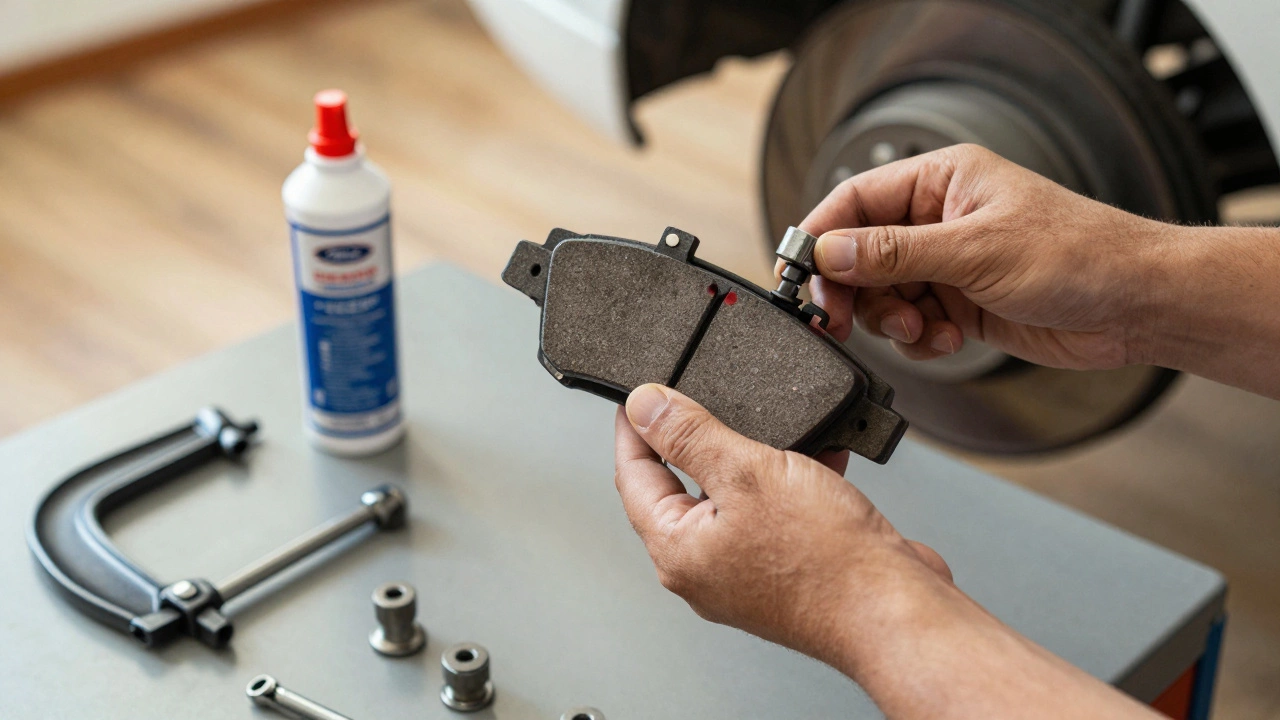
Brake Pad Cost Estimator
Calculate Your Brake Pad Costs
Estimated Costs
Enter your details above to see estimated costs.
Important Safety Note: If you hear grinding noises, see a warning light, or feel spongy brakes, get your brakes checked immediately. Brakes are critical safety components.
Replacing brake pads isn’t just about fixing a squeaky noise-it’s about safety. If your car’s brakes feel spongy, if you hear grinding when you stop, or if the brake warning light came on, you’re not just overdue for a service-you’re risking your life and others’. But before you head to the garage, you want to know: how much does a set of 4 brake pads cost? The answer isn’t simple. It depends on your car, where you live, and whether you’re buying cheap parts or premium ones.
What’s the average price for a set of 4 brake pads?
In the UK in 2026, a basic set of 4 brake pads for a common family car like a Ford Focus or Volkswagen Golf will cost between £50 and £90 if you buy them online or from a parts store like Halfords or Euro Car Parts. These are standard, non-premium pads made by brands like ATE, Textar, or Ferodo. They’ll do the job fine for everyday driving.
But if you drive a BMW, Audi, or Mercedes, or you want better stopping power and less dust, you’ll be looking at £100 to £180 for a set. High-performance or ceramic pads-often sold as "low-dust" or "quiet"-cost more because they last longer and don’t wear down your rotors as fast.
And don’t forget: this is just the pads. If you’re doing the job yourself, that’s your total. If you’re paying a garage, labour adds another £80 to £150 depending on where you are. In Manchester, a typical brake pad replacement job including labour runs £180 to £280 total. In London or the South East, you could easily pay £300+.
Why does the price vary so much?
Not all brake pads are created equal. The material they’re made from changes everything.
- Organic pads are the cheapest-often under £40 for a set. They’re soft, quiet, and gentle on rotors, but they wear out fast, especially if you drive hard or in the city. You might need to replace them every 20,000 miles.
- Low-metallic pads are mid-range. They’re tougher than organic, handle heat better, and last around 30,000 to 40,000 miles. Most budget garage replacements use these. Expect to pay £50-£80.
- Ceramic pads are the premium choice. They’re more expensive-£100-£180-but they last up to 70,000 miles, produce almost no dust, and stay quiet even under heavy braking. They’re the standard on most modern European cars and recommended if you want long-term value.
Also, your car’s make and model matter. A tiny Fiat 500 might need pads that cost £35 total. A Range Rover Sport? You’re looking at £160-£220 just for the pads. Some high-end models use two sets of pads per axle (front and rear), which doubles the cost.
Can you save money by buying online?
Yes-big time. Buying brake pads online from reputable sellers like Amazon, Autodoc, or eBay (from verified sellers) can cut your cost by 30-50% compared to buying at a local garage. Many online sellers offer free delivery in the UK, and you can compare exact part numbers to make sure you’re getting the right fit.
But here’s the catch: you need to get the right part. Use your car’s registration number or VIN to search. Don’t guess. A pad that fits a 2018 Honda Civic won’t fit a 2020 model, even if they look the same. Some pads come with wear sensors-make sure yours matches. If your car has brake pad sensors, buying a set without them could trigger a warning light that won’t go away until you reset it at a garage.
Pro tip: Look for kits that include mounting hardware-pins, clips, and anti-rattle springs. Reusing old hardware is a common mistake. Worn clips cause squealing and uneven wear. A good kit includes everything you need.
How long do brake pads last?
There’s no one-size-fits-all answer, but most drivers in the UK replace their pads every 30,000 to 50,000 miles. City drivers with lots of stop-and-go traffic might need new pads at 25,000 miles. Motorway drivers who brake gently can stretch that to 60,000 miles or more.
Signs you need new pads:
- A high-pitched squeal when braking (that’s the wear indicator)
- Grinding or metal-on-metal noise (this means the pads are gone and your rotors are damaged)
- Longer stopping distances or the car pulling to one side
- The brake warning light on your dashboard
- Less than 3mm of friction material left on the pad
Check your pads every 10,000 miles. You can often see them through the wheel spokes. If you’re not sure, a mechanic can check them in 5 minutes-many garages offer free brake checks.
Should you replace brake pads yourself?
If you’ve changed a car battery or replaced air filters, you can handle brake pads. It’s not rocket science-but it’s not a job to rush.
You’ll need:
- A jack and jack stands
- A torque wrench
- A C-clamp or brake piston tool
- New brake pads and hardware
- Brake cleaner spray
Steps are simple:
- Loosen the wheel nuts while the car is on the ground.
- Jack up the car and put it on stands.
- Remove the wheel.
- Unbolt the caliper (don’t let it hang by the brake hose-support it with wire).
- Slide out the old pads.
- Compress the brake piston with a C-clamp (this gives the new pads room).
- Install new pads and hardware.
- Reattach the caliper, torque bolts to spec.
- Reinstall the wheel, lower the car, and pump the brake pedal 5-10 times before driving.
Don’t skip bedding-in the pads. Drive gently for the first 200 miles-no hard braking. This lets the pad material transfer evenly onto the rotor surface. Skip this, and you’ll get noise and reduced performance.
If you’re not confident, don’t risk it. Bad brakes can kill you. Pay the £100-£150 for labour. It’s cheaper than an accident.
What about rotors? Do you need to replace them too?
Not always. But if your pads were worn down to metal, the rotors are likely scored or warped. You’ll feel it in the steering wheel-a vibration when you brake. That’s not just annoying-it’s dangerous.
Rotors can be resurfaced (machined smooth) if they’re thick enough. Most manufacturers say rotors must be at least 1mm thicker than the minimum thickness stamped on the rotor. If they’re too thin, you must replace them.
Replacing both pads and rotors on a single axle will add £80-£150 to your bill. If you’re doing it yourself, new rotors cost £40-£100 each. Ceramic pads paired with new rotors give you the smoothest, quietest, longest-lasting brake job.
Is there a warranty on brake pads?
Most quality brake pads come with a 12-month or 12,000-mile warranty. Premium brands like Brembo, EBC, and Pagid offer up to 2 years. Check the packaging. If you buy from a garage, ask if they offer a labour warranty too. Many will guarantee their work for 6 to 12 months.
Warranties don’t cover damage from improper installation or misuse. If you don’t bed in the pads or you ignore a grinding noise, the warranty’s void.
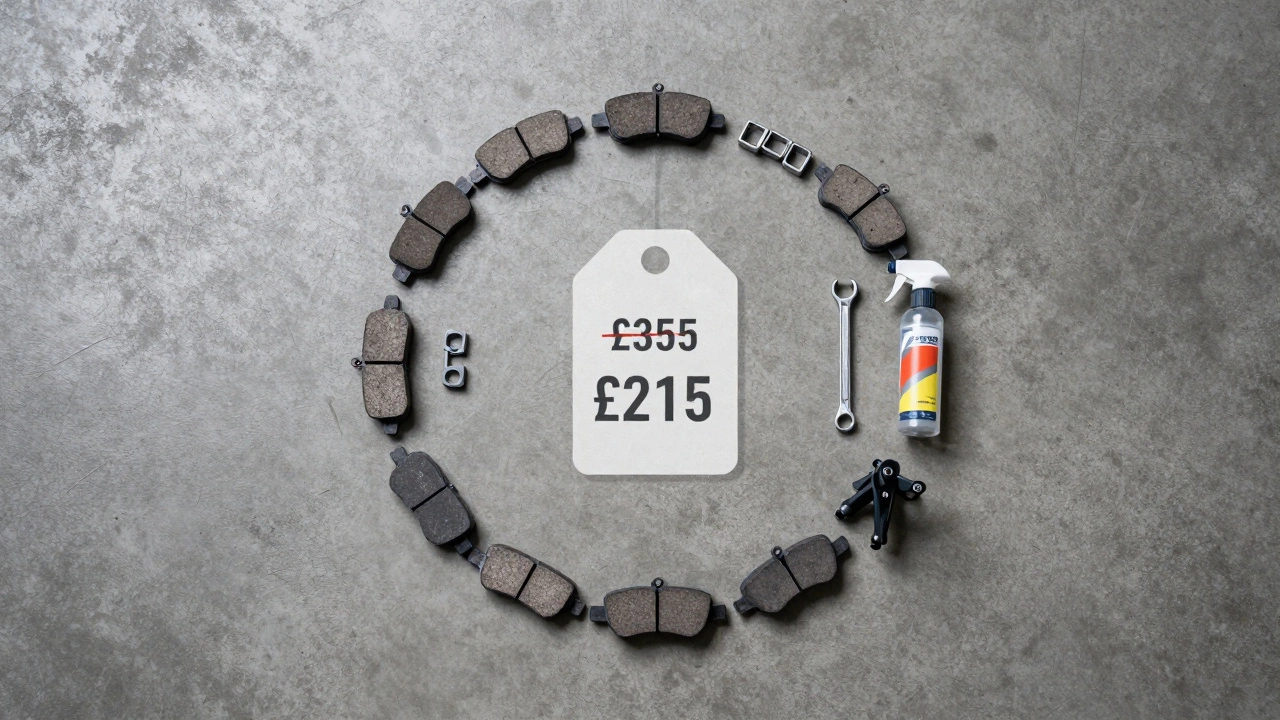
Final cost breakdown for a typical UK car
Here’s what you can realistically expect for a standard family car like a Toyota Corolla or Hyundai i30:
| Item | DIY Cost | Garage Cost |
|---|---|---|
| Set of 4 brake pads (ceramic) | £120 | £120 (included) |
| Hardware kit (pins, clips) | £15 | £15 (included) |
| Labour (front axle only) | £0 | £90-£120 |
| Rotors (if needed) | £80 | £80 (included) |
| Brake fluid flush (recommended) | £0 | £50 |
| Total | £215 | £355 |
DIY saves you over £140. But if you’re short on time or tools, paying for professional work is worth it. Just shop around. Get three quotes. Some independent garages charge half what dealers do.
What if you ignore worn brake pads?
Bad brakes don’t just fail suddenly. They degrade slowly. You’ll think you’re getting used to the longer stopping distance. But every mile you drive on worn pads increases the chance of:
- Damage to your rotors-costing you £200+ extra
- Loss of control in wet conditions
- Brake fluid leaks from overheated calipers
- A failed MOT
In the UK, brake performance is one of the top reasons cars fail their MOT. If your pads are below 1.5mm, you’ll fail instantly. Even at 2mm, you’ll get a major fault. Don’t wait until the last minute.
How often should brake pads be replaced?
Most drivers replace brake pads every 30,000 to 50,000 miles. City driving with lots of stops wears them faster-sometimes as early as 25,000 miles. Highway driving can extend life to 60,000 miles. Always check thickness-if it’s less than 3mm, replace them.
Are cheap brake pads safe?
Cheap, no-name brake pads can be dangerous. They often wear unevenly, fade under heat, and produce excessive dust or noise. Stick to reputable brands like Ferodo, ATE, Brembo, or EBC. Even mid-range pads from trusted suppliers are safer than bargain-bin options.
Can I replace just the front brake pads?
You can, but it’s not recommended. Brakes work as a system. Replacing only the front pads can cause uneven braking, pulling to one side, and faster wear on the rear pads. For safety and balance, replace pads on both axles at the same time.
Do brake pads come in sets of 4?
Yes-most brake pad kits are sold as sets of 4, meaning two pads for each front wheel or two for each rear wheel. Always check the product description. Some kits are for front only, others for rear. Make sure you’re buying the right set for your car’s axle.
Why do brake pads cost more for some cars?
High-end or performance cars use larger, more complex brake systems. Pads for a Porsche or BMW M-series are made from advanced materials, have more precise tolerances, and often include sensors. They’re engineered for higher temperatures and heavier loads, which drives up the cost.
Next steps: What should you do now?
If you’re wondering whether your brake pads need replacing, start by checking their thickness. Use a flashlight and look through your wheel spokes. If you see less than 3mm of friction material, book a check. If you’re unsure, take it to a trusted garage for a free brake inspection.
If you’re planning to replace them yourself, order the correct pads from a reliable supplier. Match the part number to your car’s VIN. Don’t forget the hardware. And if you’re not confident-pay for professional help. Your brakes are your most important safety system. Don’t cut corners on them.