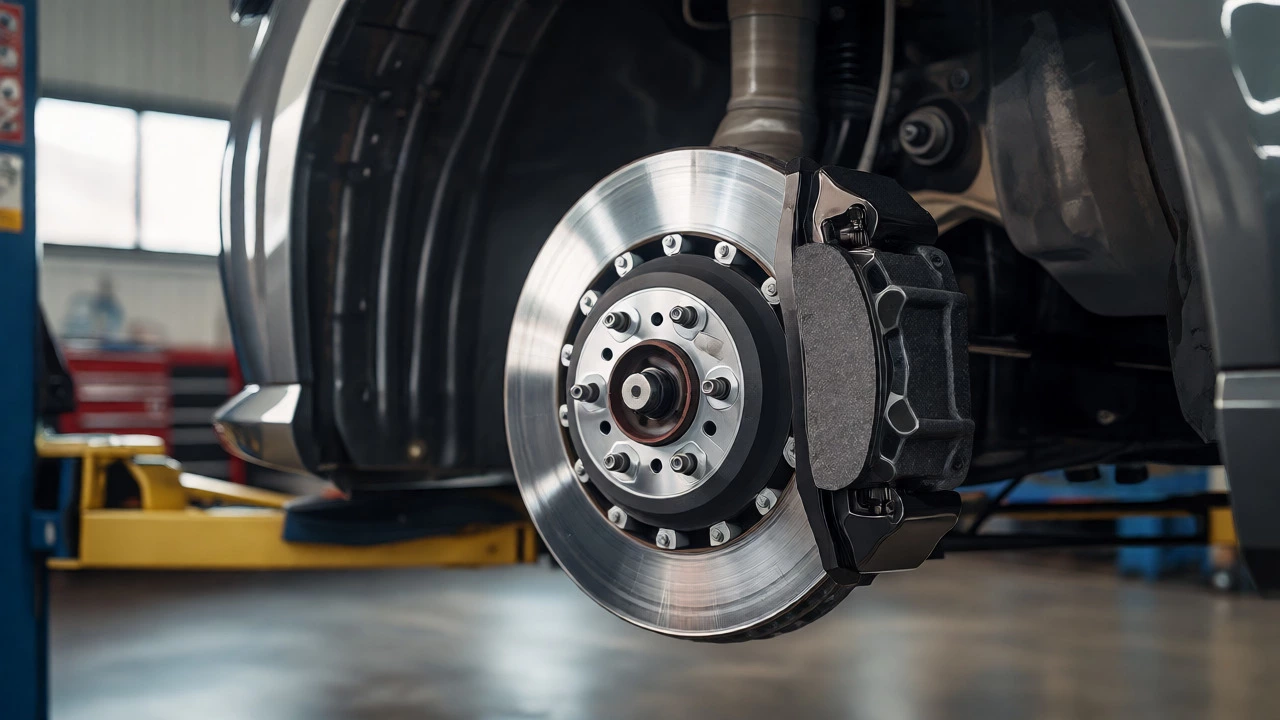
Brake Pad Lifespan Estimator
Not all brake pads are created equal. Use this tool to estimate how long your current set might last based on real-world factors discussed in the article.
Your Driving Profile
Estimated Outcome
Enter your details and click calculate to see your estimated brake pad lifespan.
--
Total Expected Lifespan (Miles)
Remaining Miles:
--
Time Until Replacement:
--
Key Factors Affecting You:
You just paid good money for a fresh set of brake pads, and now you're staring at your dashboard wondering: when will I have to do this again? It’s the million-dollar question-or rather, the hundred-pound question. While manufacturers often throw around numbers like "30,000 miles" or "50,000 kilometers," the reality is far messier. Your brake pad lifespan isn't a fixed expiration date; it's a variable outcome determined by how you drive, where you live, and what kind of pads you bought.
If you’re in Manchester or any other city with stop-and-go traffic, your pads are working overtime compared to someone cruising down the M62 motorway all day. This guide breaks down exactly what dictates that timeline, how to spot the warning signs before they turn into expensive rotor damage, and which types of pads actually stick around longer.
The Myth of the Fixed Mileage
Let’s kill the biggest myth right away: there is no universal mileage limit for new brake pads. If a mechanic tells you they’ll last exactly 40,000 miles, they’re guessing. The average range sits somewhere between 25,000 and 70,000 miles (40,000 to 112,000 km), but that spread is massive. Why? Because braking is physics, not magic.
Every time you hit the pedal, friction converts kinetic energy into heat. That heat wears away the material on your pads. If you drive gently, coasting into roundabouts instead of slamming the brakes, you generate less heat and less wear. If you drive aggressively-late braking, hard stops from high speeds-you’re essentially grinding your pads away faster. Think of it like running shoes: a marathon runner replaces them every few hundred miles, while a casual walker might keep them for years. Same shoe, different usage, wildly different lifespan.
Material Matters: Ceramic vs. Semi-Metallic vs. Organic
Not all pads are created equal. The compound used to make them plays a huge role in longevity. Here is the breakdown of the three main types you’ll encounter in the UK market:
| Pad Type | Typical Lifespan | Pros | Cons |
|---|---|---|---|
| Ceramic | 50,000 - 70,000+ miles | Quiet, low dust, consistent performance | More expensive upfront, less ideal for extreme track use |
| Semi-Metallic | 30,000 - 50,000 miles | Cheap, good heat tolerance, strong bite | Noisy, creates lots of black dust, can wear rotors faster |
| Organic/Low-Metallic NAO | 20,000 - 30,000 miles | Very quiet, soft on rotors, cheap | Fades quickly under heavy heat, shorter life, dusty |
Ceramic pads are generally the longest-lasting option for daily drivers. They handle heat well without breaking down quickly, meaning the material doesn't shed as fast. Semi-metallic pads contain steel fibers and iron powder. They grab hard and handle heat, but that metallic content is abrasive. It eats through the pad itself and can also chew up your brake discs (rotors) if you aren't careful. Organic pads, often found on older economy cars, are made from rubber, glass, and resin. They’re quiet but burn off relatively quickly, especially if you find yourself in heavy traffic.
Your Driving Style Is the Biggest Variable
Here is where you need to be honest with yourself. How do you actually drive? A study by the Department for Transport suggests that urban driving involves significantly more braking events per mile than rural driving. If your commute involves crawling through Manchester’s rush hour, stopping at every red light, and dealing with unpredictable cyclists, your pads are taking a beating.
Consider these habits that shorten lifespan:
- Riding the Brakes: Keeping slight pressure on the pedal while driving keeps the pads touching the rotors. This generates constant friction and heat, wearing them down even when you aren't slowing down.
- Aggressive Acceleration: If you speed up quickly, you have to slow down quickly. Hard acceleration necessitates hard braking. Smooth acceleration allows you to coast, reducing the need for braking altogether.
- Towing Heavy Loads: Pulling a trailer or caravan adds significant weight. More mass equals more momentum, which requires more force-and more friction-to stop.
Conversely, highway driving extends life. On a long stretch of motorway, you rarely touch the brakes until you exit. You might cover 50 miles using only engine braking or gentle taps. In contrast, 50 miles in central London could involve hundreds of full stops. The difference in wear is exponential, not linear.
Environmental Factors and Road Conditions
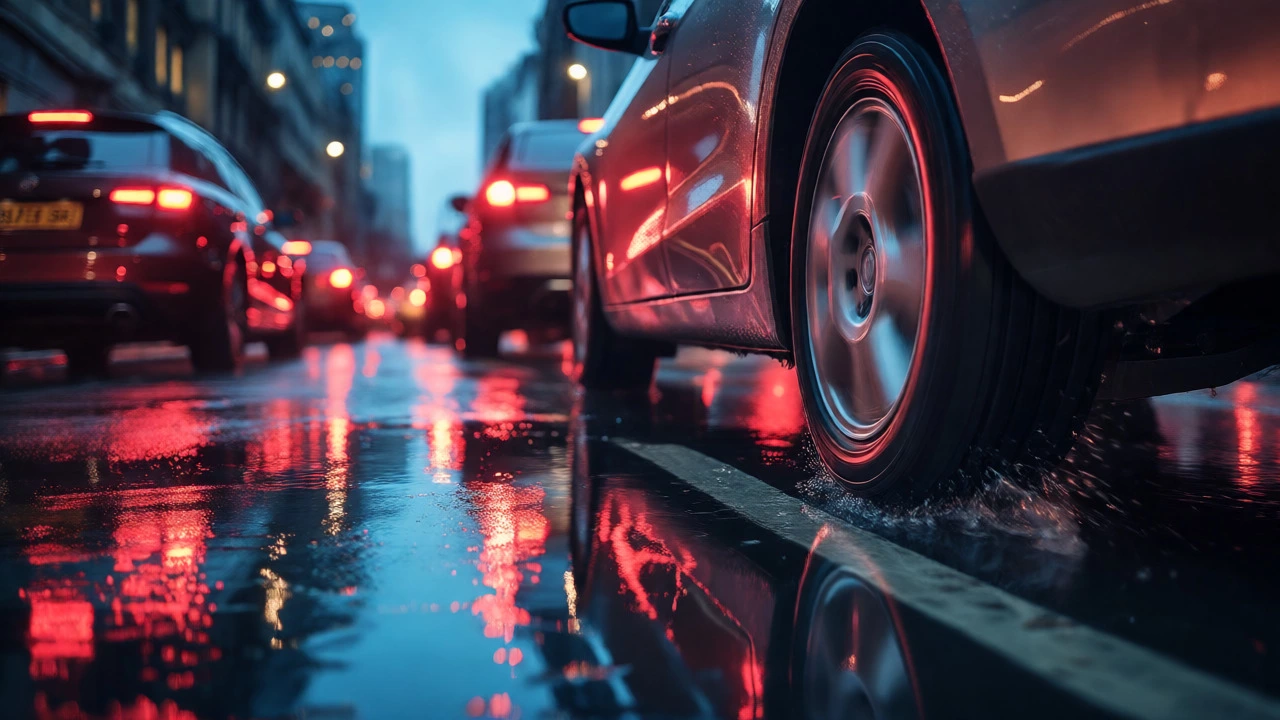
We don’t get many mountains in the UK, but we do get rain, grit, and salt. These elements affect how your brakes age. Wet roads reduce initial braking efficiency, sometimes causing drivers to press harder or earlier, increasing wear. Winter road salt accelerates corrosion on the backing plates and calipers. While this doesn't directly eat the friction material, corroded caliper pins can cause the pads to stick. If a pad sticks, it drags against the rotor constantly, destroying both components in weeks rather than months.
Also, consider your terrain. If you live near the Peak District and enjoy winding country lanes, you’re likely using your brakes more frequently than someone living on the flat Fens. Downhill sections require sustained braking, which builds up immense heat. This heat causes "brake fade," where the pads lose effectiveness temporarily. Repeated cycling through hot and cold states degrades the binder materials in the pads, leading to cracking and faster disintegration.
Signs Your Pads Are Nearing the End
You shouldn't rely solely on mileage estimates. Your car gives you feedback. Ignoring it leads to metal-on-metal contact, which scores your rotors and turns a £80 job into a £300 one. Watch for these cues:
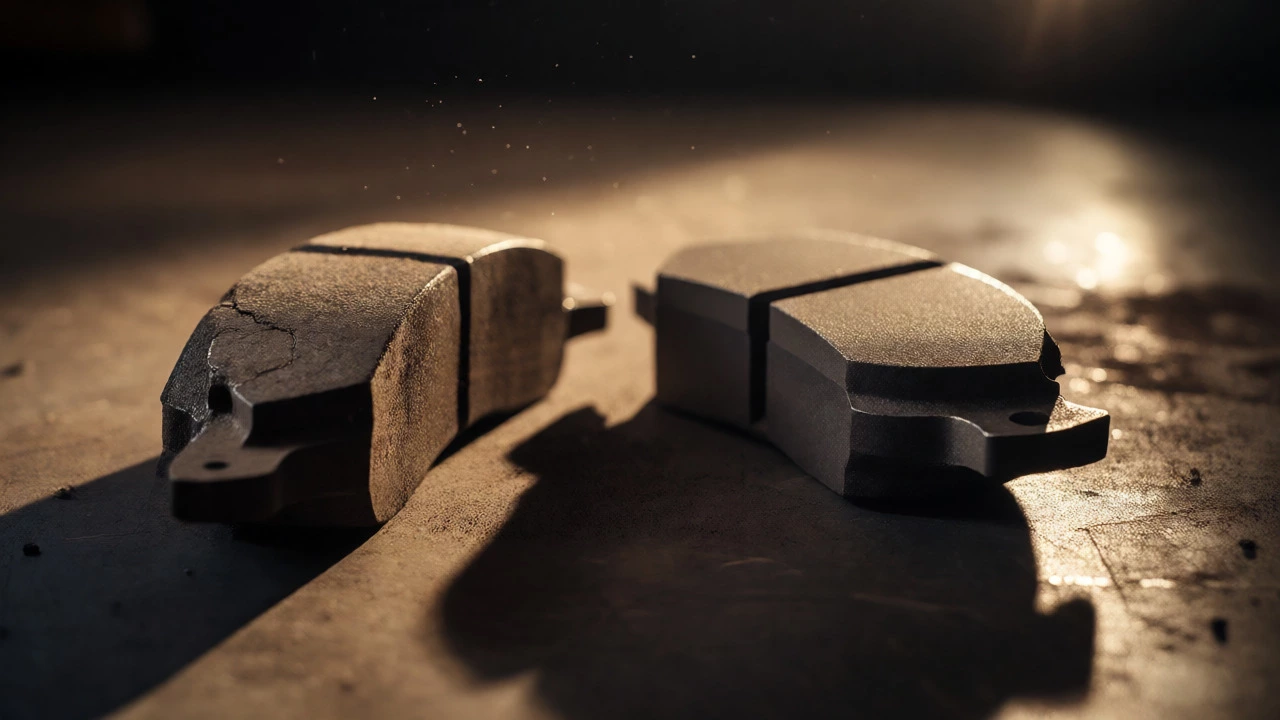
- Squealing or Squeaking: Most modern pads have a small metal wear indicator tab. When the pad gets thin (usually around 3mm remaining), this tab touches the rotor, creating a high-pitched squeal. This is your early warning system.
- Grinding Noise: If you hear a deep growl or grind, the friction material is gone. The metal backing plate is now rubbing against the metal rotor. Stop driving immediately if possible; you are damaging the disc.
- Vibration in the Pedal: Warped rotors or unevenly worn pads can cause the steering wheel or brake pedal to shudder when you apply pressure.
- Visual Inspection: Look through the spokes of your wheels. You should see the pad thickness. Anything less than 1/4 inch (approx. 6mm) means you should start planning a replacement. At 3mm, replace them now.
How to Maximize Your Investment
You can’t change your commute, but you can change your technique. Anticipatory driving is the single best way to extend brake life. See a red light half a mile ahead? Lift off the accelerator and let the engine drag the car down. Only tap the brakes at the very end. This reduces the total friction applied over the distance.
Maintenance plays a role too. Have your brake fluid changed every two years. Old fluid absorbs moisture, lowering its boiling point. If the fluid boils during heavy braking, the pedal goes spongy, and you push harder to compensate, wearing pads faster. Also, ensure your calipers slide freely. If they seize, one side of the pad wears out much faster than the other, requiring premature replacement of the whole axle.
Frequently Asked Questions
Can I replace just one brake pad?
No, never replace just one pad. You must replace pads in axle sets (both front or both rear). If one side has new thick pads and the other has old thin ones, the car will pull to one side when braking. Additionally, the new pad needs to bed in with the existing rotor surface, which works best when both sides are fresh.
Do electric vehicles have longer-lasting brake pads?
Yes, significantly. EVs use regenerative braking, which uses the electric motor to slow the car and recharge the battery. This handles most everyday deceleration, meaning the mechanical friction brakes are used less frequently. However, because they are used less, they can suffer from corrosion due to lack of cleaning action from friction. Regular inspection is still vital.
What happens if I ignore my brake pads?
Ignoring worn pads leads to metal-on-metal contact. This destroys the brake rotors (discs), forcing you to replace them as well. Rotors are much more expensive than pads. In worst-case scenarios, severe wear can lead to brake failure, where the caliper piston pushes out of its housing, resulting in zero braking power on that wheel.
Are expensive brake pads worth it?
For most daily drivers, mid-range ceramic or semi-metallic pads offer the best value. Premium brands (like Brembo or EBC) provide better consistency and quieter operation, but they won't necessarily double your mileage. Cheap, unbranded pads may save money upfront but often produce excessive dust and noise, and may degrade faster under heat stress.
How long does it take to break in new brake pads?
New pads need a bedding-in period, usually the first 300-500 miles. During this time, transfer layers of pad material form on the rotor surface, ensuring optimal contact area. Avoid harsh emergency stops during this phase unless necessary. After this period, braking performance stabilizes and reaches peak efficiency.