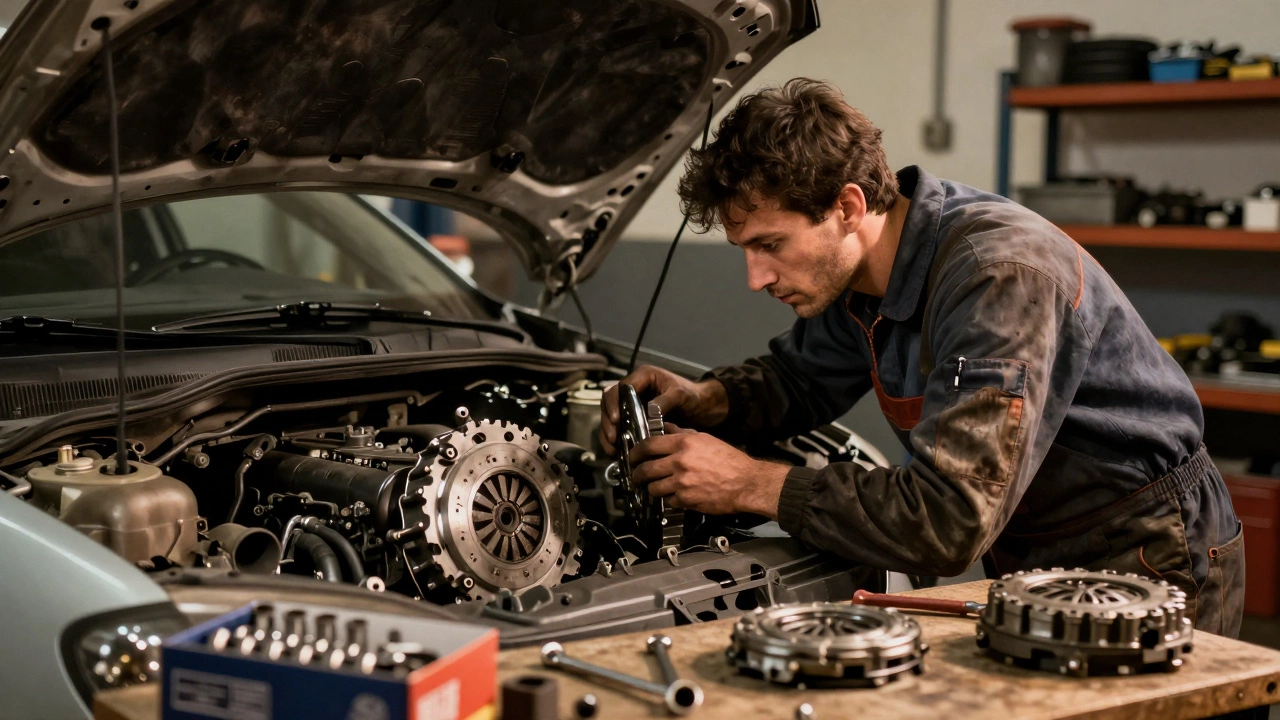
Clutch Installation Cost & Difficulty Estimator
Time Required
Total Cost Breakdown
DIY Total
Shop Total
£0
There is a moment every driver with a manual gearbox knows well. You press the pedal, but the gears grind. Or worse, you’re stuck in traffic, your foot is cramping, and the engine is revving while the car barely moves. The clutch has gone. Now comes the big question: can you fix it yourself, or is this a job for the garage?
The short answer is that installing a clutch kit is one of the most demanding jobs you can tackle as a DIY mechanic. It isn’t rocket science, but it is heavy lifting, tight spaces, and a lot of patience. If you have never dropped a gearbox before, you are looking at a full weekend project, not an afternoon tweak.
Is replacing a clutch hard for beginners?
Yes, it is considered advanced. It requires removing the transmission, which involves disconnecting electrical systems, brake lines, and suspension components. Without prior experience, the risk of damaging expensive parts is high.
Why This Job Feels So Daunting
To understand the difficulty, you need to look at what a clutch assembly actually does. It sits between the engine’s flywheel and the transmission input shaft. To get to it, you usually have to pull the entire gearbox out of the car. That means supporting the engine from above, unbolting the transmission mounts, and carefully lowering several hundred pounds of metal without dropping it on your toes or cracking the oil pan.
It is not just about strength. It is about precision. The new clutch disc must be perfectly centered on the splines of the input shaft. If it is even slightly off-center, the gears will grind when you try to engage them. You also have to deal with the release bearing, the pilot bushing, and often the flywheel itself. If the flywheel is warped or glazed, simply swapping the clutch won’t solve the problem. You might need to resurface or replace it, which adds another layer of complexity and cost.
Then there is the torque sequence. Bolts holding the bell housing together must be tightened in a specific pattern to within exact specifications. Miss one bolt, or over-tighten it, and you could crack the aluminum casing. It is unforgiving work.
Front-Wheel Drive vs. Rear-Wheel Drive: The Big Difference
Not all cars are created equal when it comes to clutch swaps. The layout of your vehicle changes the difficulty level dramatically.
| Vehicle Type | Access Method | Difficulty Level | Key Challenges |
|---|---|---|---|
| Front-Wheel Drive (FWD) | Remove subframe or drop gearbox from bottom | High | Tight engine bay, CV axles in the way, limited space to maneuver tools |
| Rear-Wheel Drive (RWD) | Drop gearbox from underneath | Medium-High | Driveshaft removal, crossmember interference, alignment checks |
| Mid-Engine Sports Car | Often requires removing seats/engine bay panels | Very High | Extremely cramped, specialized tools often required, low ground clearance |
In a front-wheel-drive car like a Honda Civic or a Ford Focus, the engine and transmission sit side-by-side. There is rarely enough room to pull the gearbox straight back. You often have to remove the subframe, which involves jacking up the engine, unbolted the lower control arms, and sliding everything out from under the car. It is a puzzle where every piece fights you for space.
Rear-wheel-drive vehicles, like older Mustangs or BMWs, are generally easier because the transmission hangs behind the engine. You can usually drop it from below after removing the driveshaft and crossmembers. However, you still need a transmission jack, and aligning the input shaft back into the clutch disc during reinstallation is tricky without a helper.
Tools You Actually Need
You cannot do this job with a basic socket set from a supermarket. Here is what needs to be in your garage:
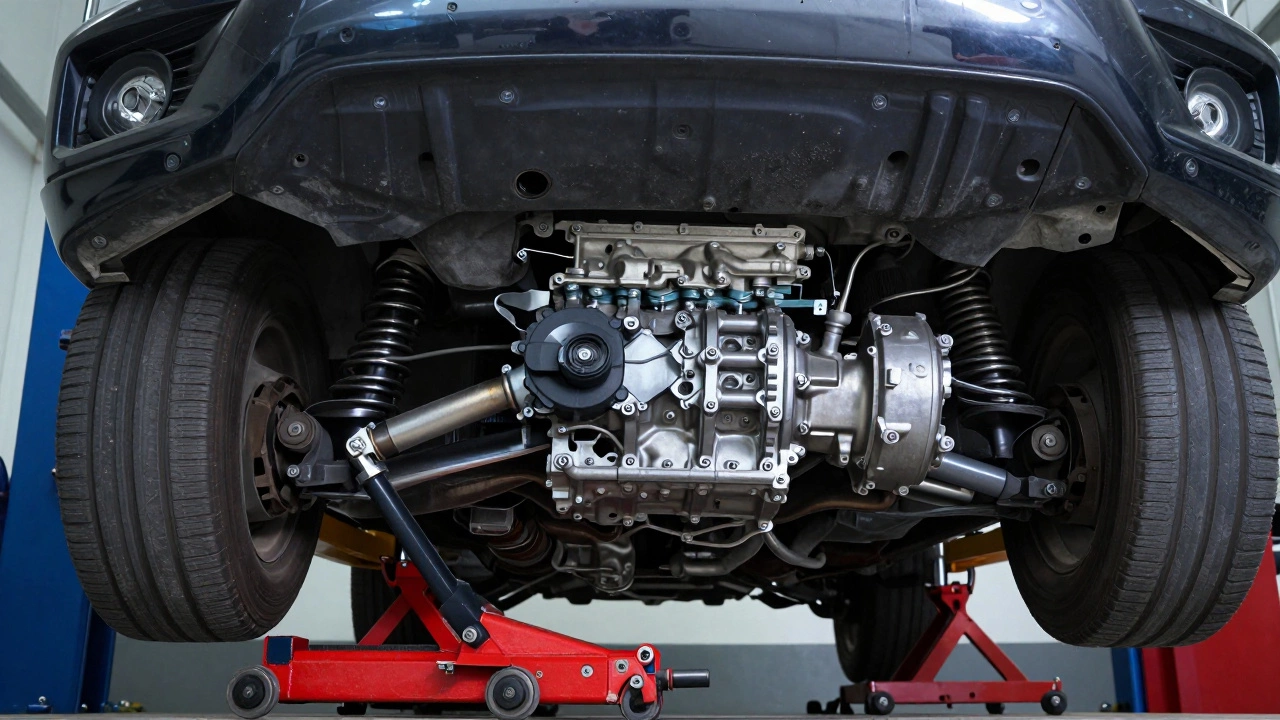
- Transmission Jack: Essential. Trying to support the weight of a gearbox with a standard floor jack is dangerous and unstable.
- Engine Support Bar: To hold the engine steady once the transmission mounts are removed.
- Socket Set and Ratchet Extensions: Deep sockets and long extensions are crucial for reaching bolts hidden deep in the bell housing.
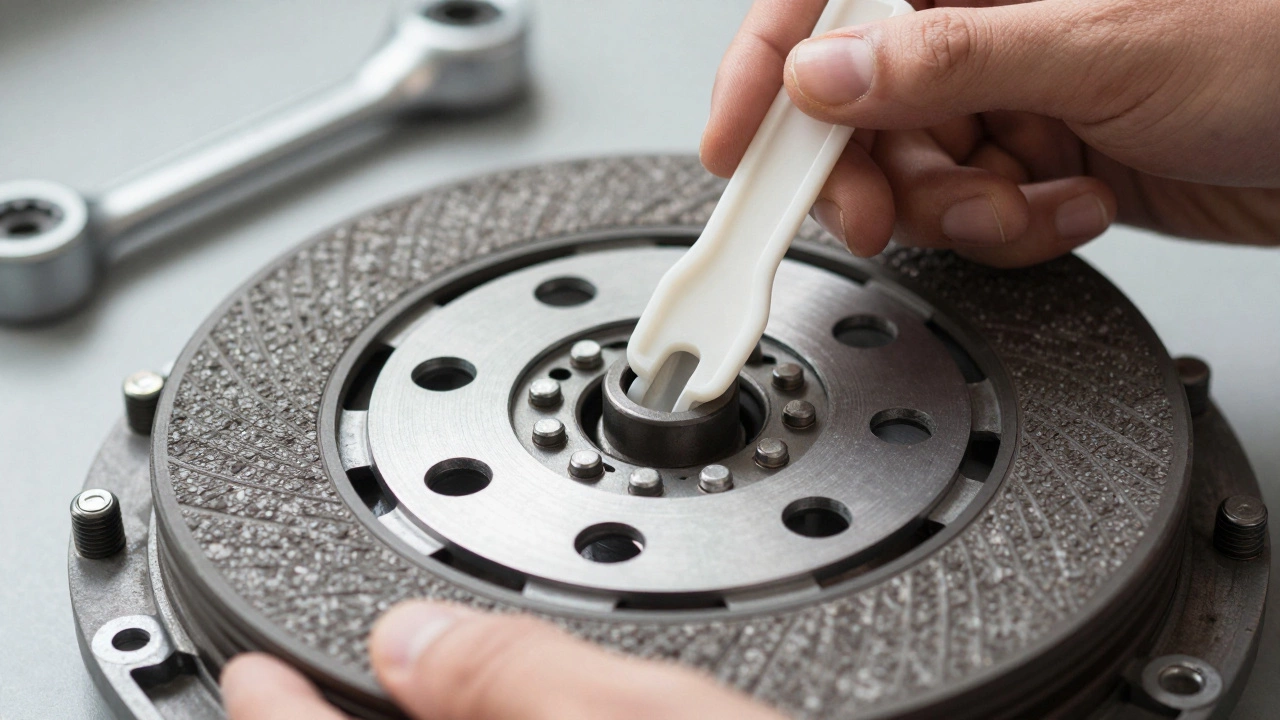
- Clutch Alignment Tool: Most kits include this plastic or metal cone. Do not skip it. It ensures the disc stays centered on the input shaft splines.
- Torque Wrench: Critical for bell housing bolts and engine mount nuts. Guessing torque values here is a recipe for failure.
- Jack Stands: Never work under a car supported only by a hydraulic jack.
If you don’t own a transmission jack, renting one is worth it. Trying to improvise with blocks of wood and a floor jack will likely end with a damaged transmission case or a bruised ego.
Step-by-Step: The General Process
While every car is different, the core steps remain similar across most manual vehicles. Understanding the flow helps demystify the process.
- Preparation: Disconnect the battery. Drain the transmission fluid if necessary. Remove any components blocking access to the transmission mounts, such as heat shields, exhaust sections, or wiring harnesses.
- Support the Engine: Install the engine support bar. Adjust it so it takes the weight of the engine without compressing the internal components.
- Disconnect Linkages: Unbolt the shifter linkage, clutch hydraulic line (be prepared to catch fluid), and any electrical sensors attached to the transmission.
- Remove Mounts: Unbolt the transmission mount and the starter motor. Carefully unbolt the bell housing bolts connecting the transmission to the engine block.
- Drop the Transmission: With the help of a transmission jack, slowly lower the gearbox away from the engine. Watch for hanging wires or hoses you might have missed.
- Inspect and Replace: Remove the old clutch disc and pressure plate. Inspect the flywheel for hot spots or cracks. Clean the surface thoroughly. Install the new pressure plate and disc, using the alignment tool.
- Reassembly: This is the reverse of removal. Align the transmission input shaft with the clutch disc center. Bolt the bell housing together, torquing in a star pattern. Reconnect all linkages, fluids, and electrical connections.
The reassembly is often harder than the removal. Getting those last few bell housing bolts started while the transmission is hanging by a thread is a test of coordination. Having a second person to hold the transmission steady while you thread the bolts is highly recommended.
Common Pitfalls to Avoid
Even experienced mechanics make mistakes on clutch jobs. Here are the most common ones:
- Forgetting the Pilot Bearing: Located inside the crankshaft, this small bearing supports the transmission input shaft. If it is worn, the new clutch will fail prematurely. Always replace it.
- Dirt on the Flywheel: Grease or dirt on the friction surfaces will cause chatter and vibration. Clean the flywheel and clutch disc with brake cleaner before installation.
- Misaligned Disc: If the alignment tool falls out or wasn’t used, the disc may be cocked. This prevents the transmission from engaging smoothly.
- Over-tightening Bolts: Aluminum bell housings strip easily. Follow the manufacturer’s torque specs religiously.
- Ignoring the Slave Cylinder: While you are in there, check the master and slave cylinders. If they are leaking, fix them now. You don’t want to drop the transmission again next month.
When to Call a Professional
Knowing when to walk away is part of being a smart DIYer. Consider hiring a pro if:
- You don’t have a lift or adequate ramps. Working under a car on uneven ground is risky.
- Your vehicle has a complex layout, like a turbocharged engine with tight packaging or a dual-clutch transmission.
- You lack the proper tools. Buying a transmission jack and engine hoist for a one-time job might cost more than the labor fee.
- You are uncomfortable with the weight and precision involved. Dropping a transmission can cause serious injury or damage.
Professionals have lifts, specialized tools, and experience that speeds up the process significantly. What takes you 10 hours might take them three. Factor in the value of your time and the risk of error.
Cost Comparison: DIY vs. Shop
Let’s talk numbers. A complete clutch kit for a common car might cost between £150 and £300. Labor rates vary, but expect to pay £80 to £120 per hour. A clutch job typically takes 4 to 6 hours of labor. So, a professional installation could run you £500 to £900 total, including parts.
If you do it yourself, you save the labor cost. But remember to factor in the cost of renting tools if you don’t own them. Even then, the savings are substantial. However, if you make a mistake-like stripping a bolt or cracking the transmission case-the repair bill can quickly exceed the original quote.
Final Thoughts on Tackling the Job
Installing a clutch kit is a rite of passage for many home mechanics. It teaches you how the drivetrain works and gives you a sense of accomplishment that changing oil never will. But it is not a beginner’s project. It demands respect for the weight, precision, and complexity involved.
If you decide to go for it, take your time. Read the service manual for your specific vehicle. Take photos as you disassemble things so you know how they go back together. And most importantly, don’t rush. A careful, methodical approach will save you headaches and ensure your new clutch lasts for years to come.
How long does it take to install a clutch kit?
For a first-time DIYer, expect 8 to 12 hours. Experienced mechanics might complete it in 4 to 6 hours. The time varies based on vehicle layout and accessibility.
Do I need to resurface the flywheel?
It is highly recommended. If the flywheel has hot spots, cracks, or excessive wear, the new clutch will slip or chatter. Resurfacing ensures a smooth mating surface.
Can I install a clutch without dropping the transmission?
In some rare cases, yes, particularly in certain rear-wheel-drive trucks where the engine can be tilted forward. However, for 95% of passenger cars, dropping the transmission is necessary.
What signs indicate a failing clutch?
Symptoms include slipping (engine revs increase but speed doesn't), grinding gears, a stiff or spongy clutch pedal, and a burning smell during engagement.
Is it safe to drive with a bad clutch?
No. Driving with a failing clutch can damage the flywheel, transmission input shaft, and engine. It also poses a safety risk if you lose the ability to shift gears while driving.