Flywheel Replacement Decision Tool
Vehicle & Flywheel Details
Inspection Checklist
Check the boxes that apply to your current flywheel's condition.
Ready to Analyze
Enter your vehicle details and check any symptoms you've noticed to get a recommendation.
You are staring at your car’s transmission, wrench in hand, wondering if you can save money by skipping one part. You have already bought the clutch kit, which includes the disc, pressure plate, and release bearing. But there is that heavy steel disk sitting right behind it: the flywheel. Do you really need to replace it? The short answer is: usually, yes. But the real answer depends on what kind of engine you drive and how much you value your sanity later on.
Replacing a clutch is expensive because labor costs are high. You are paying a mechanic (or spending your own weekend) to drop the transmission out of the vehicle. If you ignore the flywheel now, you might be doing this job again in six months. That is not saving money; that is renting trouble.
The Role of the Flywheel in Your Drivetrain
To understand why you might need a new one, you first need to know what it does. The flywheel is a heavy rotating disk attached to the crankshaft that stores rotational energy to smooth out engine pulses. Without it, your engine would jerk and shudder with every combustion cycle. It keeps the rotation smooth so the clutch can engage without grinding gears.
There are two main types of flywheels used in modern cars:
- Single Mass Flywheel (SMF): This is a solid piece of cast iron. It is simple, durable, and cheap. You will find these in older cars, performance vehicles, and many diesel trucks.
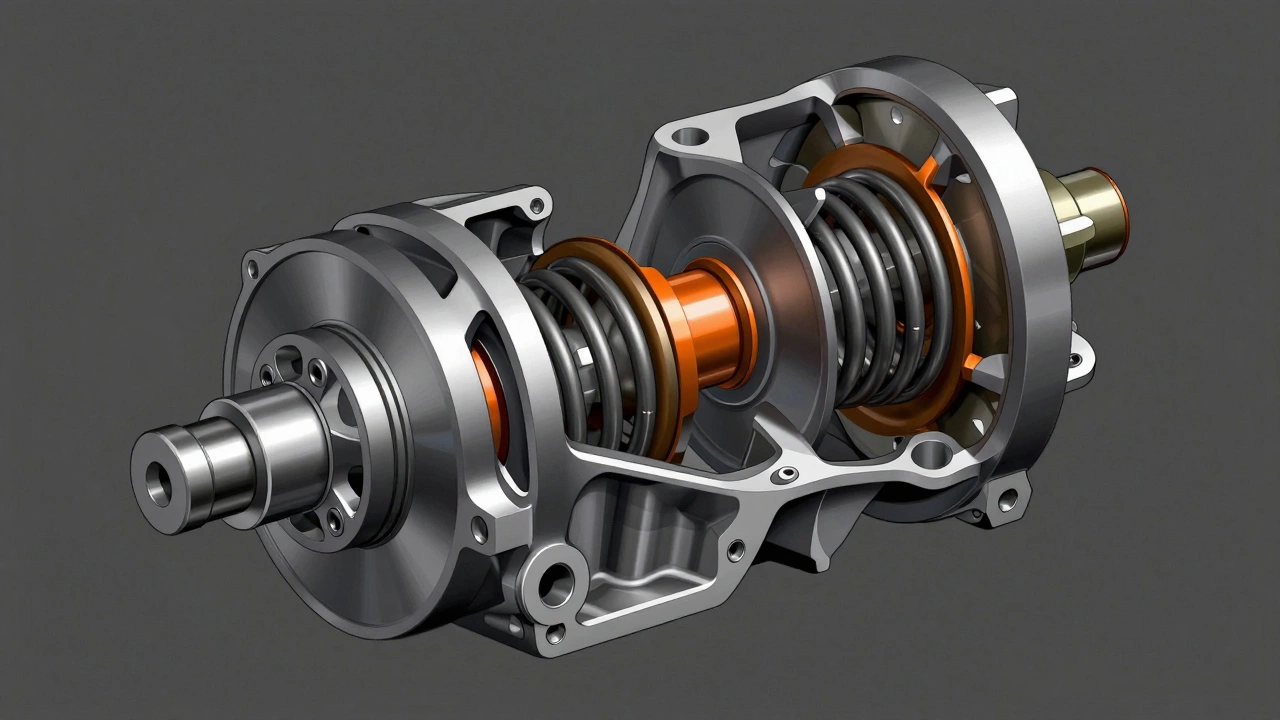
- Dual Mass Flywheel (DMF): This is a complex assembly with two disks separated by springs and dampers. It absorbs vibrations before they reach the gearbox. Most modern passenger cars, especially diesels and automatics, use DMFs.
The type of flywheel you have dictates whether you must replace it or if you can get away with resurfacing it.
Why Mechanics Recommend Replacing the Flywheel
Mechanics often tell you to replace the flywheel as a rule of thumb. Here is why that advice exists.
First, consider the labor cost. Removing a transmission takes hours. If you pay $150 an hour for labor, dropping the trans just to swap the clutch costs you nearly $600 in labor alone. If you skip the flywheel and it fails six months later, you pay that same $600 again. Replacing the flywheel while the transmission is already out adds maybe 30 minutes of extra work. The math is brutal but clear.
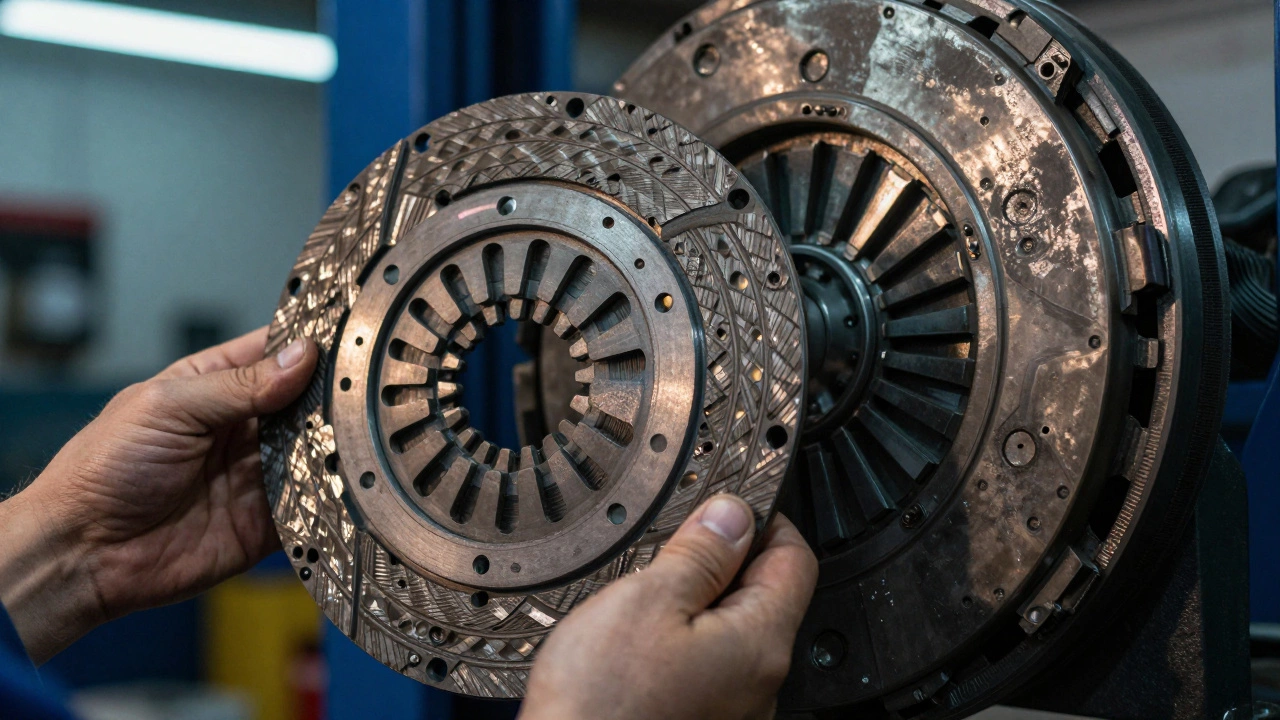
Second, heat damage. The old clutch has been slipping against the flywheel for thousands of miles. This creates hot spots, scoring marks, and warping. Even if the surface looks okay to the naked eye, microscopic imperfections can cause the new clutch to chatter or slip prematurely. A new clutch deserves a clean, flat mating surface.
Third, wear on the ring gear. The starter motor engages with teeth on the outer edge of the flywheel called the ring gear. These teeth wear down over time. If you install a new clutch on a flywheel with stripped ring gear teeth, your car won’t start when you turn the key. Checking this requires removing the flywheel anyway.
When Can You Keep the Old Flywheel?
It is not always mandatory to buy a new flywheel. There are specific scenarios where keeping the old one makes sense.
If your car has a Single Mass Flywheel and it is in good condition, you can often have it resurfaced (skived). Resurfacing removes a thin layer of metal to create a perfectly flat surface. This costs about $50-$100 at a machine shop. If the flywheel is not warped, cracked, or excessively worn, resurfacing is a valid option.
However, you cannot resurface a Dual Mass Flywheel. DMFs are sealed units. Once the internal springs lose tension or the bearings wear out, the whole unit must be replaced. Trying to repair a DMF is impossible and unsafe.
| Flywheel Type | Condition Check | Action Required | Cost Impact |
|---|---|---|---|
| Dual Mass (DMF) | Any age/mileage | Replace | High ($300-$800+) |
| Single Mass (SMF) | Warped/Cracked | Replace | Medium ($100-$200) |
| Single Mass (SMF) | Good Condition | Resurface | Low ($50-$100) |
| Single Mass (SMF) | Worn Ring Gear | Replace | Medium ($100-$200) |
Signs Your Flywheel Is Already Dead
Sometimes the flywheel tells you it needs replacing long before you touch the clutch. Pay attention to these symptoms during your diagnosis.
Rumbling noise in neutral. If you hear a deep rumbling sound when the car is in neutral and the clutch pedal is pressed, the input shaft bearing inside the Dual Mass Flywheel is likely failing. This bearing is inaccessible unless you replace the entire DMF.
Clutch chatter. When you try to pull away from a stop, does the car jerk or shudder? This often means the flywheel surface is glazed, oily, or warped. No amount of cleaning will fix severe glazing; the metal structure itself is compromised.
Vibration under load. If you feel excessive vibration through the floorboard when accelerating, the dampening springs inside a DMF may be broken. This is a safety issue. A broken DMF can throw pieces into the transmission casing, causing catastrophic failure.
Starter grinding. If your starter motor grinds when trying to start the engine, check the ring gear. Missing teeth mean the flywheel must go. You cannot weld or repair ring gear teeth reliably.
The Risk of Skipping the Flywheel
Let’s talk about what happens if you choose to keep the old flywheel to save cash today.
If you install a new clutch on a worn Single Mass Flywheel, the new friction material will conform to the irregularities of the old surface. This leads to uneven wear. Your new clutch might last only 10,000 miles instead of the expected 50,000+. You also risk overheating the clutch hub, which can crack the pressure plate.
If you ignore a failing Dual Mass Flywheel, the consequences are worse. The internal separation allows the two masses to spin independently. If the bolts fail or the housing cracks, metal shards enter the bell housing. This destroys the transmission synchronizers and output shafts. Suddenly, your $800 clutch job turns into a $4,000 transmission rebuild.
Also, consider resale value. If you sell the car soon, a receipt showing “New Clutch Kit + New Flywheel” reassures buyers. A receipt saying “Clutch Only” raises red flags. Buyers wonder what else was skipped.
How to Inspect the Flywheel Yourself
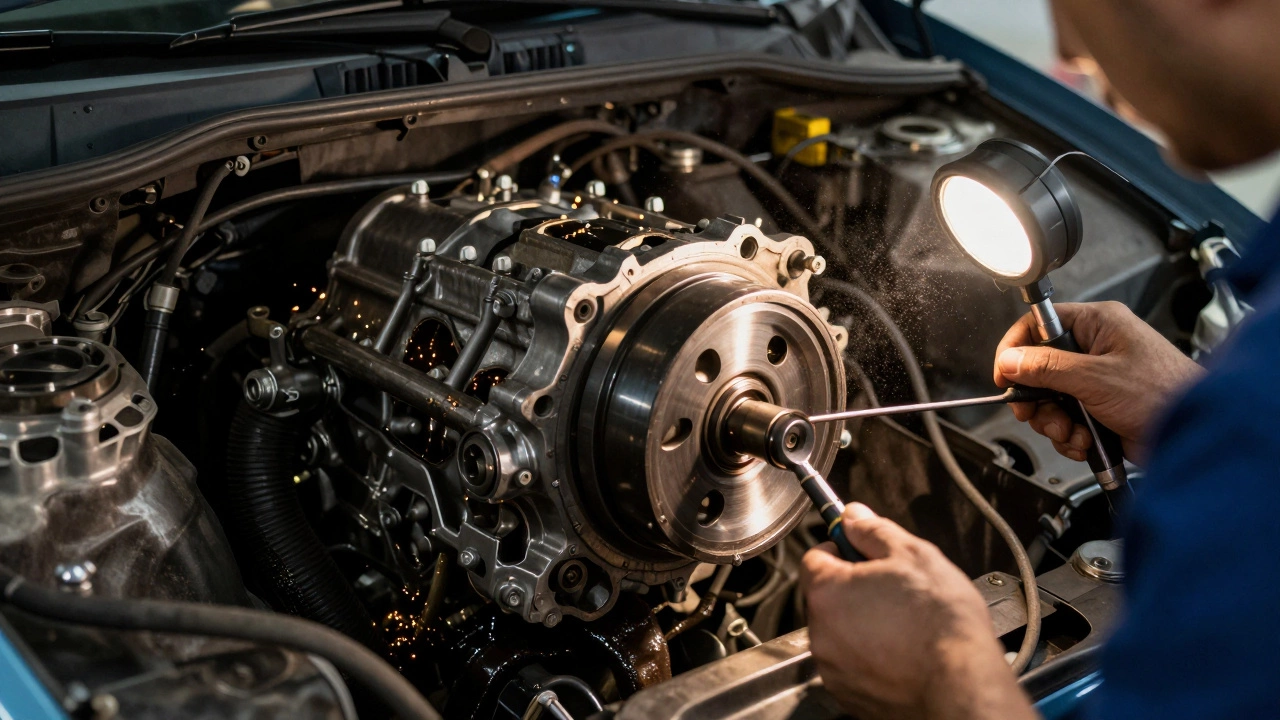
If you are doing this job yourself, here is how to inspect the flywheel once the transmission is off.
- Clean the surface. Use brake cleaner and a wire brush to remove oil and carbon buildup. Oil contamination ruins clutches instantly. If you see oil leaking from the rear main seal, fix that first.
- Check for cracks. Look closely at the mounting bolt holes and the rim. Hairline cracks are common in cast iron due to heat stress. Any crack means immediate replacement.
- Measure runout. Use a dial indicator to check how much the surface wobbles. For most cars, runout should be less than 0.005 inches. If it exceeds this, the flywheel is warped and must be replaced or resurfaced.
- Inspect the ring gear. Rotate the flywheel and look for missing or chipped teeth. Even one missing tooth can prevent starting in certain positions.
- Spin test for DMF. If you have a Dual Mass Flywheel, hold one side and spin the other. There should be some resistance from the springs. If it spins freely or feels gritty, the internal bearings are shot. Replace it.
Choosing the Right Replacement Part
Not all flywheels are created equal. When buying a replacement, look for quality brands like Luk, Sachs, Exedy, or Valeo. Cheap aftermarket flywheels often use inferior castings that warp quickly.
For Dual Mass Flywheels, ensure you buy the exact OEM specification. DMFs are tuned to your engine’s specific vibration profile. Using a generic DMF can lead to premature failure or increased cabin noise.
Always replace the clutch alignment tool and pilot bearing/bushings at the same time. These small parts guide the new clutch disc into place. If they are worn, installing the new clutch becomes a nightmare, and misalignment can destroy the new setup immediately.
Final Verdict: To Replace or Not to Replace?
Here is the bottom line. If you have a Dual Mass Flywheel, replace it. Every time. No exceptions. The cost of the part is negligible compared to the risk of transmission damage and the labor to access it again.
If you have a Single Mass Flywheel, inspect it thoroughly. If it is cracked, warped, or has bad ring gear teeth, replace it. If it is solid and straight, resurfacing is a safe and cost-effective option. However, if the flywheel is more than 100,000 miles old, replacement is still the smarter long-term play.
Don’t let false economy bite you. The transmission is out. The hard work is done. Spending an extra $200-$500 now saves you hundreds of dollars and days of frustration later. Drive smooth, not cheap.
Can I drive my car with a bad flywheel?
You should avoid driving with a known bad flywheel. If it is a Dual Mass Flywheel with failing bearings, driving can cause metal fragments to enter the transmission, leading to total transmission failure. If it is a single mass flywheel with minor warping, short trips to the shop are acceptable, but prolonged driving will accelerate clutch wear and cause overheating.
How much does it cost to replace a flywheel?
The cost varies by vehicle. A Single Mass Flywheel typically costs between $100 and $300 for the part. A Dual Mass Flywheel ranges from $300 to $800 or more. Labor is usually bundled with the clutch replacement job, adding minimal extra cost since the transmission is already removed. Total job costs including parts and labor often range from $1,200 to $2,500 depending on the car model.
What happens if I don't replace the flywheel?
If you skip replacing a worn flywheel, the new clutch will likely fail prematurely due to uneven surfaces or heat damage. In the case of a Dual Mass Flywheel, internal failure can destroy the transmission. You will also face the same high labor costs again in the near future, making the initial savings pointless.
Can a flywheel be repaired?
Only Single Mass Flywheels can be repaired, and only by resurfacing (skiving) the friction surface. This removes imperfections to create a flat plane. Dual Mass Flywheels cannot be repaired because their internal damping mechanisms are sealed and non-serviceable. Cracks or ring gear damage require full replacement for both types.
How do I know if I have a dual mass flywheel?
Most cars manufactured after 1990, especially diesels and those with automatic transmissions, use Dual Mass Flywheels. You can identify one by its weight and complexity; DMFs are heavier and have a visible gap or spring mechanism between two disks. Consulting your vehicle’s service manual or searching online forums for your specific make and model is the best way to confirm.
Does replacing the flywheel fix clutch chatter?
Often, yes. Clutch chatter is frequently caused by a glazed, warped, or contaminated flywheel surface. Replacing the flywheel ensures a clean, flat mating surface for the new clutch disc, eliminating the jerking sensation when engaging the clutch. However, if the chatter persists, check for issues with the hydraulic system or engine mounts.
Should I replace the pilot bearing with the flywheel?
Yes, always replace the pilot bearing or bushing when replacing the clutch and flywheel. The pilot bearing supports the transmission input shaft. If it is worn, it can cause noise, vibration, and difficulty shifting. Since it is located in the center of the flywheel and requires disassembly to access, replacing it is a low-cost insurance policy against future problems.