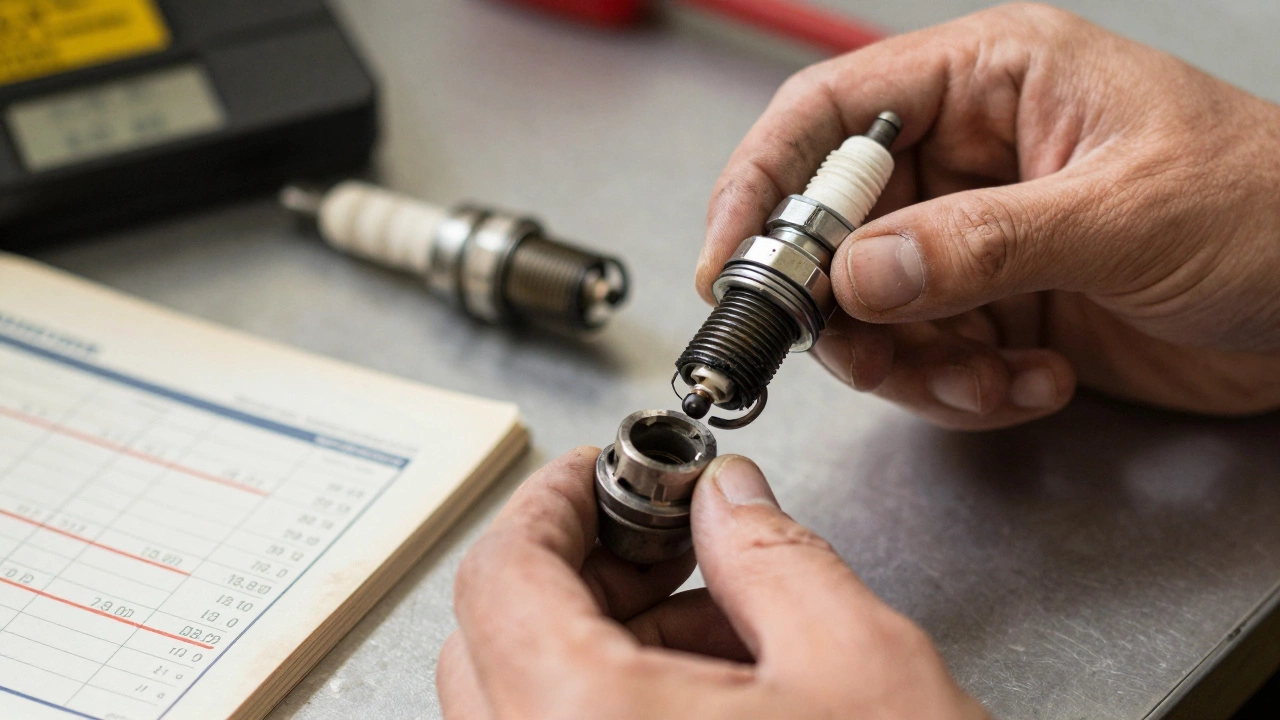
Spark Plug Symptoms: Common Signs Your Car Needs New Plugs
When your spark plug, a small but critical part that ignites fuel in your engine’s combustion chamber. Also known as ignition plug, it’s one of the most overlooked components in your car’s engine. Even though it’s tiny, a failing spark plug can cause big problems—like stalling, poor fuel economy, or even leaving you stranded. Most drivers don’t think about spark plugs until something goes wrong. But if your car is acting up, it’s often not the fuel pump, not the battery, and not the alternator—it’s the spark plugs.
Look for engine misfire, when one or more cylinders fail to ignite properly, causing a jerking or stumbling sensation. That’s usually the first red flag. You might feel it when accelerating, or hear it as a sudden pop or backfire from the exhaust. Then there’s rough idle, when the engine shakes or vibrates while stopped at a light. It’s not normal. If your car feels like it’s about to shut off at a stop sign, worn spark plugs are likely the cause. And don’t ignore reduced fuel economy, where you’re filling up more often without changing your driving habits. Bad plugs don’t burn fuel cleanly, so your car uses more gas to get the same power.
Other signs? Hard starts, especially in cold weather. A check engine light that flashes or stays on. Even increased emissions—your car might fail its MOT because the plugs are fouled with carbon. These aren’t random issues. They’re direct results of weak or failed sparks. And if you’ve passed 60,000 miles without replacing them, you’re already overdue. Copper plugs wear out faster. Platinum and iridium last longer, but they don’t last forever. The key is catching symptoms early. Ignoring them can lead to damage in the catalytic converter, oxygen sensors, or even the pistons. That’s not a cheap fix.
What you’ll find below are real, practical guides from drivers who’ve been there. From how to spot a bad plug by sound and feel, to whether changing them really makes a difference in performance. You’ll see how mileage, driving style, and plug type affect lifespan. No fluff. Just what works on UK roads. Whether you’re a weekend mechanic or just trying to avoid a tow truck, these posts give you the facts you need to act before it’s too late.