Radiator Lifespan: How Long Do Car Radiators Last and What Kills Them?
When your radiator, the main component that cools your engine by circulating coolant through fins and tubes. Also known as a cooling radiator, it's one of the few parts in your car that works non-stop every time you drive. Most radiators last between 8 and 12 years, but that’s only if you keep the coolant clean and the system free of leaks. A lot of people assume their radiator will last the life of the car—until it suddenly overheats and leaves them stranded. The truth? Radiators fail because of neglect, not age. Rust, debris, and old coolant are the real killers.
What happens inside your radiator isn’t magic—it’s physics. Hot engine coolant flows in, heat gets pulled out by airflow, and cool fluid goes back in. But if you skip coolant flushes, dirt and metal particles build up and clog the tiny passages. That’s when your cooling system, the network of hoses, water pump, thermostat, and radiator that regulates engine temperature starts to choke. A bad thermostat, a valve that controls coolant flow based on engine temperature can make your radiator work overtime, overheating it faster. And if you’re topping up with plain water instead of proper coolant, you’re speeding up corrosion. You don’t need to replace your radiator every few years, but you do need to check it every oil change.
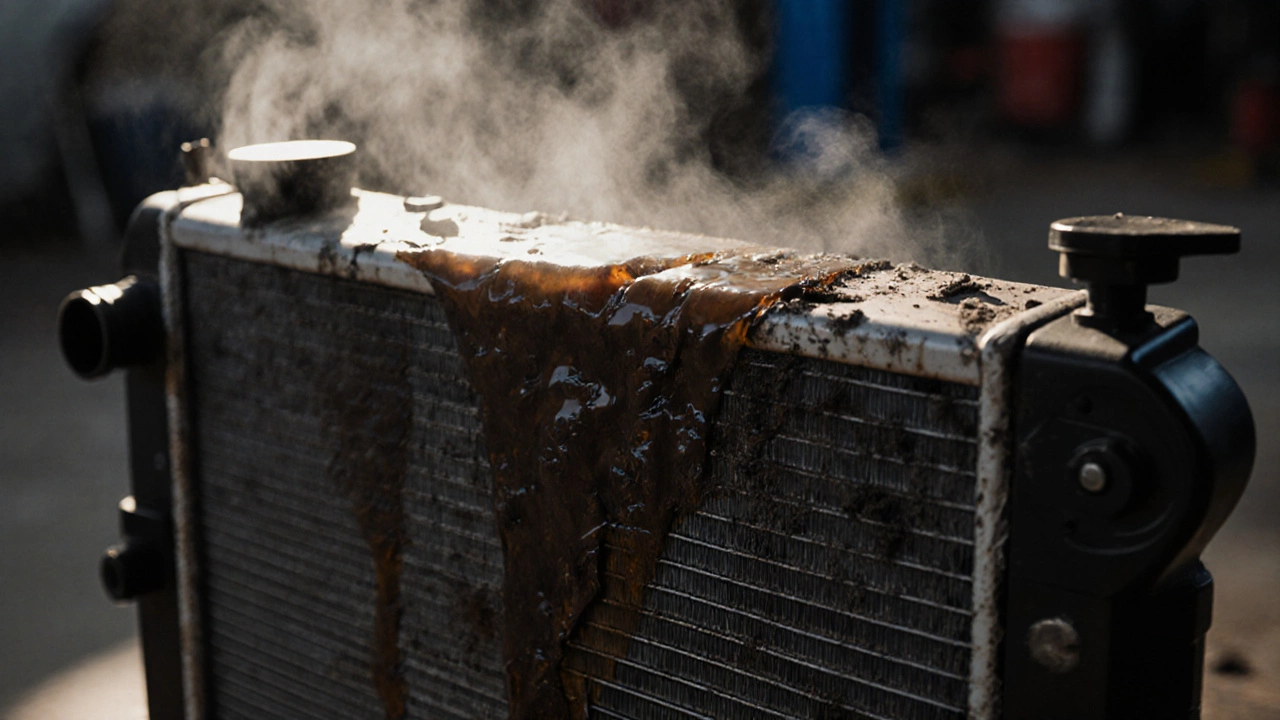
Look for signs before it’s too late. Is your car overheating on short drives? Are there puddles under the front end? Is the coolant looking brown or gritty? These aren’t normal. A small leak might seem harmless, but it’s a countdown. Even a cracked plastic tank or a bent fin can turn into a full failure in hot weather. And don’t ignore the warning lights—your engine doesn’t scream before it dies. The radiator isn’t flashy, but it’s the silent hero keeping your engine alive. When it goes, you don’t just lose cooling—you risk a blown head gasket, warped cylinder head, or worse. The posts below show you how to spot early radiator trouble, how to test coolant health, what causes leaks, and how to extend its life without spending a fortune. You’ll also see how a failing radiator can mess with your AC, cause strange noises, and even trigger false engine warnings. No fluff. Just what works.