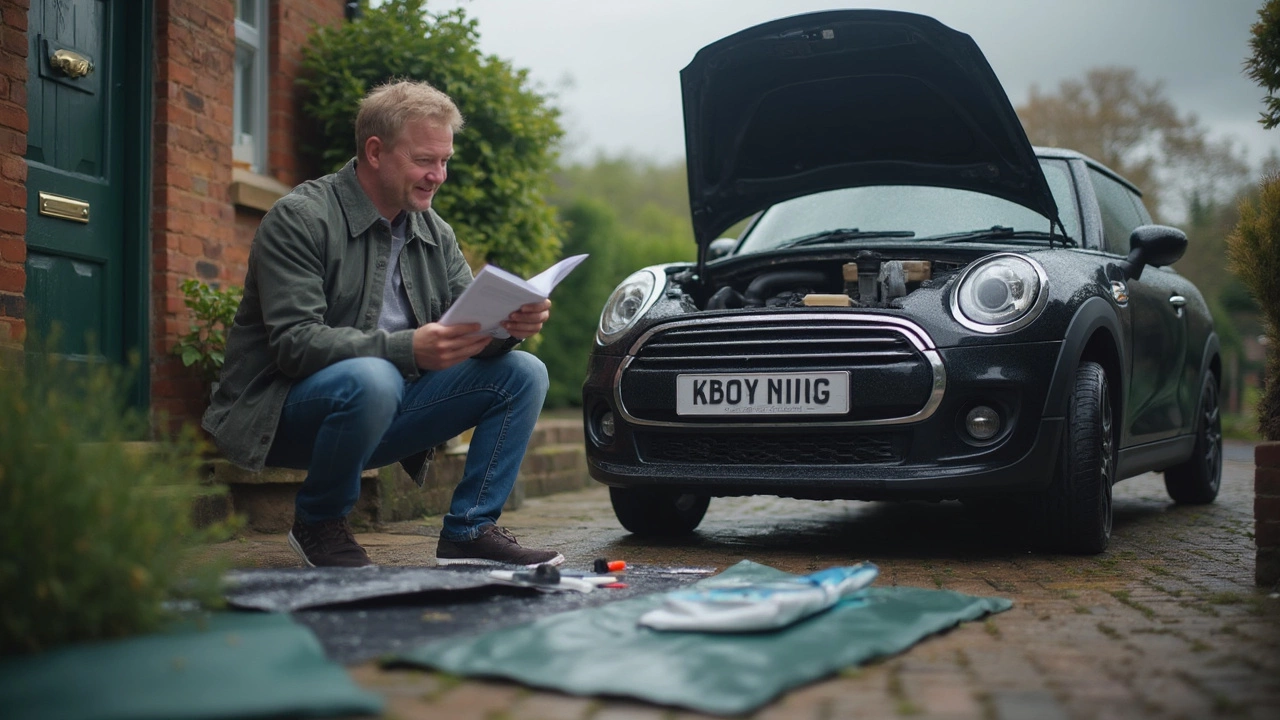
DIY Car Repair: Save Money and Fix Common Issues Yourself
When you're dealing with a DIY car repair, the practice of maintaining or fixing your vehicle without professional help. Also known as home car maintenance, it's not just about saving cash—it's about knowing your car well enough to spot trouble before it leaves you stranded. Most people think repairs mean a trip to the garage, but a lot of common issues—like worn brake pads, dirty spark plugs, or a failing air filter—are simple to fix with basic tools and ten minutes of your time.
Take brake pads, the friction material that slows your car when you press the pedal. They wear down over time, and ignoring them can cost you hundreds in rotor damage. Checking them doesn’t need a lift—just look through the wheel spokes. If the pad looks thinner than a quarter, it’s time to replace. Spark plugs, the tiny components that ignite fuel in your engine, are another easy win. If your car sputters, idles rough, or gulps fuel, old plugs are likely the culprit. A new set costs less than a coffee and takes under an hour to swap. Even radiator maintenance, keeping your engine from overheating by circulating coolant, is manageable. A quick visual check for leaks or rust, and topping up coolant every few months, can add years to your engine’s life.
DIY car repair isn’t about becoming a mechanic—it’s about becoming a smarter driver. You don’t need fancy gear to fix a clogged cabin air filter, check your suspension for bad struts, or replace a failing fuel pump. These aren’t niche tasks; they’re everyday problems that show up in UK driving conditions: wet roads, stop-start traffic, and aging vehicles. The posts below give you exact steps, tools you actually need, and what to watch for so you don’t make costly mistakes. Whether you’re replacing brake pads for the first time or wondering if your radiator’s about to quit, you’ll find clear, no-fluff guides that match what’s happening under your hood. No jargon. No upsells. Just what works.