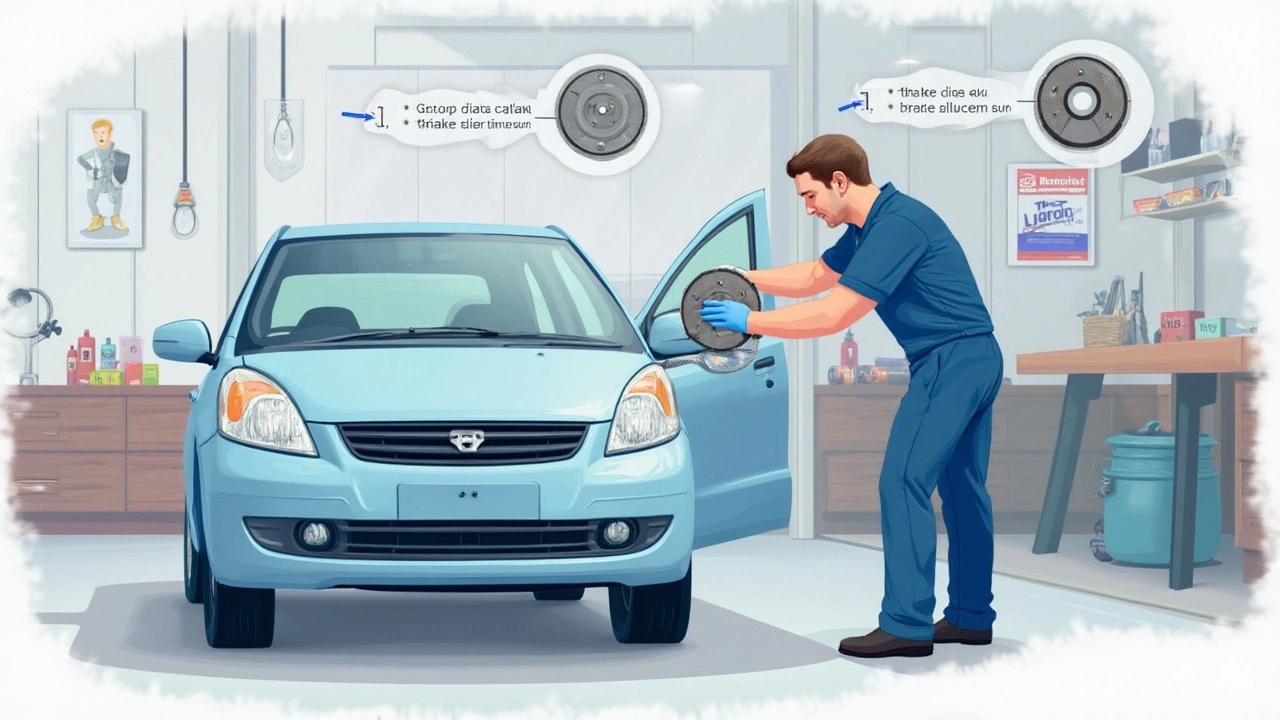
Brake Discs: What They Are, How They Wear, and When to Replace Them
When you press the brake pedal, the brake discs, also called rotors, are the metal plates that slow your car by gripping with brake pads. Also known as rotors, they’re a core part of your car’s brake system and directly affect how quickly and safely your vehicle stops. Without properly functioning brake discs, even the best brake pads won’t do their job.
Brake discs wear down over time—not just from normal use, but from heat, moisture, and debris. In the UK, where wet roads and stop-start traffic are common, they often need replacing before 60,000 miles. Signs you’re dealing with worn discs include squealing, vibrations when braking, or a noticeable increase in stopping distance. These issues don’t happen overnight. They build up slowly, which is why many drivers miss the warning until it’s too late. The brake pads you replace every 30,000 miles? They’re designed to protect the discs. But if you ignore worn pads, they’ll eventually grind into the discs, causing grooves, warping, or even cracks. That’s when repair costs jump from a simple pad swap to a full disc and pad replacement.
It’s not just about safety—it’s about money. Driving with damaged brake discs can lead to uneven tire wear, suspension stress, and even total brake failure. And while some people think brake discs last forever, that’s a myth. They’re consumable parts, just like tires or filters. The good news? You don’t need to be a mechanic to spot early signs. A quick visual check through your wheel spokes can show if the surface is smooth or heavily scored. If you hear a metallic grinding sound, it’s not the pads—it’s the disc itself. And if your steering wheel shakes when you brake, that’s often a warped disc.
What you’ll find below are real, practical guides from UK drivers who’ve been there. From how to tell if your discs are worn without lifting the car, to whether you can replace them yourself, to how brake disc quality affects your overall braking performance. These aren’t theory pieces—they’re hands-on experiences from people who fixed their own brakes, saved money, and stayed safe. Whether you’re looking at buying used parts at auction or just trying to understand why your car feels different when stopping, this collection gives you the facts you need—no fluff, no jargon, just what works.