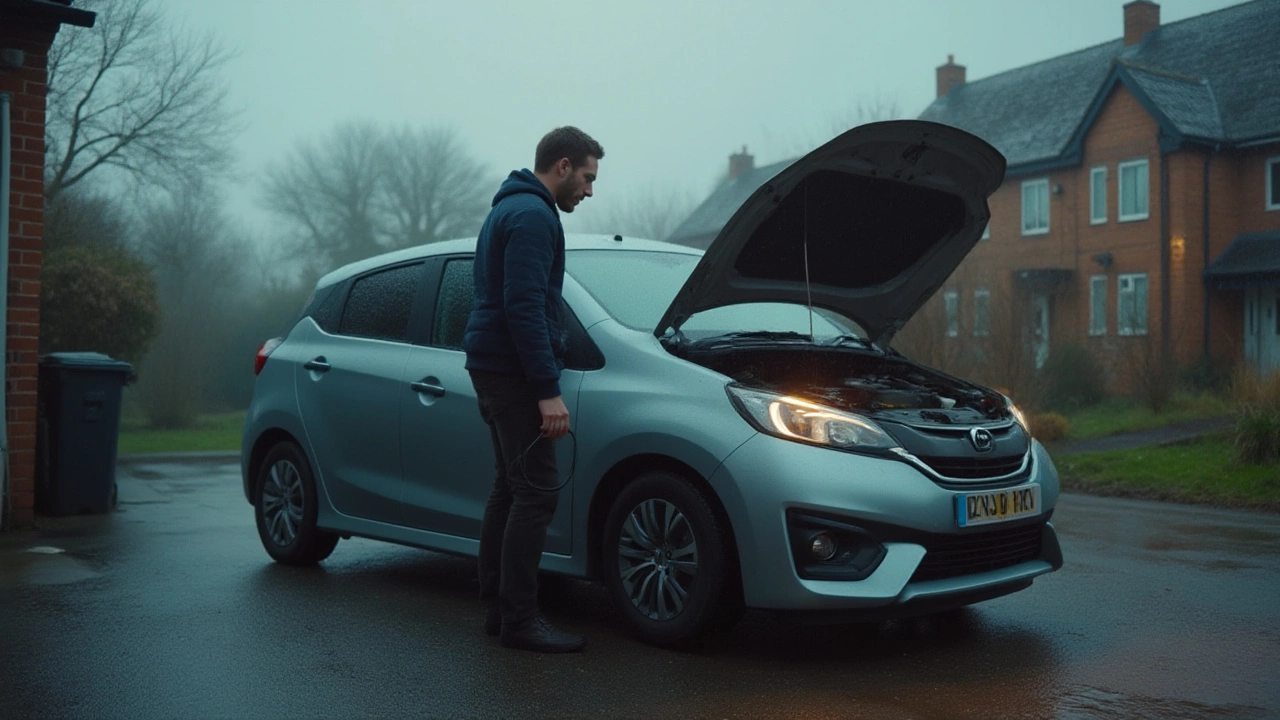
Bad Battery Signs: How to Spot a Failing Car Battery Before It Leaves You Stranded
When your car won’t start, it’s rarely the engine’s fault—it’s usually the bad battery, a power source that degrades over time and fails without warning. Also known as a weak battery, it’s the silent killer of morning commutes and road trips. Most car batteries last 3 to 5 years, but heat, cold, and short trips can cut that life in half. If you’ve noticed your car struggling to turn over or your headlights dimming at idle, you’re not imagining it—you’ve got bad battery signs.
A failing battery doesn’t always scream for help. Sometimes it just whispers—like when your radio turns off when you start the engine, or your dashboard lights flicker after you’ve been driving for a while. These aren’t random glitches. They’re clues. The battery powers everything when the engine’s off, and it helps the alternator keep things running when it’s on. If it’s weak, your car’s electrical system starts to compensate, and that’s when things like slow cranking, clicking noises, or even the check engine light come on. It’s not always the starter. It’s not always the alternator. More often than not, it’s the battery giving up quietly.
And it’s not just about starting the car. A bad battery can mess with your car’s computer, cause erratic behavior in the touchscreen, or make your key fob act up. You might think it’s a software issue, but it’s often just low voltage. Even things like interior lights dimming when you turn on the AC or power windows moving slower than usual are red flags. These aren’t normal. They’re symptoms of a battery that’s losing its ability to hold a charge.
What makes this worse is that batteries don’t always fail suddenly. They fade. You might not notice until you’re stuck in the rain at 7 a.m. That’s why checking your battery regularly matters—not just when it’s dead. A simple voltage test with a multimeter takes two minutes. If it’s below 12.4 volts with the engine off, it’s already struggling. If it’s below 12 volts, it’s on borrowed time.
You’ll find posts below that show you how to test your battery at home, what tools you need, and how to tell if it’s really the battery or something else—like a faulty alternator or a parasitic drain. We’ve got guides on battery replacement costs, how to extend battery life, and even what to look for when buying a new one in the UK. No fluff. No jargon. Just clear, practical steps to avoid being stranded because you ignored the signs.