Air Filter Replacement Calculator
How often should I replace my air filter?
Find your optimal replacement schedule based on your filter type and home environment.
1. Select your filter type
2. Home environment factors
Estimated Replacement Frequency:
Most people don’t think about their whole house air filter until the HVAC system starts making strange noises or the dust on their shelves won’t go away. But replacing it on time isn’t just about cleanliness-it’s about health, efficiency, and saving money on energy bills. So how often should you actually change it? The answer isn’t one-size-fits-all. It depends on your filter type, your home, and your lifestyle.
What kind of filter do you have?
Not all air filters are the same. The most common types you’ll find in UK homes are fiberglass, pleated, electrostatic, and HEPA filters. Each has a different lifespan and purpose.
- Fiberglass filters are the cheapest, usually sold in packs of 10. They’re designed to catch big dust particles and protect your HVAC system, not clean the air. These need replacing every 30 days, especially if you have pets or live in a busy area like Manchester.
- Pleated filters are the most popular upgrade. Made of folded synthetic material, they trap smaller particles like pollen and mold spores. Most last 90 days, but if you have allergies or live near construction, swap them out every 60 days.
- Electrostatic filters use static charge to pull in dust. Some are washable, others aren’t. Washable ones can last years if cleaned monthly. Non-washable versions behave like pleated filters-replace every 60 to 90 days.
- HEPA filters are rare in standard homes because they restrict airflow too much for most systems. If you have one, check the manufacturer’s guide. They often need replacing every 6 to 12 months, but only if your HVAC is designed to handle them.
Look at the side of your current filter. There’s usually a MERV rating printed on it. MERV stands for Minimum Efficiency Reporting Value. Ratings from 1 to 4 are basic fiberglass. MERV 5 to 13 are standard pleated filters. MERV 14+ are high-efficiency and need professional installation.
Your home environment changes everything
Two identical homes with the same filter can need replacements at totally different times. Here’s what pushes the clock forward:
- Pets - One dog or cat can cut your filter life in half. Pet dander, fur, and tracked-in dirt clog filters fast. If you have two or more pets, replace your filter every 20 to 40 days, even if it’s a pleated one.
- Smoking indoors - Smoke particles are tiny and sticky. They build up quickly. If anyone smokes inside, swap filters every 30 days, no exceptions.
- Older homes - Houses built before 1980 often have more air leaks. Dust, pollen, and outdoor pollutants sneak in through gaps in windows, doors, and attics. You’ll need to change filters more often than someone in a modern, sealed home.
- Construction or renovation - Even a small kitchen refit kicks up drywall dust. That stuff is fine enough to slip through filters and settle in your ducts. Replace the filter immediately after any major work.
- Allergies or asthma - If someone in your home has respiratory issues, don’t wait. Change filters every 30 to 45 days, even if they look clean. Dust mites, pollen, and mold spores can still be there.
My neighbour in Salford changed her filter every 90 days like the box said. Her son had constant coughing fits. She switched to monthly changes and noticed a difference in two weeks. No medication changes. Just a cleaner filter.
How to tell if it’s time to replace it
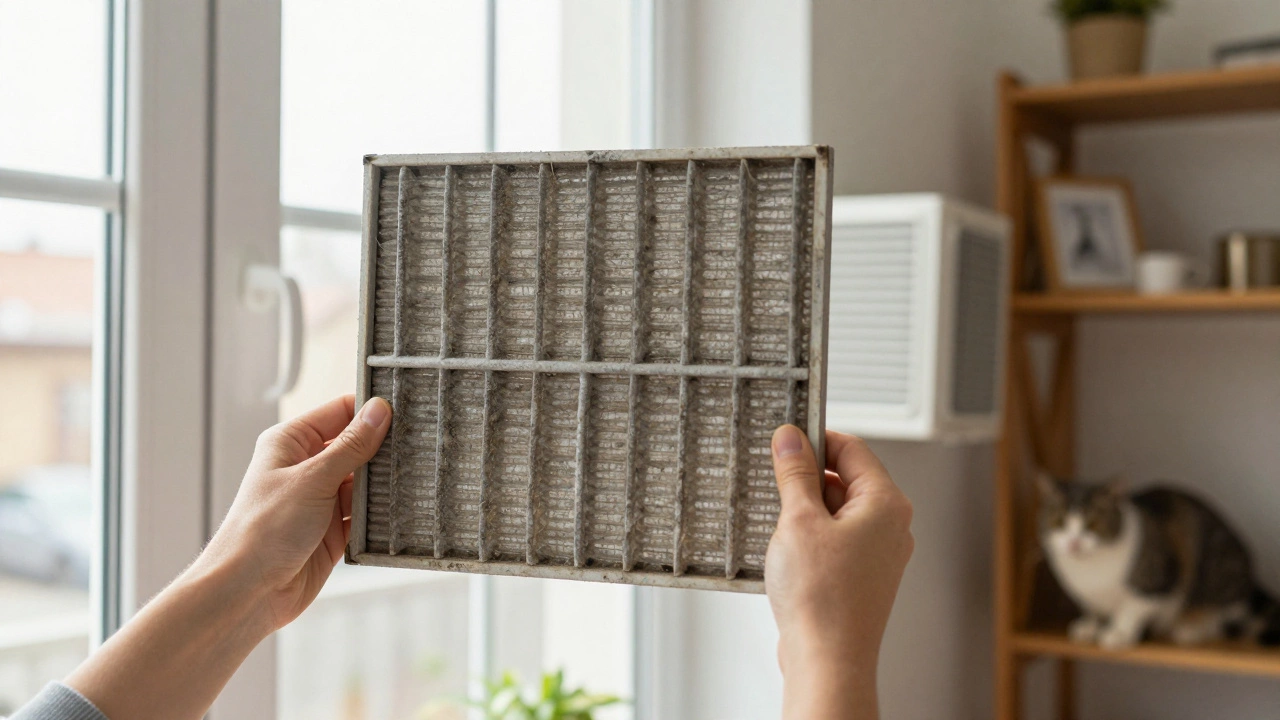
You don’t need a calendar. Just check your filter. Take it out once a month and hold it up to the light. If you can’t see light through it, it’s full. That’s your cue.
Another sign? Your HVAC runs longer than usual. If your heating kicks on more often or takes longer to reach the set temperature, a clogged filter is probably the culprit. Your system is working harder, which means higher bills and more wear.
And yes, dust on your vents is a clue. But don’t wait for that. Dust builds up on vents because the filter is already overloaded. By then, it’s too late.
What happens if you wait too long
Skipping filter changes doesn’t just make your house dusty. It damages your system.
A clogged filter forces your blower motor to push air through tighter spaces. That overheats the motor. Over time, that leads to premature failure. Replacing a motor costs £300 to £600. A new filter? £5 to £20.
It also makes your system less efficient. The UK Energy Saving Trust says a dirty filter can increase your heating bill by up to 15%. That’s £100+ extra a year if you’re on a standard gas tariff.
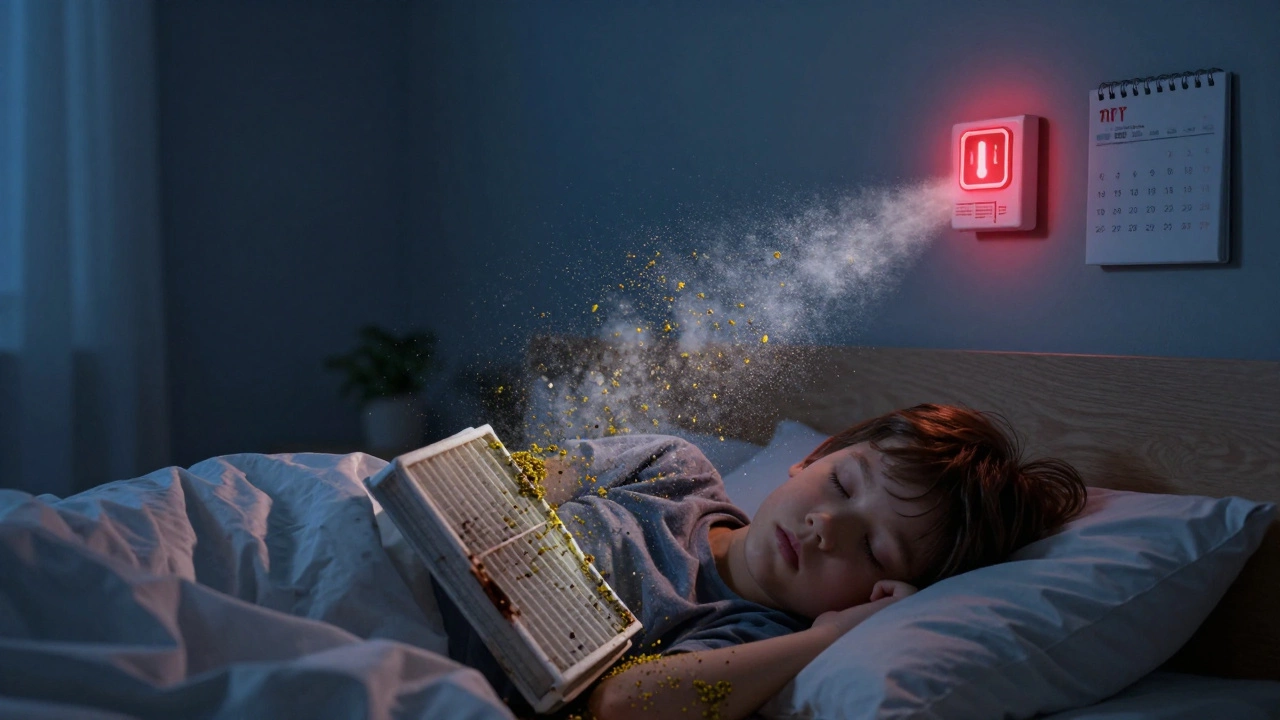
And then there’s air quality. A saturated filter stops trapping particles. Instead, it releases them back into your home. Pollen, bacteria, and even virus carriers can start circulating again. For households with kids, elderly members, or anyone with respiratory conditions, that’s not just inconvenient-it’s risky.
Seasonal changes matter too
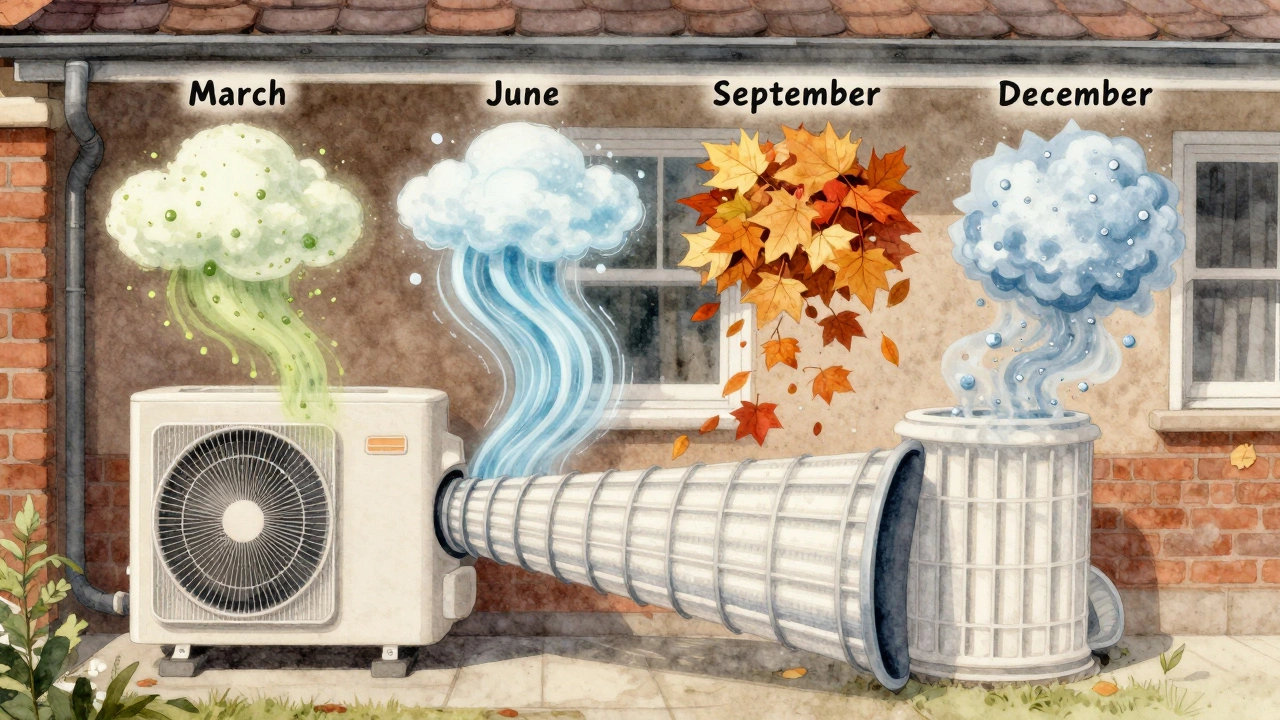
In Manchester, winter means closed windows and constant heating. Summer brings pollen and damp air. Both increase filter load.
Spring: Pollen levels spike. Even if you don’t have allergies, your filter catches more. Replace it in March or April.
Summer: Humidity brings mold spores. If you use AC, the filter gets soaked with moisture and debris. Swap it before September.
Fall: Leaves, dirt, and outdoor allergens get tracked in. Change it in October.
Winter: Indoor air gets dry and stale. Dust builds up from blankets, carpets, and heating. Replace it in December or January.
That’s four times a year. For most homes, that’s the sweet spot.
Pro tips for easier maintenance
- Mark your calendar or set a phone reminder. Try the first day of every season.
- Buy filters in bulk. A 6-pack of MERV 8 pleated filters often costs less per unit than buying one at a time.
- Keep a spare on hand. If you forget and the filter is filthy, you won’t have to wait for delivery.
- Turn off your HVAC before removing the filter. It’s safer and prevents dust from blowing back into the room.
- Write the replacement date on the filter frame with a marker. That way, next time you check, you’ll know how long it’s been in there.
One last thing: don’t upgrade your filter without checking your system. A MERV 13 filter sounds great for allergies, but if your furnace wasn’t built for it, it’ll struggle. Talk to an HVAC technician if you’re unsure.
Final checklist: When to replace your filter
Replace your whole house air filter if:
- You see visible dust buildup on the filter surface
- It’s been 30 days and you have pets, smokers, or allergies
- It’s been 90 days and you have no pets or health concerns
- You’ve had recent home renovations
- Your heating or cooling cycles are longer than normal
- Your energy bills have gone up without reason
When in doubt, take it out and look. A quick 10-second check saves you hundreds in repairs and energy costs.
Can I clean and reuse my air filter?
Only if it’s specifically labeled as washable or reusable. Most filters, especially pleated and fiberglass ones, are disposable. Washing them damages the material and reduces efficiency. Even washable filters need to dry completely before reinstalling-wet filters can grow mold.
Does the filter direction matter?
Yes. Filters have an arrow printed on the frame showing airflow direction. Install it facing toward the blower (usually toward the HVAC unit). Wrong direction reduces airflow and makes the system work harder.
Do smart thermostats tell me when to change the filter?
Some do, but don’t rely on them. Smart thermostats estimate filter life based on runtime and fan usage. They don’t measure actual dirt buildup. If you have pets or allergies, treat their suggestions as a reminder, not a rule.
Can I use a filter with a higher MERV rating?
Not without checking your system first. Higher MERV ratings mean tighter filtration, but also more airflow resistance. Older or smaller HVAC units can overheat or fail if forced to push air through a MERV 13+ filter. Consult your manual or an HVAC technician before upgrading.
Why does my filter turn black so fast?
A black filter usually means soot or carbon buildup. This can come from candles, fireplaces, gas appliances, or smoking. It can also signal a problem with your furnace’s combustion process. If your filter turns black within weeks and you don’t burn candles or smoke, get your HVAC system checked. It could be a safety issue.