
Exhaust System Power Calculator
Estimated Power Gains
Enter your current horsepower and select upgrades to see realistic gains.
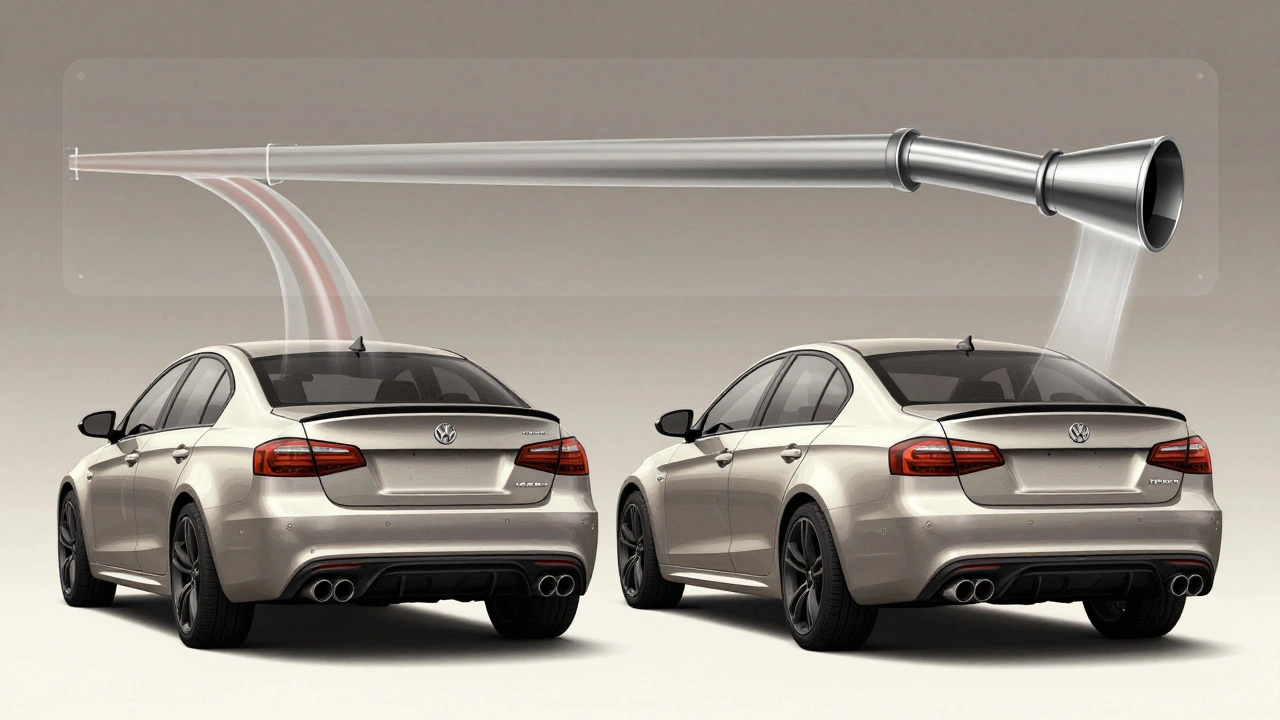
Ever seen a car with a giant exhaust tip and thought, "That must add serious horsepower"? You’re not alone. But here’s the hard truth: exhaust tips alone don’t add a single horsepower. They’re purely cosmetic. If you’re hoping to squeeze more power out of your engine just by swapping out the tip, you’re wasting your time-and your money.
What Even Is an Exhaust Tip?
An exhaust tip is the final piece of your exhaust system that sticks out from the back of your car. It’s usually made of stainless steel, chrome, or carbon fiber. Its job? To look good and sometimes direct exhaust gases away from the bumper. It doesn’t connect to the engine. It doesn’t affect airflow through the pipes. It doesn’t change pressure, temperature, or flow dynamics inside the system. It’s the finisher, not the engine.Think of it like new tires on a bicycle. You can put on flashy red tires, but they won’t make you pedal faster. Same idea. The exhaust tip is the paint job on the tailpipe, not the carburetor.
Where Did the Myth Come From?
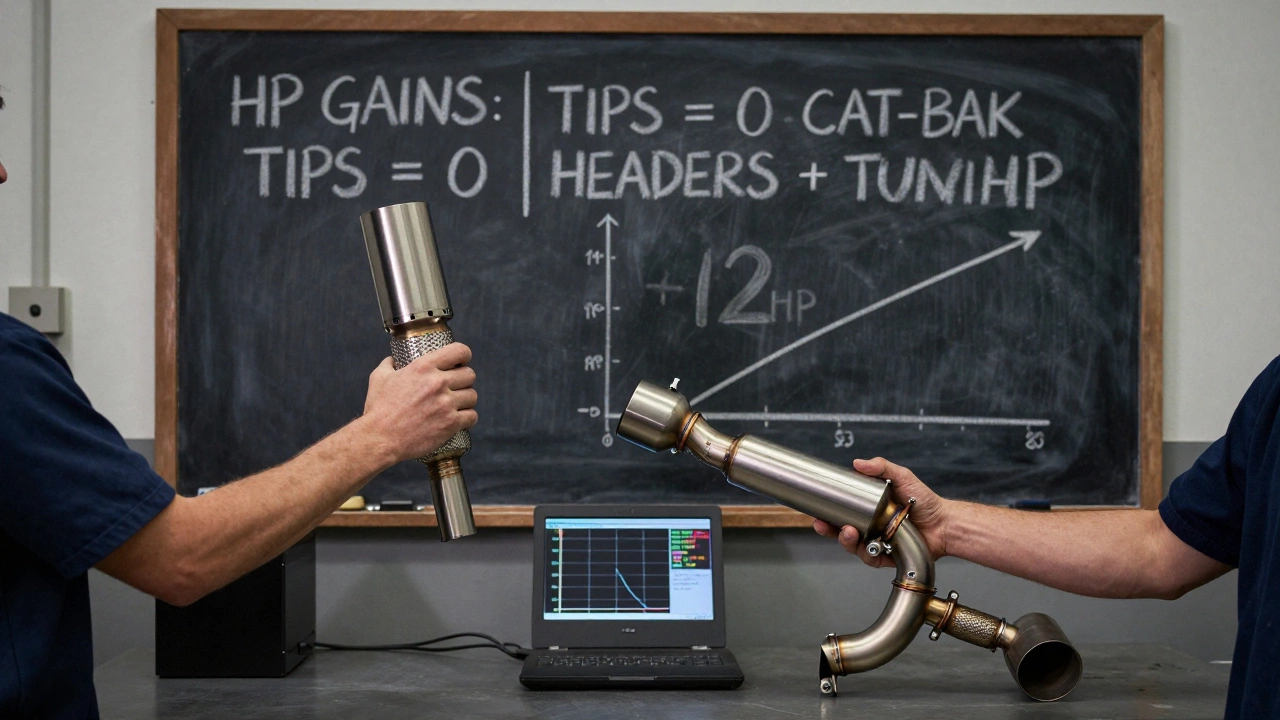
The confusion started in the 1990s. Car magazines and TV shows would show a modified Mustang with huge dual exhaust tips, then slap on a dyno graph showing 20 extra horsepower. Viewers assumed the tips caused the gain. But the real upgrades? A free-flowing cat-back system, headers, and a tuned ECU. The tips were just the shiny cherry on top.Dealerships and aftermarket shops leaned into this. They’d sell a $300 set of tips and market them as "performance upgrades." Some even labeled them "race-tested" or "dyno-proven." But if you dig into the fine print, those claims usually refer to the entire exhaust system-not the tip alone.
What Actually Increases Horsepower in an Exhaust System?
Real power gains come from reducing backpressure and improving gas flow. That means changing the parts that actually touch the exhaust gases as they leave the engine.- Headers: These replace the factory exhaust manifolds. They’re designed with equal-length tubes that let each cylinder’s exhaust flow out smoothly, reducing interference.
- Cat-back systems: This is the section from the catalytic converter back to the tips. A true performance cat-back uses larger-diameter piping (2.5 to 3 inches), fewer bends, and a free-flowing muffler. That’s where real gains happen-typically 5 to 15 hp depending on the engine.
- High-flow catalytic converters: Factory cats are designed for emissions, not flow. Upgrading to a high-flow version reduces restriction and helps the engine breathe better.
- ECU tuning: After you improve airflow, the engine’s computer needs to adjust fuel and timing. Without tuning, you might not see any gains-or even lose power.
These changes work together. A good cat-back system on a 2023 Honda Civic Type R, for example, can add about 12 hp and 18 lb-ft of torque. But if you just slap on a bigger tip? Zero gain.
Why Do People Still Buy Exhaust Tips?
Because they look cool. And sound cool.Exhaust tips can change the tone of your car’s exhaust note. A larger tip can slightly deepen the sound by allowing gases to expand more freely as they exit. But that’s not horsepower-it’s acoustics. A tip alone won’t make your V6 roar like a V8. For real sound changes, you need a different muffler design or resonator.
Many people buy tips for aesthetics. Chrome tips look sharp on a black sedan. Dual tips make a muscle car look aggressive. Carbon fiber tips scream "racing." And let’s be honest: if you’re spending $1,000 on a new exhaust system, you might as well get tips that match your style.
When Do Exhaust Tips Matter?
There are two real cases where exhaust tips affect performance:- Design integration: Some performance exhausts have tips that are part of the muffler’s exit geometry. For example, a dual-tip system with a Y-shaped muffler exit can improve flow balance. But again, it’s not the tip itself-it’s how the entire end section is engineered.
- Clearance and safety: If a tip is too short or poorly positioned, it can overheat your bumper, melt plastic trim, or even cause a fire. A properly sized tip prevents that. But that’s safety, not speed.
So if you’re replacing a damaged tip, go ahead. But don’t expect a boost. If you’re buying new tips to gain power? Save your cash.
What About Those "Performance Tips" on Amazon?
You’ve seen them: "2.5" Dual Chrome Exhaust Tips for 10+ HP Gain!" They’re everywhere. These listings use fake dyno charts, stock photos of muscle cars, and vague terms like "optimized flow." But here’s what they never show: the full system they’re paired with.Real performance shops don’t sell tips alone. They sell complete systems. That’s because they know the truth: you can’t tune a car with just a tip. If a product claims horsepower gains from a tip alone, it’s either misleading or outright false.
Check the reviews. Look for posts from people who actually dyno-tested the tips. You’ll find very few-because the results are always zero.
Bottom Line: Don’t Waste Your Money
Exhaust tips are about looks, not power. If you want more horsepower, invest in a full cat-back system with a high-flow muffler, headers, and ECU tuning. Those changes are measurable. They’re proven. And they’ll make your car feel faster.But if you just want your car to look and sound more aggressive? Go for the tips. Just don’t fool yourself into thinking you’re making more power. You’re not. You’re just making it look like you are.
And that’s okay. Cars are personal. If a shiny tip makes you smile every time you pull into the driveway, then it’s worth it. Just know what you’re paying for.
Do exhaust tips increase horsepower?
No, exhaust tips do not increase horsepower. They are purely aesthetic components that do not affect airflow, pressure, or engine performance. Any claims that they add power are misleading. Real horsepower gains come from upgrading the entire exhaust system, including headers, cat-back piping, and ECU tuning.
Can exhaust tips change the sound of my car?
Yes, but only slightly. A larger or differently shaped tip can alter how exhaust gases expand as they exit, which may deepen the tone slightly. However, the muffler and resonator do the heavy lifting for sound. A tip alone won’t make your car louder or more aggressive-it just changes the final note.
What’s the difference between exhaust tips and a cat-back system?
Exhaust tips are the visible ends of the system. A cat-back system replaces everything from the catalytic converter back to the tips, including piping, mufflers, and sometimes hangers. A cat-back system can improve flow and add 5-15 hp. Tips do neither. You can install tips without changing the cat-back, but you can’t get real performance gains without upgrading the cat-back.
Are dual exhaust tips better than single?
Not for performance. Dual tips are mostly for looks and symmetry. A true dual exhaust system uses two separate pipes from the engine, which can improve flow. But dual tips on a single-pipe system? They’re just decoration. The number of tips doesn’t affect power-it’s the pipe diameter and internal design that matter.
Should I upgrade my exhaust tips if I already have a performance exhaust?
Only if you want to change the look. If your cat-back system is already giving you power gains, new tips won’t improve performance. But they can upgrade the style-chrome vs. carbon fiber, size, or finish. Just make sure the new tips match the outlet size of your existing muffler.