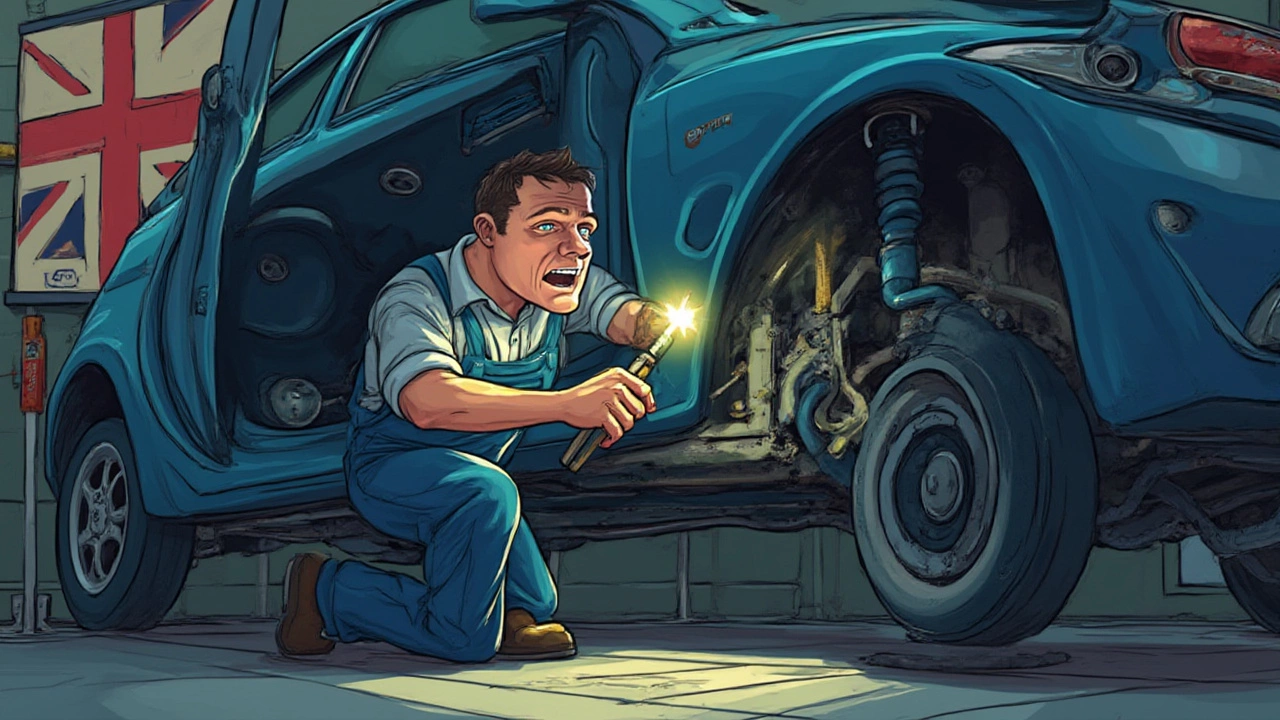
Worn Shocks: Signs, Risks, and What to Do Next
When your car worn shocks, damaged shock absorbers that fail to control spring movement and reduce ride control. Also known as failing suspension dampers, they turn every bump into a jolt and make your car feel unstable at speed. Most drivers don’t notice them until it’s too late—until the ride feels like a trampoline, or the car sways like it’s on ice. Worn shocks don’t just make driving uncomfortable—they’re a safety risk. They increase stopping distances, cause uneven tire wear, and make it harder to control the car in emergency maneuvers.
Shocks and struts are often mixed up, but they’re not the same. struts, a structural part of the suspension that also supports the vehicle’s weight and holds the spring are built into the suspension system itself. shocks, are separate dampers that control the up-and-down motion of the springs. Both wear out over time, and both cause similar symptoms: excessive bouncing after hitting a bump, nose-diving when braking, or the car leaning hard in turns. If you’ve noticed your tires wearing unevenly—especially on the edges—it’s not just an alignment issue. It’s likely your shocks or struts are done.
Ignoring worn shocks doesn’t just hurt your ride—it damages other parts. Your tires wear out faster. Your brake pads wear out faster because the car’s weight shifts unpredictably during stops. Even your steering components take extra stress. One driver we talked to replaced his tires twice in a year, only to find out the real problem was his shocks. Once he fixed them, his tires lasted three more years. That’s not luck—that’s basic maintenance.
You don’t need a garage to spot the signs. Try the bounce test: push down hard on one corner of your car and let go. If it bounces more than once or twice, your shocks are likely worn. Listen for clunking noises over bumps—those are metal parts hitting each other because the shock can’t cushion the impact. And if your car feels like it’s floating on rough roads, that’s not "smooth ride"—that’s loss of control.
The posts below cover everything you need to know about suspension problems, from spotting bad struts to understanding how worn shocks affect your brakes, tires, and even your engine. You’ll find real-world advice on what to check, when to replace, and how to avoid being overcharged at the shop. Whether you’re a DIYer or just trying to understand what your mechanic is telling you, these guides cut through the noise and give you clear, practical answers.