Vehicle Exhaust: What It Is, How It Works, and What to Watch For
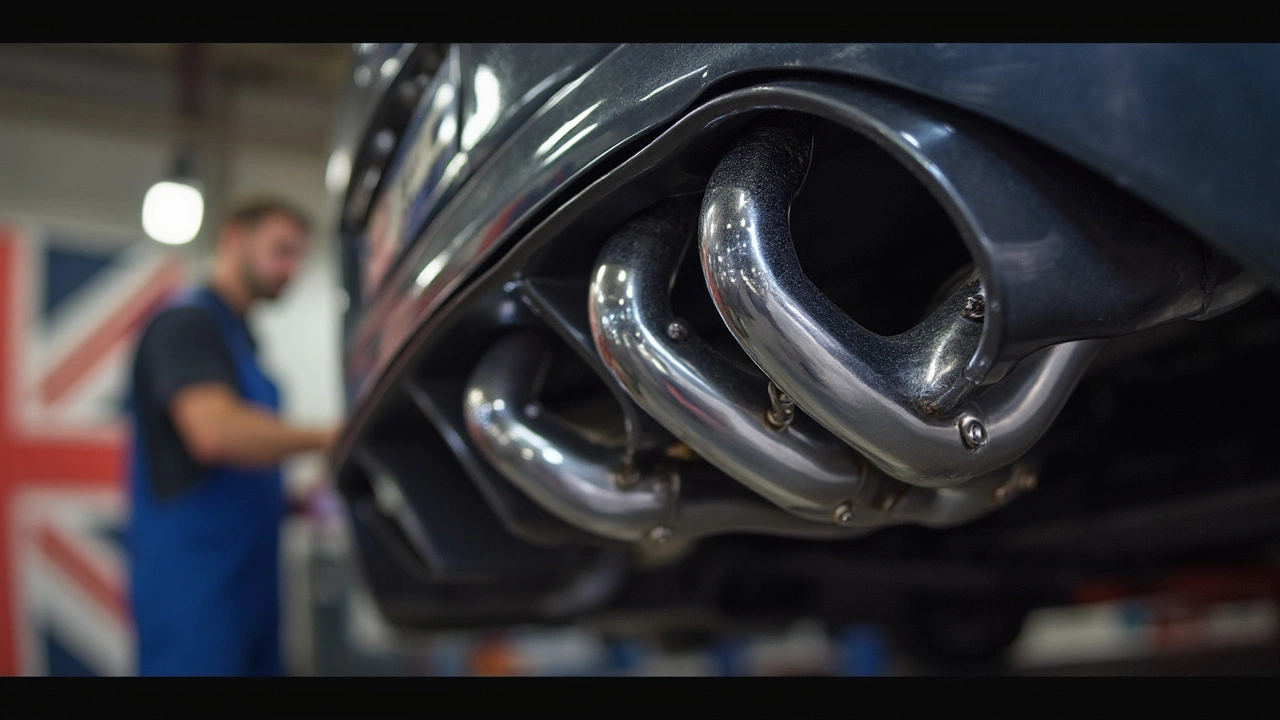
When you hear that rumble from the back of your car, you’re hearing the vehicle exhaust, the system that safely channels harmful gases away from the engine and out of the car. Also known as an exhaust system, it’s not just a pipe—it’s a chain of parts working together to reduce noise, clean emissions, and keep your engine running right. Without it, your car wouldn’t just be loud—it’d be dangerous. Exhaust fumes contain carbon monoxide, a silent killer, and the system’s job is to keep that out of your cabin and into the air where it’s less harmful.
The exhaust system, a network of pipes, mufflers, catalytic converters, and resonators starts at the engine’s exhaust manifold and ends at the tailpipe. Each part has a role: the manifold collects gases, the catalytic converter burns off pollutants, the muffler cuts noise, and the tailpipe sends it all outside. If any piece rusts, cracks, or breaks, the whole system suffers. You might hear a new rattle, smell gas inside the cabin, or notice your car losing power. These aren’t just annoyances—they’re warnings.
Many people think a loud exhaust just means it’s "sporty," but that’s often a sign of damage. A broken hanger, a rusted pipe, or a failing muffler can let fumes leak into your car. That’s not cool. And if you’re thinking about upgrading to a performance exhaust, a modified system designed to improve flow and sound, know this: it’s not just about noise. A better-flowing system can help your engine breathe easier, which might give you a bit more power and better fuel economy—if it’s installed right and matches your car’s setup. But a cheap, poorly fitted system? It’ll cost you more in the long run.
What you’ll find below are real, practical guides from drivers who’ve been there. You’ll learn how to spot a failing exhaust before it leaves you stranded, why a loud muffler might mean more than just noise, and how a damaged system can hurt your engine’s efficiency. We cover what to listen for, what to look under the car, and how to tell if you need a full replacement or just a simple fix. No fluff. Just what works.