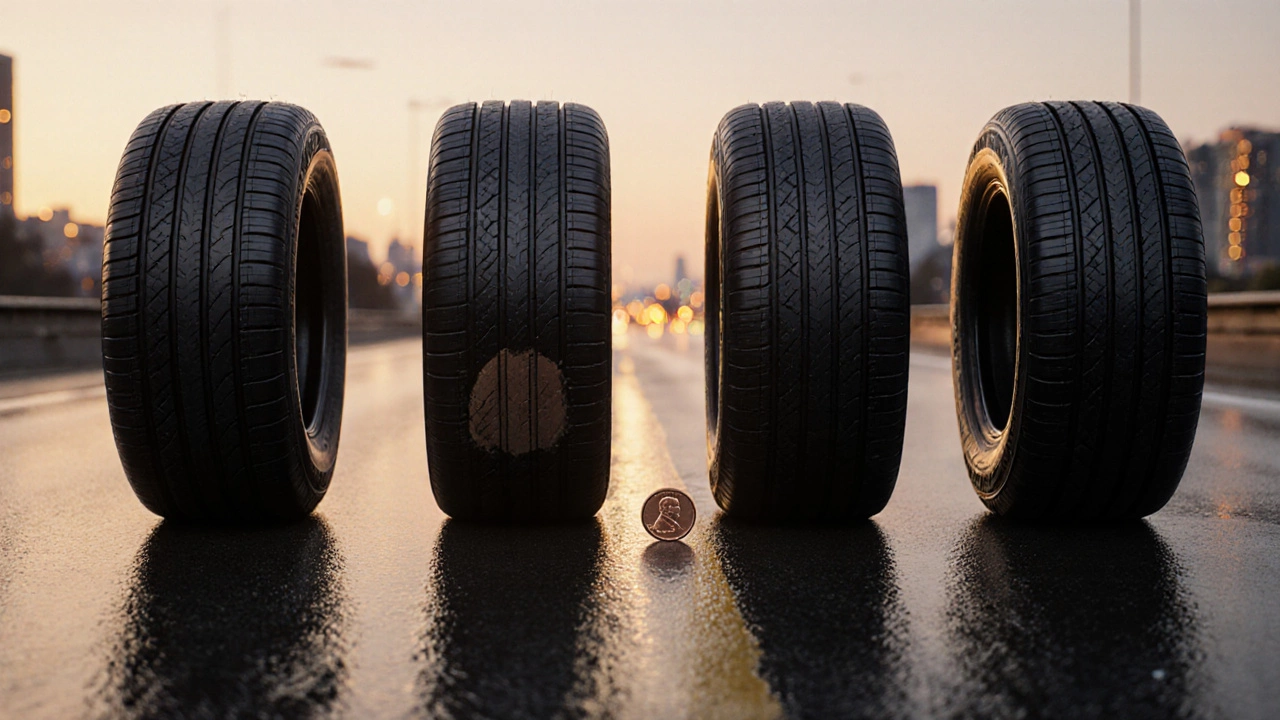
Tire Lifespan: How Long Do Car Tires Last and What Kills Them?
When you buy a new set of tires, rubber circles designed to grip the road and carry your vehicle's weight. Also known as tyres, they’re the only part of your car touching the road—and they wear out faster than most people think. In the UK, most tires last between 20,000 and 40,000 miles, but that’s only if you treat them right. Many drivers replace them after just 3 years, not because the tread is gone, but because the rubber has hardened from sun, cold, or neglect.
Tire pressure, the amount of air inside the tire is the biggest hidden killer. Underinflated tires flex too much, creating heat that breaks down the rubber. Overinflated ones wear out fast in the center and lose grip. Both reduce fuel economy and make braking longer. Then there’s tire wear, the gradual loss of tread depth. Uneven wear? That’s usually a sign of bad alignment, worn suspension, or improper inflation. You don’t need a garage to spot it—run your hand across the tread. If one side feels smooth and the other rough, your tires are being punished.
Tire replacement, the act of swapping worn tires for new ones isn’t just about safety—it’s about cost. Driving on worn tires increases your risk of aquaplaning in UK rain, and insurers may not pay out if they prove your tires were below legal limit. A full set of new tires costs £400–£800, but you can stretch their life with simple habits: check pressure every two weeks, rotate them every 6,000 miles, and avoid curbs and potholes. Even a small nick can lead to a slow leak that turns into a blowout.
Most people don’t realize tires age even if they’re not driven much. Rubber breaks down over time. A five-year-old tire, even with full tread, can be unsafe. Look for cracks in the sidewall—tiny lines like spiderwebs. That’s aging. And don’t trust the tread wear indicators alone. The legal minimum in the UK is 1.6mm, but safety experts say you should replace them at 3mm. Stopping distance increases dramatically below that.
What you’ll find below are real, no-fluff guides from UK drivers who’ve been there. Learn how to check tread depth with a 20p coin, why your tires wear faster on motorways than in town, how winter conditions eat up rubber, and what to do when one tire blows and you’re stuck with three old ones. These aren’t theory pieces—they’re fixes, checks, and warnings from people who’ve lost control, paid for bad tires, or saved money by catching wear early. This isn’t about guessing. It’s about knowing exactly when your tires are done.