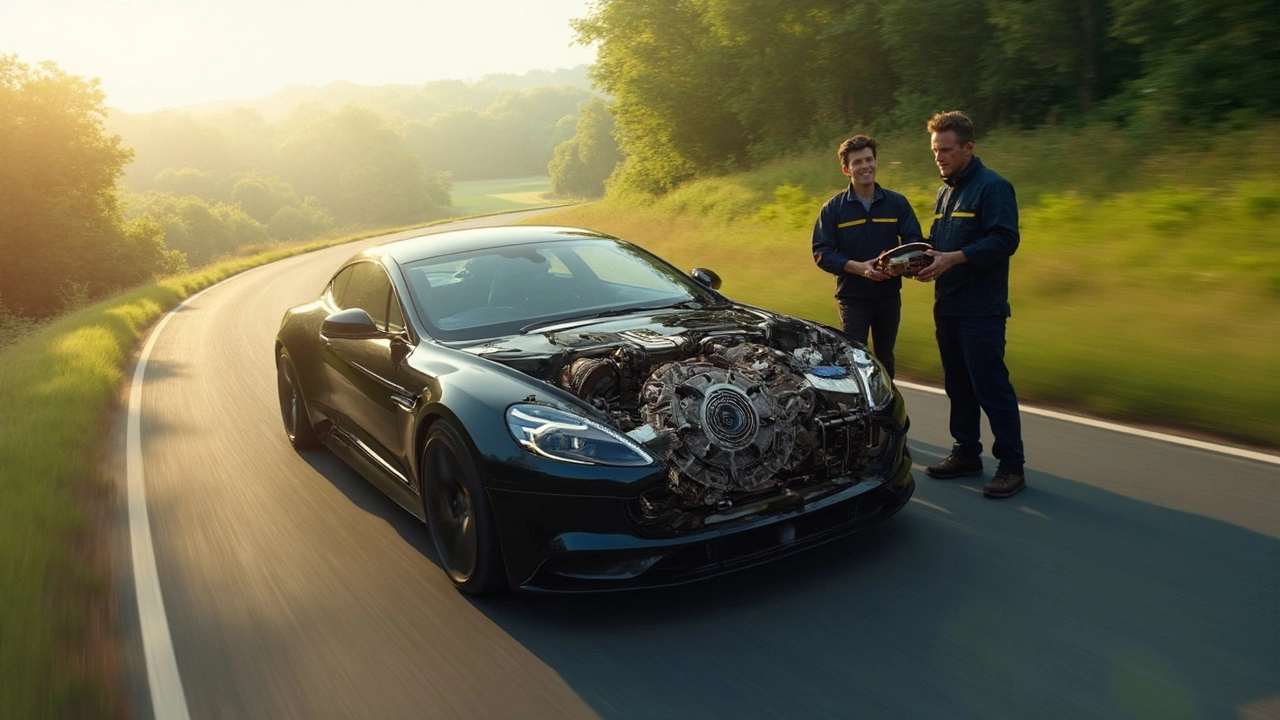
Stage 3 Clutch: What It Is, Who Needs It, and What to Expect
When you’ve pushed your car past factory limits—adding a turbo, tuning the ECU, or swapping the engine—you need a clutch that can handle the abuse. That’s where a stage 3 clutch, a high-torque, heavy-duty clutch system designed for modified vehicles with significant power increases. Also known as a performance clutch, it’s not for daily commuting. It’s for drivers who want to transfer every extra horsepower to the road without slippage or failure. Unlike a stage 1 or 2 clutch, which still feel close to stock, a stage 3 clutch trades comfort for durability. It uses tougher materials like ceramic, carbon, or sintered metal, and a stronger pressure plate that grips harder and lasts longer under stress.
This kind of clutch is part of a bigger picture. It relates to your engine’s output, requires a matching flywheel and release bearing, and influences how your car drives every day. If you’ve upgraded your exhaust, intake, or ECU, and now your car feels like it’s losing power under hard acceleration, your stock clutch is probably slipping. A clutch kit, a complete set of components including the disc, pressure plate, and release bearing for stage 3 builds often includes a lightweight flywheel to reduce rotational mass and improve throttle response. But here’s the catch: that same lightweight flywheel makes the clutch harder to modulate in traffic. You’ll get more engine braking, more chatter at low speeds, and a stiffer pedal. It’s not a lazy driver’s upgrade. It’s for those who track their car, drag race, or just want to feel every bit of power they’ve paid for.
Most people who go stage 3 already know their car’s limits. They’ve done the research. They’ve seen the videos. But what they don’t always realize is how much the rest of the drivetrain needs to match. A stage 3 clutch won’t fix a worn differential or a weak transmission. It also won’t help if your tires can’t grip. You need to think about the whole chain. That’s why many UK buyers check auction listings for used clutch kits from track cars—someone else already did the testing. And if you’re buying parts through a platform like Ultimate Car Auction Hub, you’re not just getting a component. You’re getting real-world proof that it works.
What you’ll find below are real posts from drivers who’ve swapped clutches, dealt with the trade-offs, and learned what actually matters after the install. From how to tell if your clutch is failing to what happens when you mismatch a stage 3 disc with a stock flywheel, these aren’t theory pieces. They’re lessons from the garage. Whether you’re thinking about upgrading or just trying to understand why your car feels so different after a tune, this collection gives you the unfiltered truth—no fluff, no marketing, just what works and what doesn’t.