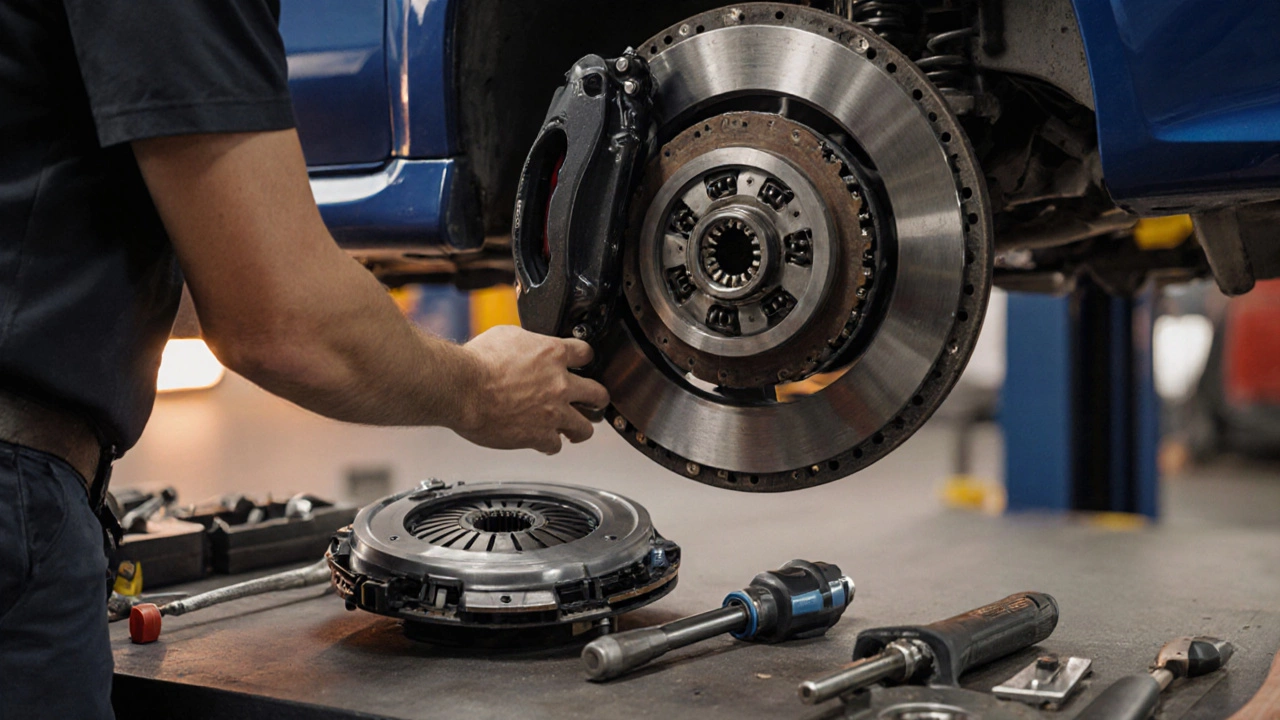
Stage 1 Clutch: What It Is, How It Works, and What You Need to Know
When you hear stage 1 clutch, a mild performance upgrade designed to handle more power than a stock clutch while keeping everyday usability. Also known as upgraded clutch kit, it’s the most common first step for drivers who’ve added a tune, turbo, or other engine mods but still want to commute without drama. Unlike full race clutches that vibrate like a jackhammer and slip in traffic, a stage 1 clutch grips harder when you need it—like when accelerating hard or towing—but still engages smoothly at low speeds. It’s not magic, but it’s the smartest upgrade for most street-driven cars with even small power increases.
What’s inside a stage 1 clutch? Usually, it’s a clutch disc, the friction surface that connects engine to transmission, a stronger pressure plate, the component that squeezes the disc against the flywheel, and a new release bearing, the part that disengages the clutch when you press the pedal. These parts are made from materials like ceramic, organic, or Kevlar blends—not the cheap organic material in stock clutches—that can handle higher heat and torque without fading. You don’t need a full 3-piece kit with a lightweight flywheel unless you’re racing. A stage 1 setup sticks to the factory flywheel, which keeps costs down and drivability high.
Why do people upgrade? If your car’s stock clutch starts slipping under load—like when you floor it in 3rd gear and the RPMs climb but the car doesn’t pull—you’re already fighting a losing battle. A worn clutch doesn’t just feel bad; it can overheat and damage your flywheel or transmission. A stage 1 clutch fixes that before it turns into a $1,200 repair. And if you’ve added a cold air intake or a basic exhaust, you’re already making more torque. Your stock clutch wasn’t designed for that.
It’s not just for tuned cars, either. If you haul heavy loads, tow trailers, or drive in hilly areas often, a stage 1 clutch gives you peace of mind. It’s the difference between your clutch fading on a steep hill and holding strong. And because it’s a direct replacement, most people install it themselves with basic tools—no special alignment or calibration needed.
What you won’t find in a stage 1 clutch? Aggressive engagement, loud chatter, or short life. That’s stage 2 and above. This is the sweet spot: more grip, no compromise. If you’re looking at a clutch upgrade, this is where you start—and for most, where you stop.
Below, you’ll find real-world guides on clutch kits, what’s inside them, how to tell if yours is failing, and how to spot when it’s time to replace it before you get stranded. No fluff. Just what works.