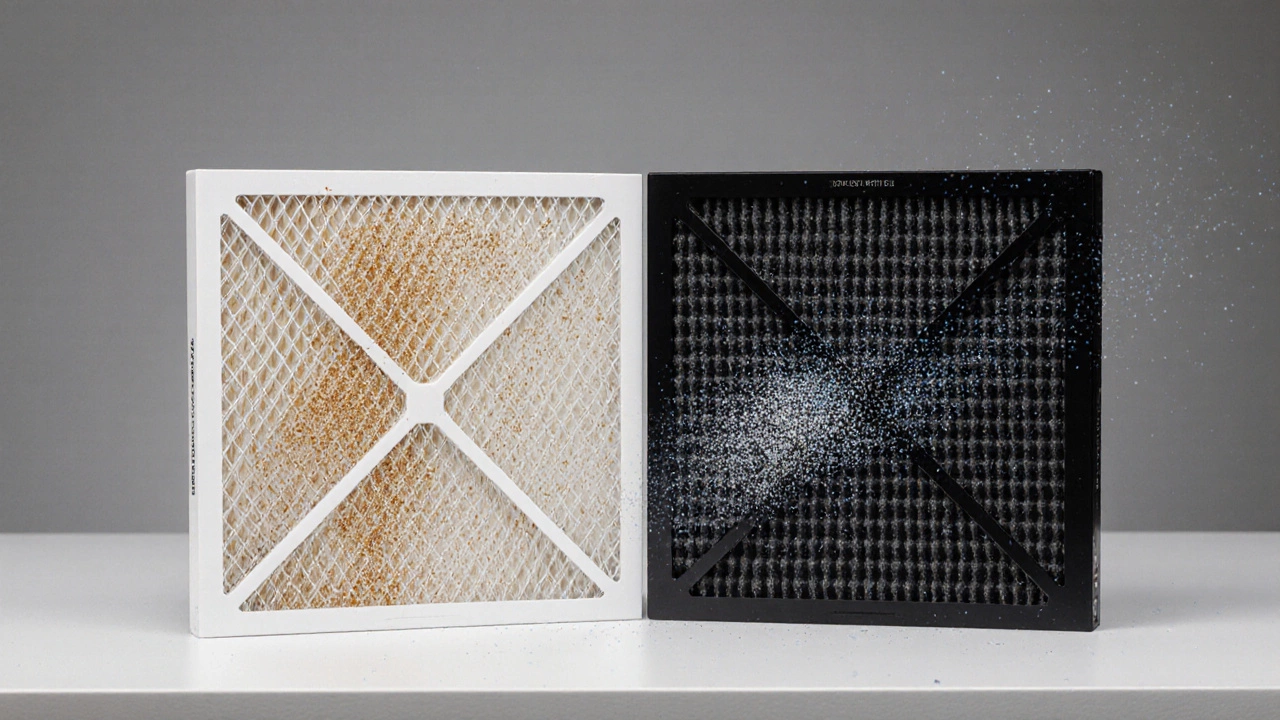
MERV 8 Air Filters: What They Are and Why They Matter for Your Car
When you hear MERV 8, a standard rating for air filter efficiency that balances particle capture and airflow. Also known as Minimum Efficiency Reporting Value 8, it's the sweet spot for most passenger vehicles—catching dust, pollen, mold spores, and even some smoke without choking your car’s ventilation system. Unlike basic filters that only stop large debris, MERV 8 filters are designed to trap smaller particles that can make your cabin feel stuffy or trigger allergies. This isn’t just about comfort—it’s about keeping your car’s interior air quality safe, especially if you drive in cities, near construction zones, or during pollen season.
Your car’s cabin air filter, the component that cleans air before it enters the passenger compartment through the HVAC system is what holds the MERV 8 filter. It’s not the same as the engine air filter, which protects your motor. The cabin filter sits behind the glove box or under the dashboard, and if it’s clogged, your AC won’t blow as hard, your windows might fog up faster, and you’ll start smelling musty air—even if you just changed the oil. MERV 8 is the most common rating for factory-installed cabin filters because it doesn’t restrict airflow like higher ratings (MERV 13+) might, which could strain your blower motor. Many aftermarket brands label their filters as MERV 8, but not all are equal—some are just cheaper materials with the same number printed on them.
What you might not realize is that air filter efficiency, how well a filter captures airborne particles based on its material and design directly affects how often you need to replace it. In dusty areas or during long highway drives, a MERV 8 filter can clog in as little as 12,000 miles. In clean, rural driving, it might last 20,000. The key is checking it every 12 months or when you notice weak airflow, weird smells, or foggy windows. Replacing it yourself is simple—most cars don’t need tools—and saving a few bucks on a filter beats paying for a new blower motor down the line.
There’s a reason you’ll see MERV 8 mentioned in guides about bad air filter symptoms, cabin air filter replacement, and even how AC performance drops over time. It’s the baseline standard that most car owners interact with, whether they know it or not. If your car is running fine but the air feels off, chances are your cabin filter is the culprit—and it’s probably time for a MERV 8 upgrade. Below, you’ll find real-world advice on spotting worn filters, choosing the right replacement, and avoiding the cheap knockoffs that promise more than they deliver.