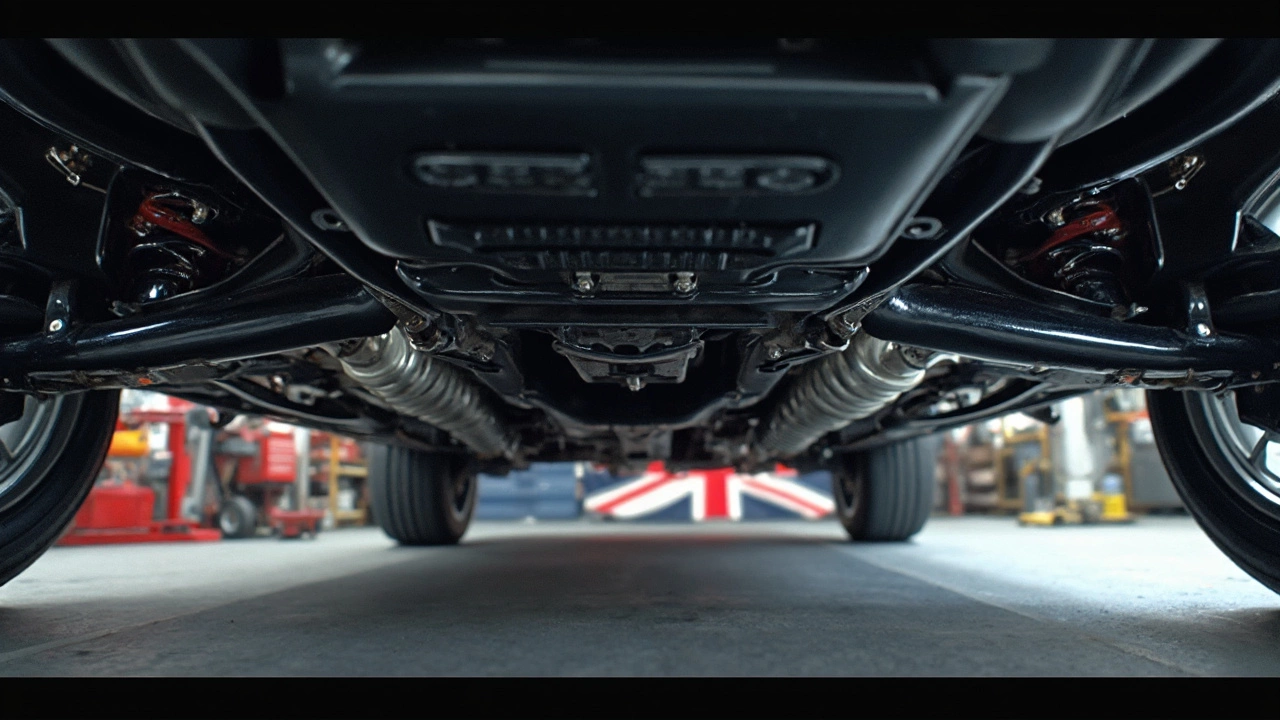
Front Suspension: Signs of Wear, Common Problems, and What to Check
When your front suspension, the system that connects your wheels to the car body and absorbs road shocks. Also known as front end suspension, it’s what keeps your tires planted on the road, your steering responsive, and your ride smooth. If it’s worn out, you won’t just feel every bump—you’ll lose control, wear out tires faster, and even put extra stress on your engine. Many drivers don’t realize how much their front suspension affects braking, handling, and safety until it’s too late.
Common problems like worn struts, the shock-absorbing units that control up-and-down movement or a bent suspension, a damaged control arm, strut, or subframe that throws off alignment don’t always make noise right away. You might notice your car bouncing after hitting a pothole, pulling to one side when braking, or uneven tire wear. These aren’t just inconveniences—they’re red flags. A failing front suspension increases stopping distance, which could mean the difference between avoiding a crash and hitting one. And it’s not just the struts. Ball joints, control arms, bushings, and sway bar links all wear out over time, especially in the UK’s rough roads and wet conditions.
Some of these issues show up in your daily drive: a clunk when going over speed bumps, a steering wheel that vibrates at highway speeds, or your car dipping forward when you brake hard. If you’ve seen posts about bad struts or uneven tire wear, those are classic signs linked to front suspension failure. You don’t need to be a mechanic to spot them. A quick visual check under the car, a bounce test on each corner, or noticing how your car handles after a rough patch of road can tell you more than you think. The posts below cover exactly these symptoms, how to test for damage, what parts fail most often, and how to fix them without overpaying. Whether you’re checking your own car before a long trip or looking at auction lots with potential suspension issues, this collection gives you the real-world knowledge to spot problems early—and save money before they turn into expensive repairs.