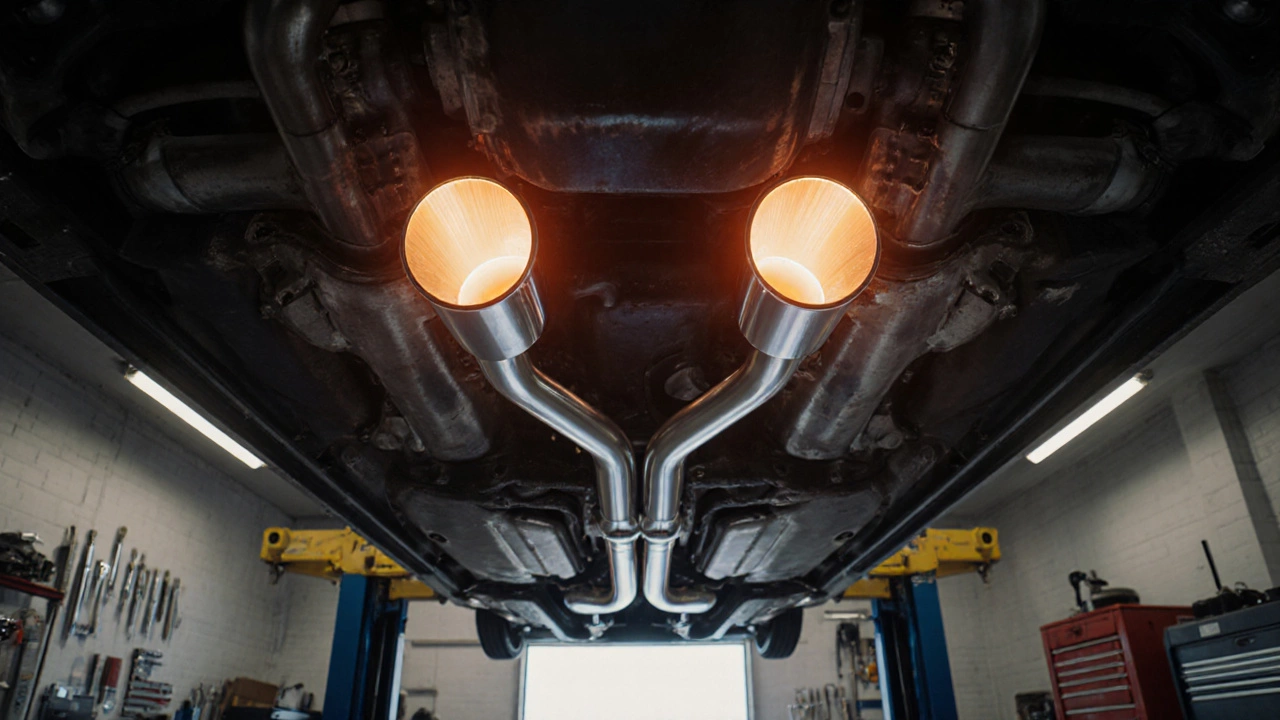
Exhaust Flow: What It Is, How It Affects Your Car, and What to Watch For
When you think about your car’s engine, you probably focus on the fuel, the spark, or the pistons—but the exhaust flow, the path exhaust gases take from the engine to the tailpipe. Also known as exhaust gas flow, it’s what lets your engine breathe out. If this path gets blocked or restricted, your engine struggles to breathe in, too. Poor exhaust flow doesn’t just make your car louder—it kills power, burns more fuel, and can even cause overheating.
The exhaust system, the network of pipes, mufflers, and catalytic converters that guide exhaust gases away from the engine is designed to handle high heat and pressure. But over time, rust, clogs, or damage can slow down the flow. A clogged catalytic converter, for example, acts like a traffic jam for exhaust gases. That forces the engine to work harder to push gases out, which steals power and hurts fuel economy. The same thing happens if your muffler is crushed or your pipes are kinked. Even a simple dirt buildup in the exhaust manifold can reduce flow enough to make your car feel sluggish.
Upgrading your performance exhaust, a modified system designed to reduce backpressure and improve gas flow can help—but only if it’s matched to your engine. Bigger pipes aren’t always better. Too much flow can hurt low-end torque, especially in daily drivers. The goal isn’t just to make noise—it’s to let gases exit faster and smoother so the engine can pull in fresh air more efficiently. That’s why professional tuners look at the whole system: headers, mid-pipes, catalytic converters, and mufflers. Each part affects the next.
What you hear—like a rattle, a hiss, or a sudden change in sound—is often the first clue something’s wrong. A failing exhaust gasket, a cracked manifold, or a rusted pipe can leak gases into places they shouldn’t go. That’s not just noisy—it’s dangerous. Carbon monoxide can sneak into your cabin, and unburned fuel can ignite under the car. And if your exhaust backpressure, the resistance exhaust gases face as they move through the system is too high, your engine might misfire, stall, or throw a check engine light. Many drivers ignore these signs until it’s too late.
The posts below cover everything from how the exhaust flow actually works to what happens when parts fail, how to spot early warning signs, and whether a new system is worth the cost. You’ll find real-world checks for worn components, tips on choosing upgrades without overspending, and how a bad exhaust can quietly wreck your fuel economy. Whether you’re trying to fix a noise, boost performance, or just avoid a costly repair, these guides give you the facts—not the fluff.