Exhaust Buying Guide: What to Look for and How to Choose the Right System
When you’re looking at a new exhaust system, the complete pathway that moves exhaust gases from the engine to the tailpipe, including pipes, mufflers, resonators, and tips. It’s not just about making noise—it’s about performance, legality, and keeping your engine running right. Many people think a louder exhaust means more power, but that’s not always true. A well-designed system improves airflow, reduces backpressure, and can actually boost horsepower and fuel efficiency—if it’s matched to your car’s setup.
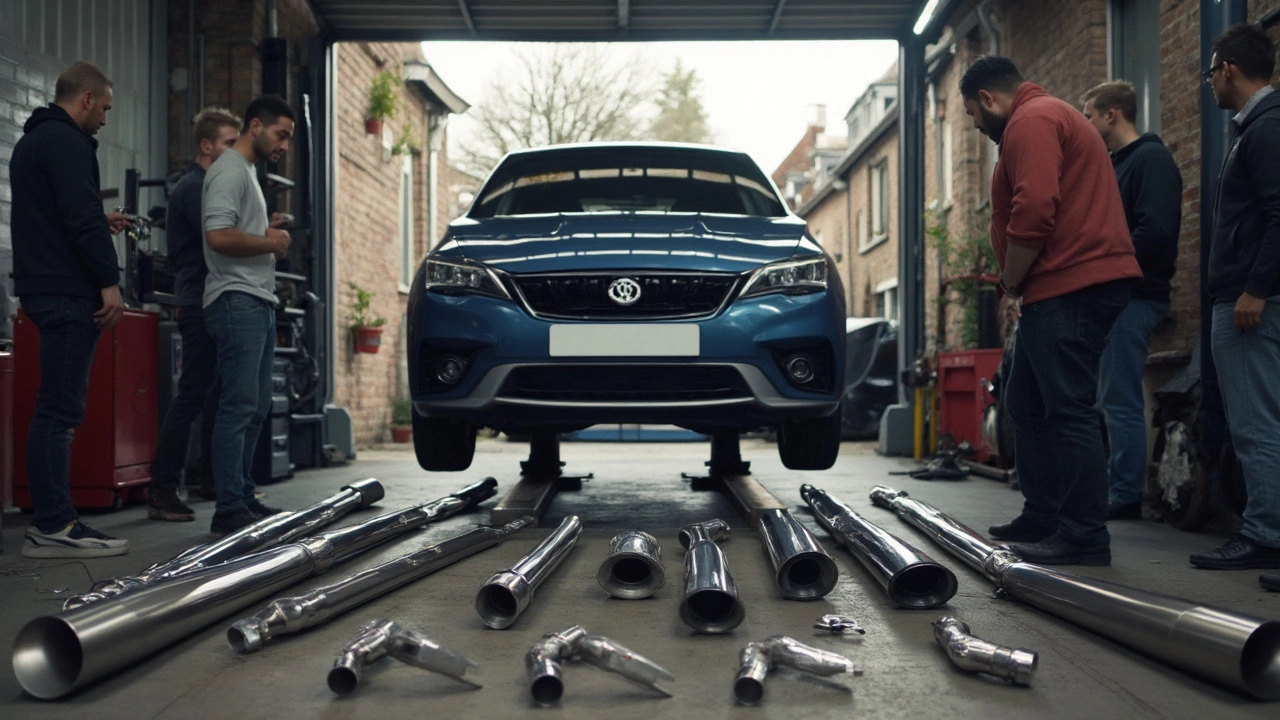
There are different types of exhaust systems you’ll see on the market. A cat-back exhaust, a system that replaces everything from the catalytic converter back to the tailpipe is the most common upgrade. It’s affordable, legal in most cases, and gives a noticeable change in sound and flow. Then there’s the axle-back exhaust, a simpler upgrade that only replaces the rear section, usually just the muffler and tips. It’s cheaper and easier to install, but the performance gain is small. For serious tuning, you might consider a full system, a complete replacement from the headers all the way to the tailpipe, often requiring ECU tuning. But that’s overkill for daily drivers.
Material matters too. Stainless steel lasts longer and resists rust better than mild steel, even if it costs more upfront. Aluminized steel is a middle ground—decent protection at a lower price. If you live in a wet or salty climate, skimping here means replacing your exhaust sooner. Also, check local noise laws. In the UK, your exhaust can’t be louder than the original factory setting, and inspectors can fail you if it’s too loud or missing components like a catalytic converter.
Don’t ignore the sound. Some systems are tuned for a deep rumble, others for a sharp crack. Listen to real车主 videos—not just ads. A system that sounds great on YouTube might drone badly on the motorway. Look for systems with resonators if you want performance without the headache of constant noise.
And remember, your exhaust connects to other parts of your car. A bad or clogged system can strain the engine, hurt fuel economy, and even cause overheating. That’s why many of the posts below cover how exhaust issues relate to engine performance, suspension wear, and even AC efficiency. You can’t fix one part in isolation.
What you’ll find below are real, practical guides from UK drivers who’ve been there—how to spot a failing system, what gains you actually get from a 2-into-1 setup, how to pick the best exhaust without falling for hype, and what happens when you ignore the signs of damage. No fluff. Just what works.