Clutch Components: What They Are, How They Work, and When to Replace Them
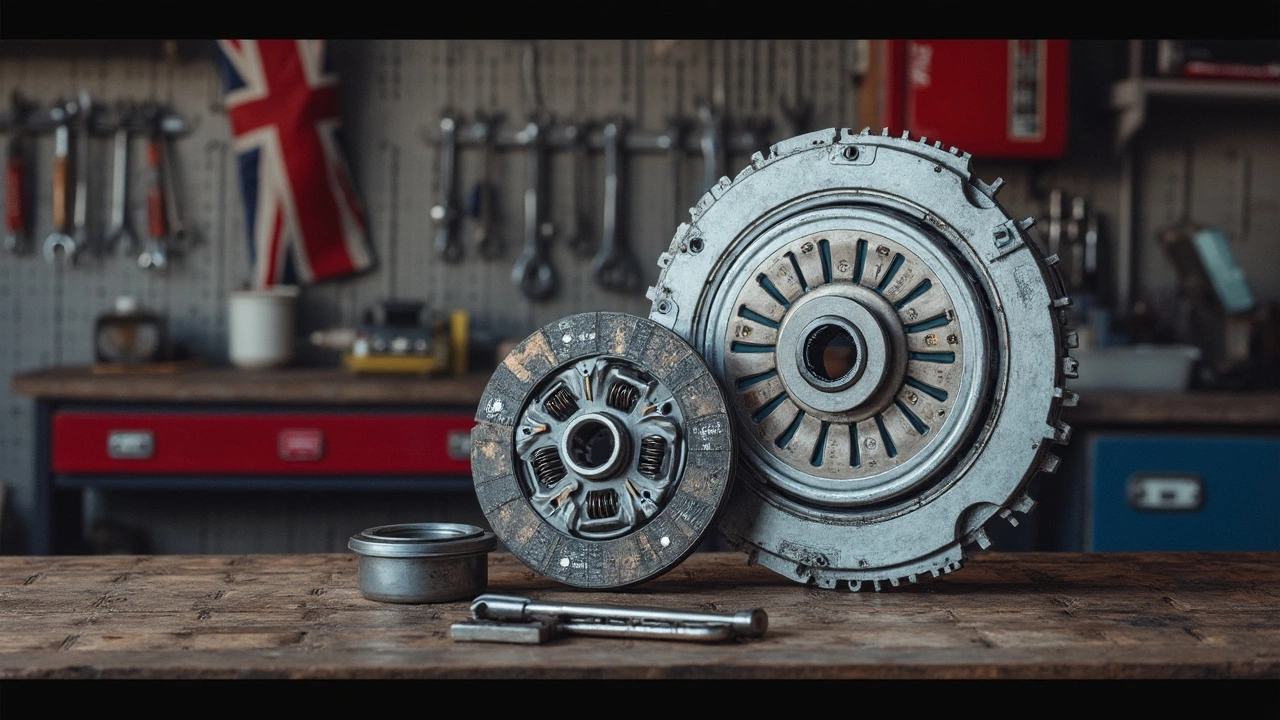
When you press the clutch pedal, you’re not just disengaging the engine from the wheels—you’re triggering a chain reaction inside a set of clutch components, the mechanical parts that connect your engine’s power to the transmission. Also known as a clutch assembly, this system includes the clutch disc, the friction surface that grips the flywheel and transfers power, the pressure plate, the spring-loaded clamp that squeezes the disc against the flywheel, and the release bearing, the part that pushes the pressure plate open when you let off the pedal. Together, they make gear changes smooth and keep your car moving without slipping or grinding.
Most people think of the clutch as one part, but it’s actually a team. A worn clutch disc means your car slips under acceleration. A weak pressure plate won’t hold the disc tight enough, causing the same issue. And if the release bearing fails, you’ll hear a grinding noise every time you press the pedal—sometimes even when you’re not using the clutch. These aren’t just annoying sounds; they’re early warnings. If you drive a manual car, especially in stop-and-go traffic or hilly areas, these parts wear faster. A stage 1 clutch upgrade isn’t just for race cars—it’s a smart fix for anyone who wants more durability without losing daily comfort. You don’t need a full rebuild unless you’ve hit 80,000 miles or more, but checking the condition of these components during a brake or transmission service can save you from being stranded.
Knowing what’s inside a clutch kit helps you avoid being overcharged. A two-piece kit usually includes just the disc and pressure plate. A three-piece adds the release bearing and sometimes the pilot bearing. If your mechanic says you need a full replacement but only mentions the disc, ask what else is included. Many UK drivers replace clutch components at the same time as their flywheel or gearbox seals, because once the transmission is out, it’s cheaper to do it all at once. The real cost isn’t the parts—it’s the labor. That’s why many buyers on auction sites look for used clutch kits from low-mileage donor cars. You can find perfectly good pressure plates and clutch discs from vehicles that never saw heavy use, saving hundreds compared to new OEM parts.
There’s no magic mileage for clutch replacement—it depends on how you drive. Someone who rides the clutch in traffic might need a new one at 50,000 miles. Someone who shifts cleanly and avoids resting their foot on the pedal could get past 120,000. The signs are simple: slipping when accelerating, difficulty shifting into gear, a spongy or high clutch pedal, or a burning smell from the engine bay. If you notice any of these, don’t wait. A failing clutch can damage the flywheel or transmission, turning a £300 repair into a £1,200 one.
Below, you’ll find real guides from drivers who’ve been there—how to spot a failing clutch, what’s actually in a 2-piece kit, why a stage 1 upgrade makes sense for tuned cars, and how to tell if your clutch is wearing out before it leaves you stranded. No fluff. Just what works.