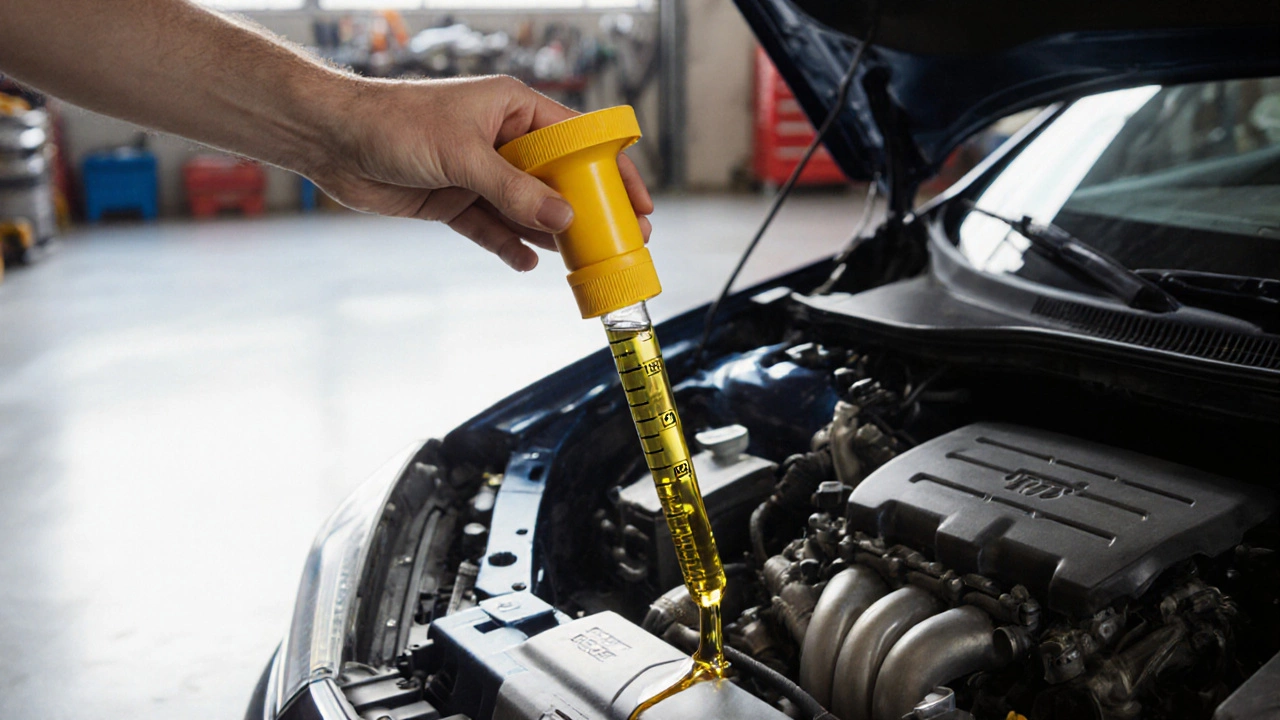
Car Oil Top Up: What You Need to Know Before Adding Oil
When your car’s oil level, the amount of engine oil circulating to keep parts lubricated and cool drops below the minimum mark, you might think a quick car oil top up, adding engine oil between scheduled changes to maintain proper levels is harmless. But it’s not always that simple. A top up can mask a bigger problem—like a leak, burning oil, or worn engine seals. Many drivers don’t realize that topping up isn’t a replacement for an oil change. It’s a temporary fix, and doing it too often can lead to sludge buildup, poor engine performance, or even total engine failure.
Engine oil itself is a engine oil, a lubricant designed to reduce friction, clean internals, and dissipate heat in internal combustion engines. It breaks down over time, loses its viscosity, and picks up metal particles and carbon deposits. That’s why manufacturers recommend full oil changes every 5,000 to 10,000 miles. If you’re regularly adding oil, you’re likely fighting a symptom, not the disease. A car that burns oil might have worn piston rings or valve seals. A leak could mean a cracked gasket or loose drain plug. Ignoring these signs and just topping up is like pouring water into a bucket with a hole—it works for a while, but the problem gets worse.
Checking your oil isn’t hard. Park on level ground, turn off the engine, wait a few minutes, then pull the dipstick. Wipe it clean, reinsert it, pull it out again. If the oil is below the minimum line, you need to add some. But here’s the catch: use the exact type of oil your manual says. Mixing different viscosities or brands can cause poor lubrication. Always add a little at a time—half a quart at a time—and recheck. Overfilling is just as dangerous as low oil. Too much oil creates foam, which stops the oil from flowing properly and can damage your engine’s internals.
There’s no shame in topping up oil now and then. Even new cars can lose a little oil over time. But if you’re adding more than a quart between oil changes, something’s wrong. That’s not normal. It’s a red flag. The posts below cover everything from how to spot oil leaks to what happens when you use the wrong oil, why skipping oil changes ruins engines, and how to tell if your car is burning oil. You’ll find real-world advice from people who’ve been there—no guesswork, no fluff. Whether you’re trying to fix a leak, avoid costly repairs, or just understand why your oil keeps dropping, you’ll find the answers here.