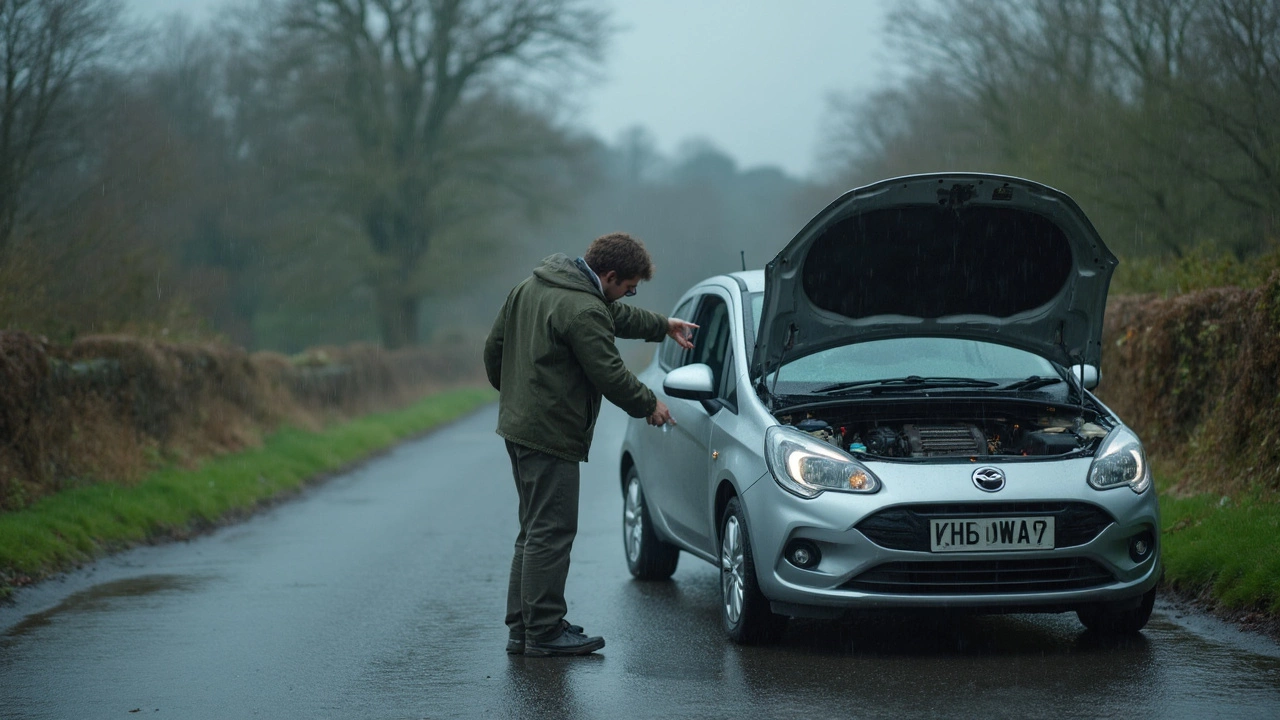
Broken Clutch: Signs, Causes, and What to Do Next
When your broken clutch, a mechanical component that connects your engine to the transmission and allows gear changes. Also known as a clutch failure, it’s one of the most common reasons drivers suddenly lose power or find gears impossible to engage. A clutch isn’t just a part—it’s the bridge between your foot and the engine’s power. When it goes, your car doesn’t just slow down—it stops working the way it should.
A clutch disc, the friction surface that presses against the flywheel to transfer engine torque wears out over time, especially if you ride the pedal, shift too fast, or drive in heavy city traffic. The pressure plate, the component that squeezes the clutch disc against the flywheel can also warp or lose spring tension, leading to slipping or incomplete disengagement. And if the release bearing, the part that pushes the clutch fingers when you press the pedal fails, you’ll hear a grinding noise every time you press down. These aren’t just parts—they’re a system. One breaks, and the others start to suffer.
You don’t need a mechanic to spot early signs. If your car revs higher than normal but doesn’t speed up, that’s clutch slip. If you hear a squeal or grinding when shifting, especially in first or reverse, the clutch isn’t releasing cleanly. If the pedal feels spongy, or you have to press it all the way to the floor to get a gear, something’s worn out or leaking fluid. And if your car rolls backward on a hill even with the clutch pressed, that’s a dead giveaway. These aren’t "maybe" problems—they’re urgent ones. Driving with a broken clutch can damage your flywheel, transmission, or even the starter motor.
Most people assume a broken clutch means a full replacement. Sometimes that’s true. But in some cases, a simple adjustment, bleeding the hydraulic line, or replacing just the release bearing can fix it. The key is catching it before the clutch disc is completely glazed or the flywheel is scored. That’s where the real cost spikes. A clutch kit—disc, pressure plate, bearing—can run from £300 to £800 depending on your car. Labor? Another £400 to £700. But if you catch it early, you might avoid the big ticket item altogether.
What you’ll find below are real, practical guides from drivers who’ve been there. You’ll see how to tell if your clutch is failing before it leaves you on the side of the road. You’ll learn what a stage 1 clutch actually is, and why it might be worth considering if you’re upgrading. You’ll find out how a 2-piece clutch kit differs from a 3-piece one, and what parts you’re really paying for. And you’ll see how suspension issues, strange noises, and even air filters can sometimes be mistaken for clutch problems—so you don’t waste money on the wrong fix. This isn’t theory. It’s what works.