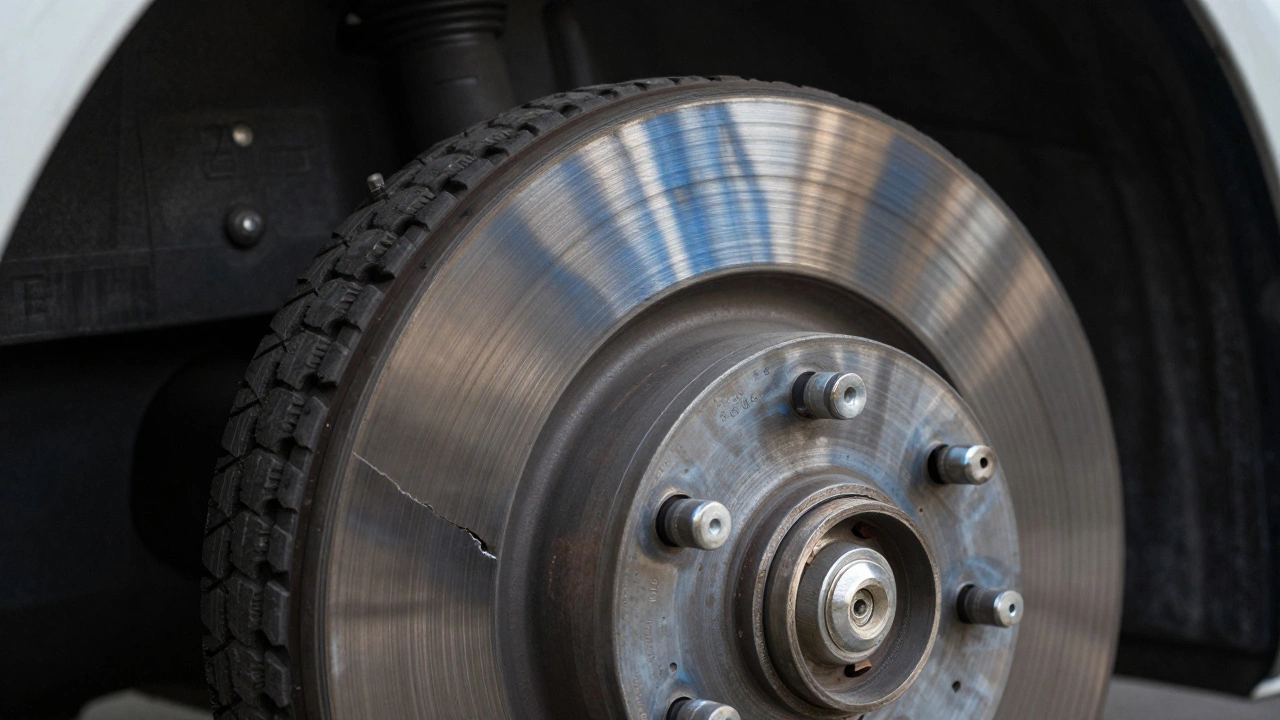
Bad Rotors: Signs, Risks, and What to Do Next
When your brakes start making noise or the car shakes under pressure, it’s often not just the bad rotors, the metal discs that brake pads clamp down on to stop your car. Also known as brake discs, they’re a critical part of your brake system—and when they wear out, your safety drops fast.
Bad rotors don’t always scream for attention. Sometimes they just whisper: a slight vibration in the steering wheel when you brake, a high-pitched squeal that wasn’t there before, or a grinding sound that makes you pull over. These aren’t just annoyances—they’re warnings. Rotors wear unevenly from heat, rust, or worn-out brake pads pressing too hard. If your pads are already thin, they’re probably digging into the rotor surface, creating grooves or warping the metal. That’s when stopping distances grow, and your car feels like it’s fighting you. And here’s the thing: you can’t fix a warped rotor with more brake fluid or a tune-up. It needs to be resurfaced or replaced, and often, it’s smarter to replace both rotors at once so your braking stays balanced.
Bad rotors don’t live in isolation. They’re tied to your brake pads, your suspension, even your tires. If your pads are worn, they accelerate rotor damage. If your struts are bad, the weight shifts unevenly and causes uneven rotor wear. And if your tires are out of balance, the shaking you feel might be blamed on rotors when it’s actually a wheel issue. That’s why checking rotors means looking at the whole system. You don’t need a garage to spot early signs—just know what to watch for: vibrations, strange noises, or a brake pedal that feels spongy or goes closer to the floor than usual. These aren’t "maybe" problems. They’re "do something now" signals.
What you’ll find below isn’t a list of repair guides—it’s a collection of real, practical insights from UK drivers who’ve been there. From how worn pads lead to rotor damage, to why ignoring brake noise costs more later, to how to tell if your rotors are beyond saving. No fluff. No theory. Just what works when your car’s stopping power is on the line.