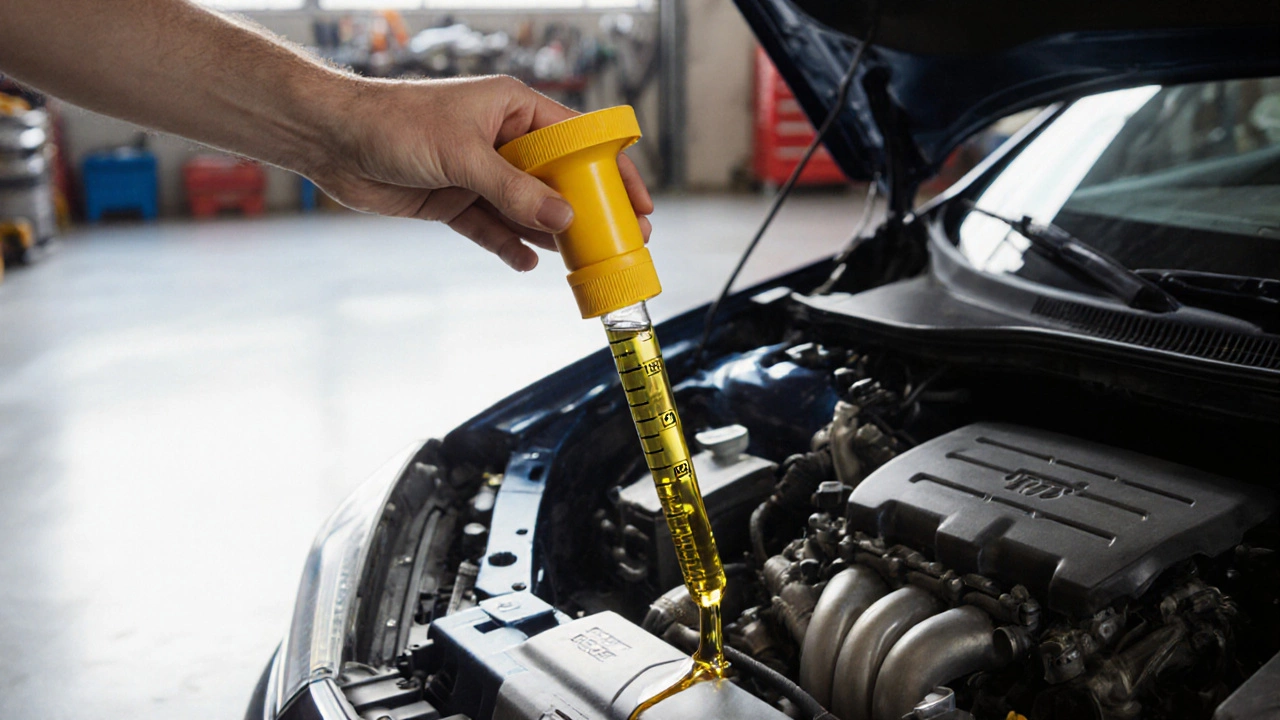
Add Oil: What Happens When Your Engine Needs More Oil and How to Fix It
When your car tells you to add oil, the process of topping up engine lubricant to maintain proper function. Also known as checking engine oil, it’s one of the simplest fixes that can stop a $5,000 repair before it starts. Most drivers don’t realize oil isn’t something you only change—it’s something you monitor, regularly. If you skip checking it, you’re not just risking performance. You’re risking your engine’s life.
Engine oil, a vital lubricant that reduces friction, cools parts, and cleans internal components breaks down over time. It gets dirty, thinner, and less effective. But even fresh oil disappears. Cars burn a little. They leak a little. And if you don’t add oil when needed, metal starts grinding on metal. You’ll hear knocking. You’ll smell burning. Then your engine dies. No warning. No mercy. That’s not theory. It’s what happens when people wait too long.
Checking oil isn’t hard. You don’t need tools. Just park on level ground, turn off the engine, wait a few minutes, pull the dipstick, wipe it clean, stick it back in, then pull it out again. If the oil is below the minimum mark, you need to add oil. Not tomorrow. Not next week. Right now. Most cars take less than a quart. A bottle costs less than £10. A mechanic’s repair bill after an oil-starved engine? Think £2,000 to £5,000.
It’s not just about level. Oil quality matters too. Dark, gritty oil means it’s done its job and needs replacing. But even clean oil can be too low. That’s why checking every few weeks is smarter than waiting for a dashboard light. UK winters? They thin oil faster. Stop-and-go traffic? It heats up the engine and burns more oil. Long motorway runs? They’re easier on the engine—but they don’t stop leaks.
Some people think if the car runs fine, the oil’s fine. That’s a myth. Engines don’t scream before they fail. They just stop. The posts below cover what happens when you ignore oil levels, how to spot leaks before they ruin your garage floor, and why using the wrong type of oil—even if it’s the right level—can still wreck your engine. You’ll find guides on how to choose the right oil for your car, how to top up without making a mess, and what to do if your oil level drops faster than normal.
Adding oil isn’t a chore. It’s insurance. And like any good insurance, you don’t notice it until you need it. The good news? You can do it yourself in five minutes. The better news? You’ll save yourself a lot of stress, money, and time.